One of the most powerful moments I experienced as an ancient history student was when I was teaching cuneiform to visitors at a fair. A father and his two little children came up to the table where I was working. I recognised them from an interfaith ceremony I’d attended several months before: the father had said a prayer for his homeland, Syria, and for his hometown, Aleppo.
All three of them were soft-spoken, kind and curious. I taught the little girl how to press wedges into the clay, and I taught the little boy that his name meant “sun” and that there was an ancient Mesopotamian God with the same name. I told them they were about the same age as scribes were when they started their training. As they worked, their father said to them gently: “See, this is how your ancestors used to write.”
And I thought of how the Ancient City of Aleppo is almost entirely destroyed now, and how the Citadel was shelled and used as a military base, and how Palmyran temples were blown up and such a wealth of culture and history has been lost forever. And there I was with these children, two small pieces of the future of a broken country, and I was teaching them cuneiform. They were smiling and chatting to each other about Mesopotamia and “can you imagine, our great-great-great-grandparents used to write like this four thousand years ago!” For them and their father, it was more than a fun weekend activity. It was a way of connecting, despite everything and thousands of kilometres away from home, with their own history.
This moment showed me, in a concrete way, why ancient studies matter. They may not seem important now, not to many people at least. But history represents so much of our cultural identity: it teaches us where we come from, explains who we are, and guides us as we go forward. Lose it, and we lose a part of ourselves. As historians, our role is to preserve this knowledge as best we can and pass it on to future generations who will need it. I helped pass it on to two little Syrian children that day. They learnt that their country isn’t just blood and bombs, it’s also scribes and powerful kings and Sun-Gods and stories about immortality and tablets that make your hands sticky. And that matters.
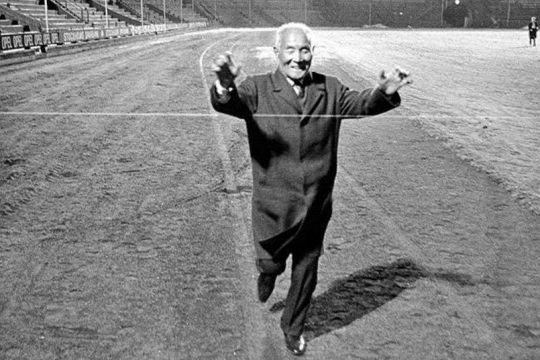
If you ever feel bad about taking a longer time than someone else to accomplish the same things, just remember that during the 1912 Stockholm Olympics Japanese marathon runner Shizo Kanakuri passed out in a garden party along the marathon route and, instead of notifying race officials of his inability to finish the race, he went back to Japan without telling anyone and was considered a missing person by the Swedish authorities for 50 years.
He didn’t finish the race until 1967 when a Swedish television station offered to help him complete the run, and he finished with a final time of 54 years, 8 months, 6 days, 5 hours, 32 minutes and 20.379 seconds.
This post needs the picture of the man finally crossing the finish line.
gosh but like we spent hundreds of years looking up at the stars and wondering “is there anybody out there” and hoping and guessing and imagining
because we as a species were so lonely and we wanted friends so bad, we wanted to meet other species and we wanted to talk to them and we wanted to learn from them and to stop being the only people in the universe
and we started realizing that things were maybe not going so good for us– we got scared that we were going to blow each other up, we got scared that we were going to break our planet permanently, we got scared that in a hundred years we were all going to be dead and gone and even if there were other people out there, we’d never get to meet them
and then
we built robots?
and we gave them names and we gave them brains made out of silicon and we pretended they were people and we told them hey you wanna go exploring, and of course they did, because we had made them in our own image
and maybe in a hundred years we won’t be around any more, maybe yeah the planet will be a mess and we’ll all be dead, and if other people come from the stars we won’t be around to meet them and say hi! how are you! we’re people, too! you’re not alone any more!, maybe we’ll be gone
but we built robots, who have beat-up hulls and metal brains, and who have names; and if the other people come and say, who were these people? what were they like?
the robots can say, when they made us, they called us discovery; they called us curiosity; they called us explorer; they called us spirit. they must have thought that was important.
and they told us to tell you hello.
So, I have to say something.
This is my favorite post on this website.
I’ve seen this post in screenshots before, and the first time I read it, I cried. Just sat there with tears running down my face.
Because this, right here, is the best of us, we humans. That we hope, and dream of the stars, and we don’t want to be alone. That this is the best of our technology, not Terminators and Skynet, but our friends, our companions, our legacy. Our message to the stars.
I’m flat out delighted, and maybe even a little honored, that I get to reblog this.
He has been teaching about computers for six years, but without actual computers to provide for his students, he illustrates for them on a chalkboard. He learned art and graphic design in secondary school and puts it to use with every lesson, and besides Microsoft Word, he teaches his students basic components.
When asked about the “digital divide” he said this in the above interview:
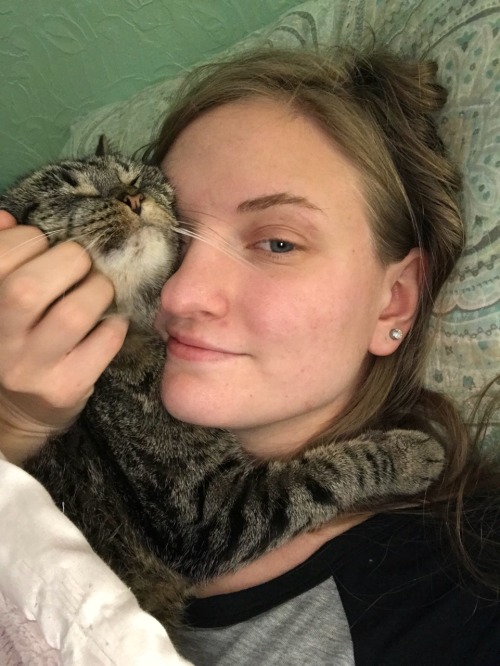
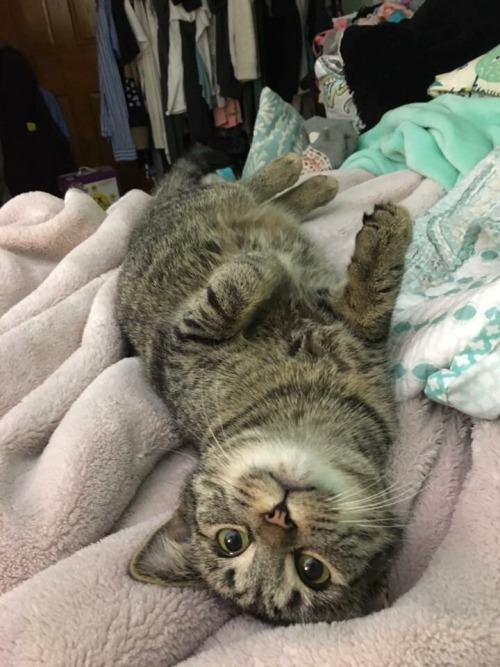
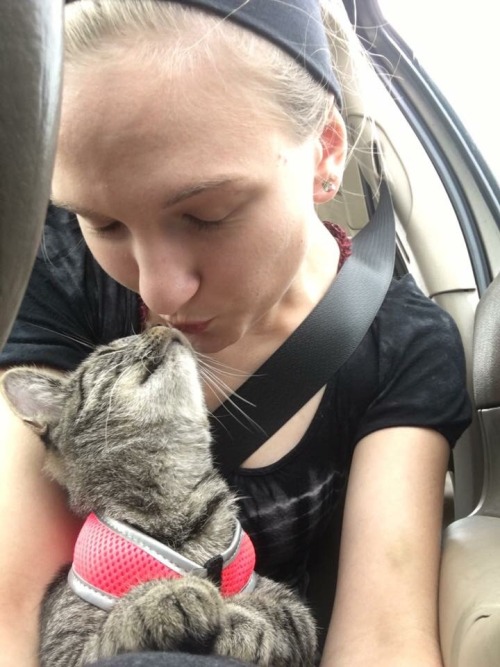
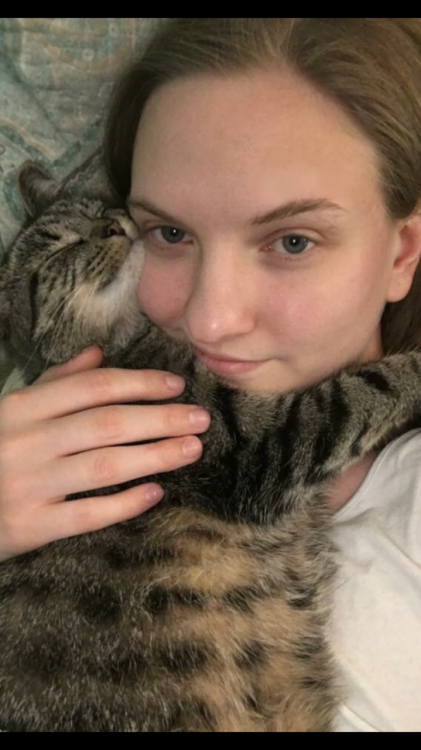
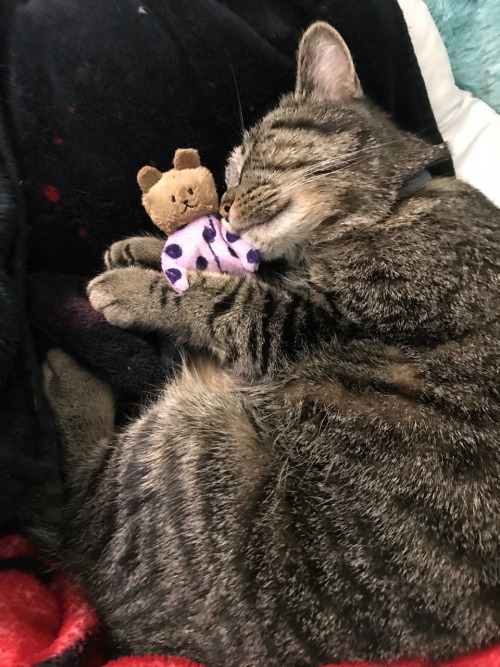
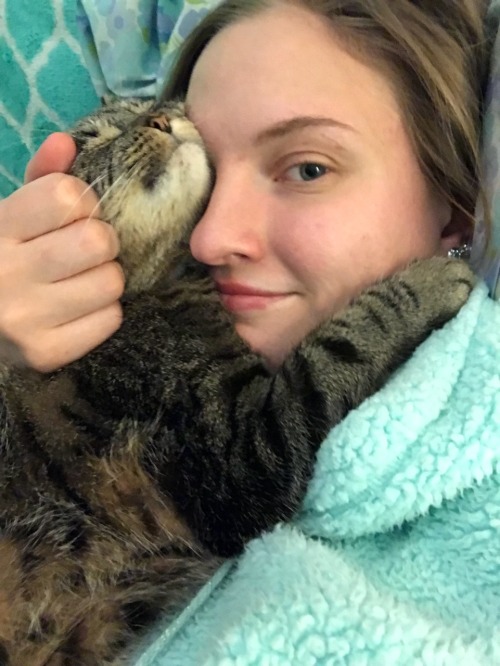
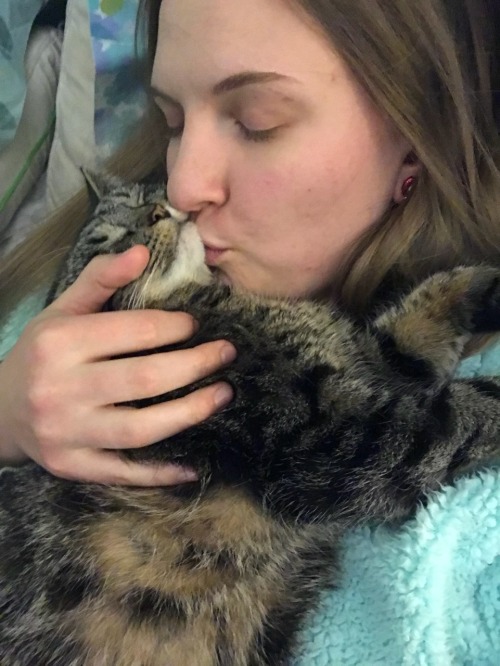
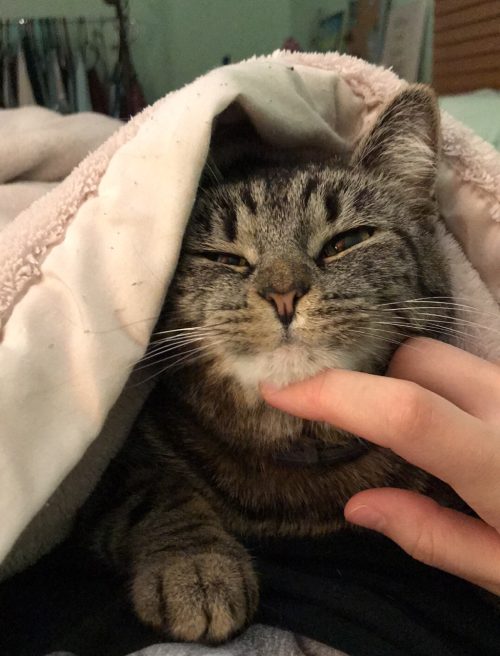
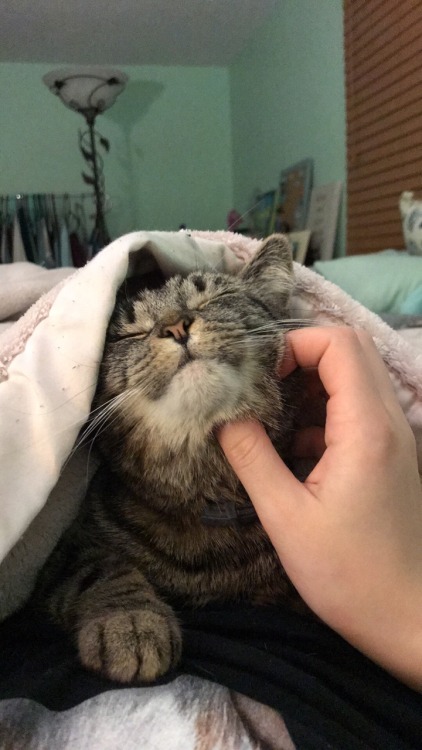
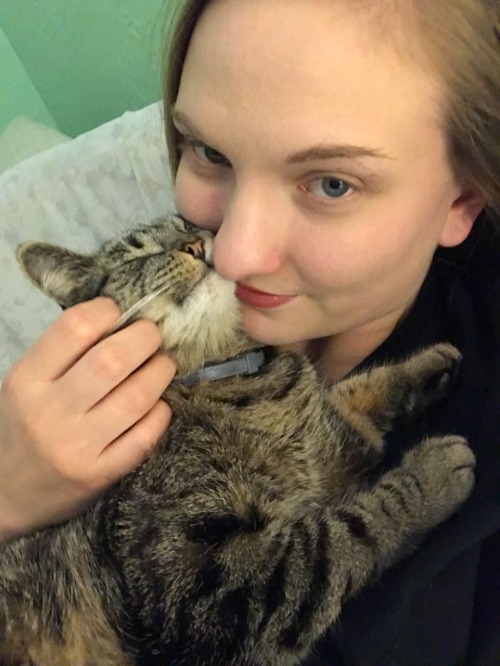
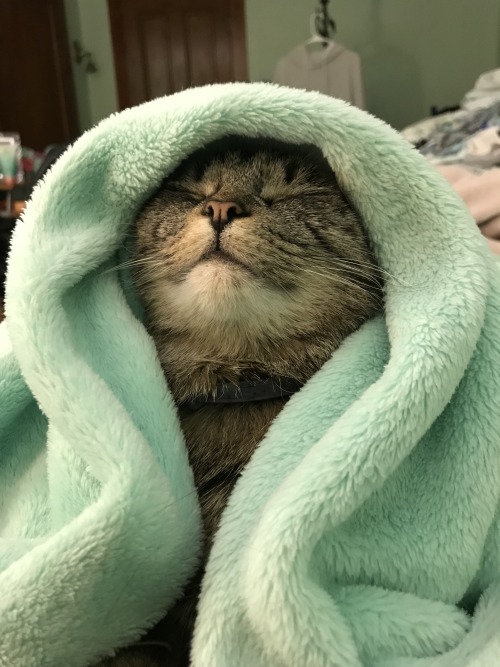
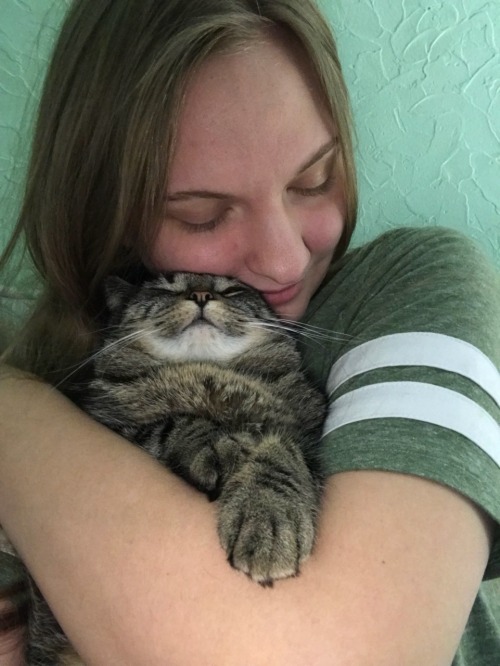
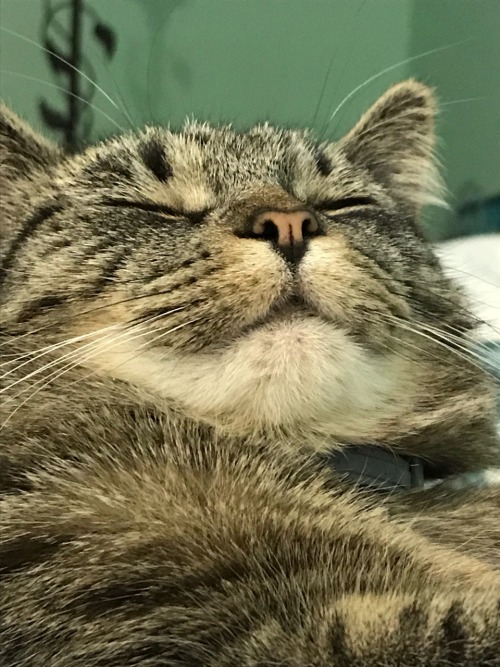
My cat literally sleeps next to my face until she thinks I’m asleep and then she’ll move to the end of my bed. If I wake up at night she’ll go back up to me head and stay with me until I fall asleep again. In the morning she’ll follow me when I call her. She’s a precious lil nugget.
This is the world’s largest flying Engine of Murder marveling at the fact that it can actually have its tummy rubbed.
I feel like this is the next step up on “loose your fingers” roulette from petting a kittie’s tummy, but just below belly rubs for say a lion.
Can someone who knows birds better than I do tell me whether this eagle is as happy as it looks? Because I want it to be happy. It looks so happy. Bewildered by having a friend, but so happy.
Just popping on this thread to confirm: yes, the eagle is happy about the belly rubs. Golden eagles make this sound when receiving allopreening and similar affectionate and soothing treatment from their parents and mates. It’s the “I am safe and well fed, and somebody familiar is taking good care of me” sound. Angry raptors and wounded raptors make some pretty dramatic hisses and shrieks; frightened raptors go dead silent and try to hide if they can, or fluff up big and get loud and in-your-face if hiding isn’t an option. They can easily sever a finger or break the bones of a human hand or wrist, and even with a very thick leather falconer’s gauntlet, I’ve known falconers to leave a mews (hawk house) with graphic punctures THROUGH the gauntlet into the meat of their hands and arms, just from buteos and kestrels way smaller than this eagle. A pissed off hawk will make damn sure you don’t try twice whatever you pulled that pissed her off, even if she’s been human-imprinted.
If you’re ever unsure about an animal’s level of okayness with something that’s happening, there are three spot-check questions you can ask, to common-sense your way through it:
1. Is the animal capable of defending itself or making a threatening or fearful display, or otherwise giving protest, and if so, is it using this ability? (e.g. dog snarling or biting, swan hissing, horse kicking or biting)
2. Does the animal experience an incentive-based relationship with the human? (i.e. does the animal have a reason, in the animal’s frame of reference, for being near this human? e.g. dog sharing companionship / food / shelter, hawk receiving good quality abundant food and shelter and medical care from a falconer)
3. Is the animal a domesticated species, with at least a full century of consistent species cohabitation with humans? (Domesticated animals frequently are conditioned from birth or by selective breeding to be unbothered by human actions that upset their feral nearest relatives.)
In this situation, YES the eagle can self-defend, YES the eagle has incentive to cooperate with and trust the human handler, and NO the eagle is not a domesticated species, meaning we can expect a high level of reactivity to distress, compared to domestic animals: if the eagle was distressed, it would be pretty visible and apparent to the viewer. These aren’t a universally applicable metric, but they’re a good start for mammal and bird interactions.
Pair that with the knowledge that eagles reserve those chirps for calm environments, and you can be pretty secure and comfy in the knowledge that the big honkin’ birb is happy and cozy.
Also, to anybody wondering, falconers are almost single-handedly responsible for the recovery from near-extinction of several raptor species, including and especially peregrine falcons. Most hawks only live with the falconer for a year, and most of that year is spent getting the bird in ideal condition for survival and success as a wild breeding adult. Falconers are extensively trained and dedicated wildlife conservationists, pretty much by definition, especially in the continental USA, and they make up an unspeakably important part of the overall conservation of predatory bird species. Predatory birds are an important part of every ecosystem they inhabit. Just like apiarists and their bees, the relationship between falconer and hawk is one of great benefit to the animal and the ecosystem, in exchange for a huge amount of time, effort, expense, and education on the part of the human, for very little personal benefit to that one human. It’s definitely not exploitation of the bird, and most hawks working with falconers are hawks who absolutely would not have reached adulthood without human help: the sick, the injured, and the “runts” of the nest who don’t receive adequate resources from their own parents. These are, by and large, wonderful people who are in love with the natural world and putting a lifetime of knowledge and sheer exhausting work into conserving it and its winged wonders.
reblogged for excellent info, I’m so glad that big gorgeous birb really is as happy as it looks!
Today’s bit of positive activism: A reminder that, although the world may contain many bad and awful things, it also contains an enormous winged predator clucking happily as a human gives it a belly rub.



 wupacing