A tiny town with a smaller population than some high schools has contaminated water, so Michigan declares a state of emergency, supplies residents with bottled water, and is dumping all the contaminated water in preparation of hooking the town up with a clean water supply.
MEANWHILE nobody gives two shits about Flint, a MAJOR CITY with OVER A HUNDRED THOUSAND RESIDENTS.
the fact women are viewed as being more sexy at 15 than 40 is the creepiest thing in the world
Horrifying really
Looking through the notes, and people seem to be justifying this as evolutionary biology. They believe that human females are most fertile at the age of 15. Considering your body isn’t even done growing at this age, I find this incredibly hard to believe. Really? The best time for you to push a baby out of your vagina is when your periods probably aren’t even regular yet? Like the younger you are, the more likely you are to DIE from child birth. Well anyway, most websites claim you’re most fertile in your 20s, peaking at 27… So congrats on trying to blatantly justify pedophilia by using bullshit science.
Not only is “15 year olds are more fertile” a creepy, pedophilic belief, it’s also an extremely dangerous one.
Also, don’t believe the whole “most girls got married at 13-15″ bullshit. Most medieval records (pre-1500s) and more recent records show that this is pretty rare in a lot of societies. Most women actually married around 17-21, and others could be “married” young but not actually considered a woman to leave for her husband until around this age. IE, a family might “marry” their infant to another, usually within a few years age of the infant, but they would not live together until they were adults. This was often to show kinship between families, usually for political purposes, and could later be ‘broken’ before anyone went to live in another’s house.
Now is your excuse really going to be “BUT PEOPLE IN 1450 … rarely… DID IT TOOOO!” when you’re talking about people who didn’t wipe their asses, believe in bathing for the most part, rarely got to wash their clothes, or have basic access to sewage systems of any kind? Are you really gonna uphold the tenets of a society that really thought it was okay to shit in a fancy jar and throw it out the window when the jar got full? because… dude, there’s a reason the Japanese wanted to kick out Euro foreigners, and it wasn’t just xenophobia. We were freaking gross. We spread disease because we didn’t WASH THINGS. To the point where anti-Semetic beliefs spread because Jewish people kept their kitchens clean and stuff, so they didn’t DIE as often from basic shit like food poisoning and hepatits A (common in shellfish then). Was the solution to learn something and wash stuff? NO. Instead it was “Jews must be magical and are killing off proper Christians!”
Anyways. the point here is. What you think history might have been like is probably nowhere near as fucked up as you think it was, and if you think that’s a cool attitude to bring back, you’re prob more fucked up than 1400s Europe. So.
There.
Those are things you now know. Whether you wanted to or not.
(In Italy, the average age for marriage was 17; in France it is 16yo; and in England and Germany 18yo was the average age – all for first marriages. Source: “Medieval Households” by David Herlihy, Harvard University Press, 1985)
AND JUST SO YOU KNOW THOSE AVERAGE MARRIAGE AGES GOT HIGHER AS THE YEARS WENT ON. AND WOMEN MARRIED MEN THEIR OWN AGE.
“The World We Have Lost" by Peter Laslett details a thousand marriage certificates issued in Canterbury from 1619 to 1660. ~85% of English brides in this period were at least 19 years of age when they married. The average ages at marriage for women were ~22 years, for men ~24 years.
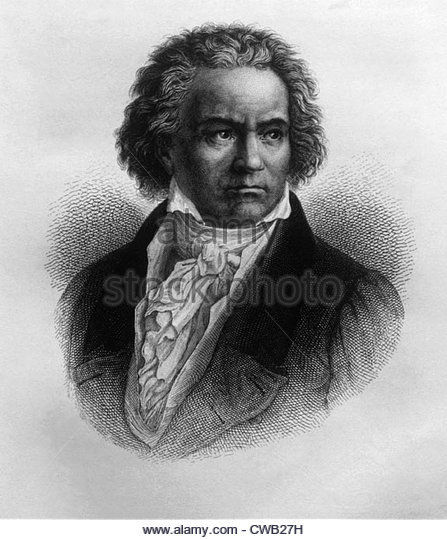
“Ludwig van Beethoven was of African descent, and the truth of his ethnic origins was covered up through a mixture of white powder worn on his face when out in public, the use of body doubles for portraits, and “euro-centric” historians, hiding the truth of his genetic heritage.“ – src
I’m mad that we aren’t taught this
This doesn’t get any truer, no matter how often it crosses my dashboard.
Jeanne de Clisson (1300-1359): the Lioness of Brittany
More historical details and footnotes up later today when I have more time. The short version is: we know she existed, that she led forces against France, that she became a pirate, and that she was protected by England. The extent of her feats varies greatly based on the telling – estimates of the length of her career as pirate range between five months and thirteen years! – but whatever the heck she actually did left quite an impression.
You know, this scene is so powerful to me that sometimes I forget that not everyone who watches it will understand its significance, or will have seen Casablanca. So, because this scene means so much to me, I hope it’s okay if I take a minute to explain what’s going on here for anyone who’s feeling left out.
Casablanca takes place in, well, Casablanca, the largest city in (neutral) Morocco in 1941, at Rick’s American Cafe (Rick is Humphrey Bogart’s character you see there). In 1941, America was also still neutral, and Rick’s establishment is open to everyone: Nazi German officials, officials from Vichy (occupied) France, and refugees from all across Europe desperate to escape the German war engine. A neutral cafe in a netural country is probably the only place you’d have seen a cross-section like this in 1941, only six months after the fall of France.
So, the scene opens with Rick arguing with Laszlo, who is a Czech Resistance fighter fleeing from the Nazis (if you’re wondering what they’re arguing about: Rick has illegal transit papers which would allow Laszlo and his wife, Ilsa, to escape to America, so he could continue raising support against the Germans. Rick refuses to sell because he’s in love with Laszlo’s wife). They’re interrupted by that cadre of German officers singing Die Wacht am Rhein: a German patriotic hymn which was adopted with great verve by the Nazi regime, and which is particularly steeped in anti-French history. This depresses the hell out of everybody at the club, and infuriates Laszlo, who storms downstairs and orders the house band to play La Marseillaise: the national anthem of France.
Wait, but when I say “it’s the national anthem of France,” I don’t want you to think of your national anthem, okay? Wherever you’re from. Because France’s anthem isn’t talking about some glorious long-ago battle, or France’s beautiful hills and countrysides. La Marseillaise is FUCKING BRUTAL. Here’s a translation of what they’re singing:
Arise, children of the Fatherland! The day of glory has arrived! Against us, tyranny raises its bloody banner. Do you hear, in the countryside, the roar of those ferocious soldiers? They’re coming to your land to cut the throats of your women and children!
To arms, citizens! Form your battalions! Let’s march, let’s march! Let their impure blood water our fields!
BRUTAL, like I said. DEFIANT, in these circumstances. And the entire cafe stands up and sings it passionately, drowning out the Germans. The Germans who are, in 1941, still terrifyingly ascendant, and seemingly invincible.
“Vive la France! Vive la France!” the crowd cries when it’s over. France has already been defeated, the German war machine roars on, and the people still refuse to give up hope.
But here’s the real kicker, for me: Casablanca came out in 1942. None of this was ‘history’ to the people who first saw it. Real refugees from the Nazis, afraid for their lives, watched this movie and took heart. These were current events when this aired. Victory over Germany was still far from certain. The hope it gave to people then was as desperately needed as it has been at any time in history.
God I love this scene.
not only did refugees see this movie, real refugees made this movie. most of the european cast members wound up in hollywood after fleeing the nazis and wound up.
paul heinreid, who played laszlo the resistance leader, was a famous austrian actor; he was so anti-hitler that he was named anenemy of the reich.ugarte, the petty thief who stole the illegal transit papers laszlo and victor are arguing about? was played by peter lorre, a jewish refugee. carl, the head waiter? played by s.z. sakall, a hungarian-jewwhose three sisters died in the holocaust.
even the main nazi character was played by a german refugee: conrad veidt, who starred in one of the first sympathetic films about gay men and who fled the nazis with his jewish wife.
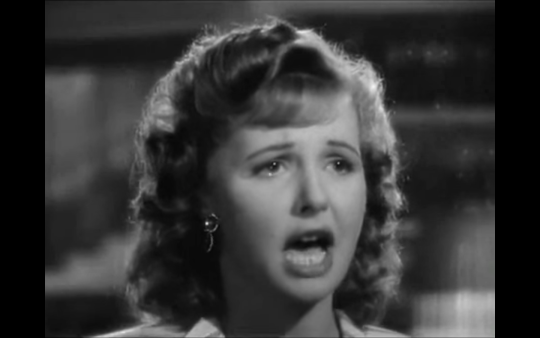
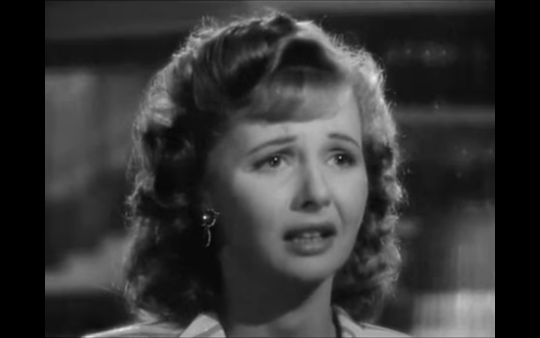
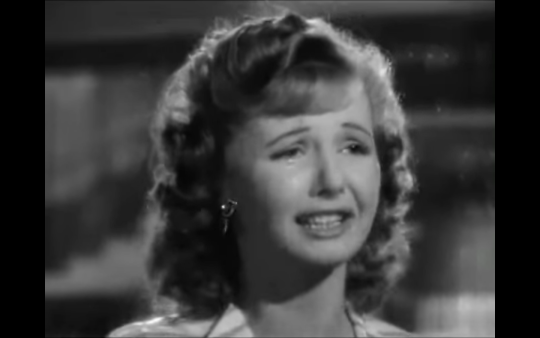
there’s one person in this scene that deserves special mention. did you notice the woman at the bar, on the verge of tears as she belts out la marseillaise? she’s yvonne, rick’s ex-girlfriend in the film. in real life, the actress’s name is madeleine lebeau and she basically lived the plot of this film: she and her jewish husband fled paris ahead of the germans in 1940. her husband, macel dalio, is also in the film, playing the guy working the roulette table. after they occupied paris, the nazis used his face on posters to represent a “typical jew.” madeleine and marcel managed to get to lisbon (the goal of all the characters in casablanca), and boarded a ship to the americas… but then they were stranded for two months when it turned out their visa papers were forgeries. they eventually entered the US after securing temporary canadian visas. marcel dalio’s entire family died in concentration camps.
go back and rewatch the clip. watch madeleine lebeau’s face.
casablanca is a classic, full of classic acting performances. but in this moment, madeleine lebeau isn’t acting. this isn’t yvonne the jilted lover onscreen. this is madeleine lebeau, singing “la marseillaise” after she and her husband fled france for their lives. this is a real-life refugee, her real agony and loss and hope and resilience, preserved in the midst of one of the greatest films of all time.
I remember when I first saw Casablanca, and being struck by this scene, and that was without knowing the history behind it or all that Madeleine Lebeau – and so many more refugees- had suffered.
Do yourself a solid and watch this film. Watch this scene. And most of all, remember refugees, the ones who lived then and especially the ones who live now.
I knew this movie, of course, it’s one of the mains from my mother’s list of movies you should see “At least once in a lifetime”, but I had never until now felt any desire to watch it.
It’s one of those movies where context and the (not so quite) subtle subtext are vitally important to understanding the importance of it, not only as a classic piece of film making (hokey old timey speech and all), but as a political and social commentary of the times, rooted fiercely in protest and a whole lot of “fuck you fascists”.
I never really got it until my father (raised by his Jewish grandmother who fled Austria with the clothes on her back and a single suitcase and swathes of dead loved ones left behind) sat me down and told me the full context of when the movie was made, what it was actually about and who it was made for.
It made his casual way of saying “here’s looking at you kid” whenever we skipped school to go to protest rallies (start of the Iraq war) all the more poignant for me. I just thought he was being an old man quoting the popular cult media from his youth. But it means so much more than that.
Cause here’s the thing about that iconic line from the end of the movie: you’ll find screeds and screeds of people talking about how he’s using it to flirt with her once last time and just how suave it is, alluding that it’s purely about her youth and beauty and his ever lasting love for her even though she’s married to someone else.
But that line? Had been in use for a good 50+ years prior to Casablanca gracing the screens. It’s a toast, a wish for your health. And the people watching would have known the significance of it, particularly the displaced Europeans knowing that they’ll likely never see their loved ones again.
Cause here’s looking at you kid– and the unspoken meaning behind it– one last time.
Rick isn’t just letting go of the love of his life in that scene. He’s using his position of power and privilege as an American with access to outside networks (predominantly crime related, but hey) to help her escape the country with her highly persecuted and sought after husband to a place of safety.
He had the option to just take her himself and run– and her husband even urges him to do so at one point. But Rick endeavors to get them both to safety, and he shows up armed to do so. He fights for their freedom even though he doesn’t have to. He goes from staunchly refusing to help them out of bitterness and cynicism, to realizing that if he doesn’t do something people are going to die. And he doesn’t just save the woman he loves, which would be oh so easy. He saves the man he hates too. Because he can, so he must.
The final scene ends with Renault (played by Claude Rains, an Englishman), head of the local police (and a character largely played for laughs), making the decision not to arrest Rick or anyone else involved when ordered to, actively defying the orders of a fascist. When he and Rick are walking away, he insinuates that he and Rick should join the French Resistance movement in
Brazzaville, and Rick again delivers the other iconic line from the movie: “Louis, I think this is the beginning of a beautiful friendship.”
Casablanca is about forging alliances in the face of tyranny. It’s about doing what is right, even though it goes against the law when the law is corrupt. It’s about being willing to give up your own liberties and comfort to preserve the things you love, even though it won’t directly benefit you. Hell, it might even kill you. But someone’s got to do it.
And yea, it’s old, it’s dated and a product of it’s time and it shows. There are times when the modern viewer will cringe and rightly so. But it was also incredibly out there for its time, when the world was going to absolute hell in a hand basket and it seemed like the walls were closing in, it held many important messages, but primarily: Resist.
So here’s looking at you, kids.
I did not watch the video, and read but a single, italicized word.
The sudden record scratch that sounded in my mind stilled all thought, as I realized
Somehow
Inexplicably
Through my entire childhood and (short) adult life
I had always thought
That Casablanca and Les Miserables were the same thing
A Pennsylvania museum has solved the mystery of a Renaissance portrait in an investigation that spans hundreds of years, layers of paint and the murdered daughter of an Italian duke.
Among the works featured in the Carnegie Museum’s exhibit Faked, Forgotten, Found is a portrait of Isabella de’Medici, the spirited favorite daughter of Cosimo de’Medici, the first Grand Duke of Florence, whose face hadn’t seen the light of day in almost 200 years.
Isabella Medici’s strong nose, steely stare and high forehead plucked of hair, as was the fashion in 1570, was hidden beneath layers of paint applied by a Victorian artist to render the work more saleable to a 19th century buyer.
The result was a pretty, bland face with rosy cheeks and gently smiling lips that Louise Lippincott, curator of fine arts at the museum, thought was a possible fake.
Before deciding to deaccession the work, Lippincott brought the painting, which was purportedly of Eleanor of Toledo, a famed beauty and the mother of Isabella de’Medici, to the Pittsburgh museum’s conservator Ellen Baxter to confirm her suspicions.
Baxter was immediately intrigued. The woman’s clothing was spot-on, with its high lace collar and richly patterned bodice, but her face was all wrong, ‘like a Victorian cookie tin box lid,’ Baxter told Carnegie Magazine.
After finding the stamp of Francis Needham on the back of the work, Baxter did some research and found that Needham worked in National Portrait Gallery in London in the mid-1800s transferring paintings from wood panels to canvas mounts.
Paintings on canvas usually have large cracks, but the ones on the Eleanor of Toledo portrait were much smaller than would be expected.
Baxter devised a theory that the work had been transferred from a wood panel onto canvas and then repainted so that the woman’s face was more pleasing to the Victorian art-buyer, some 300 years after it had been painted.
Christ men have been Photoshopping women to make us more “pleasing” since for-fucking-ever.
Also, Isabella de’Medici is nice looking, but also has that look in her eye of all Medicis: “I haven’t yet decided whether I’m going to kick your ass, buy you and everything you own, or have sex with you. Perhaps all three.”
Yet another example of why art restoration is SO IMPORTANT.
miss me with that ‘weapon accuracy’ shit. im shooting everything. im laying down cover fire. im shooting the walls. im shooting my teammates. im shooting myself. my accuracy is 100% yall just dont know what im aiming at
I didn’t even read the rest because I’m still laughing at “miss me with that ‘weapon accuracy’ shit” like I’ve never read a more perfect phrase in my life
Fun fact: during the Revolutionary War, the British HATED American soldiers’ fighting methods. Why? Because Americans aimed. We’ve all heard of the battle of Bunker Hill and how the soldiers were instructed not to shoot until they saw the whites of the enemies’ eyes, but did you know that the British military’s battle plan was essentially to spray as many musket balls as they could all over the enemy? Troops were told to just aim in the general direction of the opposing army and shoot, and the British thought that Americans aiming their weapons was a savage and uncivilized form of combat.
The British sound like me when I play Overwatch and the enemy hitscan players kill me more than once
the american army had been trained by a german guy who added the ‘aim’ in ‘ready, aim, fire’, and literally wrote a book about ‘how to be better at soldiering then the brittish who think its all about pressed uniforms and standing in neat lines’
the other side of aiming- they thought it was unfair that half the american soldiers would intentionally try and hit the brittish officers, who had distinctive uniforms and were often sitting on a horse so they were stupid easy to pick out of a crowd. quite probably the most obvious thing you could do in a fight
#how the fuck did britain conquer 97% of the world
we were lucky enough to have a lot of easily accessible coal to kickstart our industrial revolution. Side note, “old mining village” is equal to “poor people” here
I didn’t know Mr. T pityed fool’s that weren’t woke, but that’s awesome. #respect
“I think about my father being called ‘boy’, my uncle being called ‘boy’, my brother, coming back from Vietnam and being called ‘boy’. So I questioned myself:“What does a black man have to do before he’s given the respect as a man?” So when I was 18 years old, when I was old enough to fight and die for my country, old enough to drink, old enough to vote, I said I was old enough to be called a man. I self-ordained myself Mr. T so the first word out of everybody’s mouth is “Mr.” That’s a sign of respect that my father didn’t get, that my brother didn’t get, that my mother didn’t get.“
Seventeen years ago, ice rinks in Kazakhstan were only opened in the winter, because they were all outdoors. And let me tell you, it gets pretty cold in Kazakhstan in the winter. That’s one reason why we have lots and lots of real snow. Eventually, the first shopping mall in Kazakhstan was built, and included an indoor skating rink. For the first time, we didn’t have to wear snowsuits to practice ice skating. In those first years, I didn’t even have competition ice skates. I had a pair of old side skates with no support at all for jumps. To make them better, my Dad cut plastic water bottles in half, and attached them to each side so I could actually do jumps. Then, at age 8, I attended my first international competition in Omsk, Russia. It took us 3 days to get there by train. I was still wearing my plastic water bottle skates, I trained in a shopping mall, and I had little to no professional coaching. Yet, there I was competing in the qualifying round. I remember being amazed to even be there. But I also remember being ashamed of my skates, commpared to the Russian kids’ skates. And guess what? I won the competition, and the rest as they say is history. This is a long way to explain why Almaty 2022 is important to me and for Kazakhstan. Today is not seventeen years ago, but we still need better resources to develop our young athletes. So, why am I telling you all of this? Why is my story important? It is important because it is a real example of what our country can achieve in winter sports and what the whole region is capable of if we have the right resources and opportunities. That is the reason I agreed to participate in this campaign. I am not here for myself. I’m already living my Olympic dream. I am here for thousands of young Kazakh athletes dreaming their own Olympic dreams. And I am also here for that little kid out there, alone, skating around somewhere on a frozen lake, with skates supported by plastic water bottles.





 wupacing