For real tho. He was hands down murdered by the police. A lot of notable figures from Ferguson were found dead in the same manner and police labeled them all suicides which ,as we all know, is complete and utter bullshit.
If we could get statues of anyone it really is Edward Crawford. If I can get in contact with a sculptor or some shit with permission from Crawford’s family I will set up the Fund Page in a heart beat.
Omg he died!?!
Like they said, Edward died in a suspicious manner similar to several other notable protestors officially ruled a suicide and here’s some links:
Oh my god that’s heartbreaking, I don’t think I even heard about his death. Or if I did it was drowned out by all the other murders by the police. God this is heartbreaking. That photo of him made me cry when I first saw it, it was so moving. Rest In Power, Edward Crawford.
So the story behind this song, is heart breaking and heart warming at the same time. Brian May, the guitarist for Queen, wrote this song for the 1991 Queen album Innuendo. The song was written about how even though Freddie Mercury was slowly dying from AIDS, he was still doing shows, writing, and making music with the band. When they were recording the song, they were worried the Freddie would not have had the strength to do the vocals, because it was getting much worse, and was bed ridden, but he recorded it, and killed it. There will be no one like Freddie Mercury. I don’t care what anyone says, Queen was and still is the best band ever to exist.
The Show Must Go On by Queen
“I’ll fucking do it, darling” he said and killed it in a single take that’s something you need to remember. This is a song that was a single continuous take for his vocals. No misses. No re-records. Not on this, not for Freddie.
Charlotte Morabito “As Ireland goes #hometovoteto #RepealThe8thtoday, please remember Savita Halappanavar who died of sepsis after being denied an abortion for a pregnancy even after doctors said miscarriage was inevitable. Her death was a catalyst for this referendum. She was 31.
it’s Asian American and Pacific Islanders heritage month and that means reminding everyone that America stole Hawaii for sugar money, forced Japanese ppl in internment camps, exploited Chinese workers while also denying them entry and set south east asia for fuckery w their imperialism 🙂
and atomic bombed Japan even after they surrendered, split Korea in two, and bombed the entire country of Laos secretly(but were exposed) and so thoroughly that avoiding bombs is a part of the school curriculum for children in Laos still To This Day
People who say bi erasure doesn’t happen need to realize Freddie Mercury is known as the most famous homosexual man when he identified himself as bisexual. If that’s not bi erasure I don’t even know.
Also PoC erasure, most people don’t know he was 100% Indian
Specifically he was Parsi. Also raised Zeroastrian.
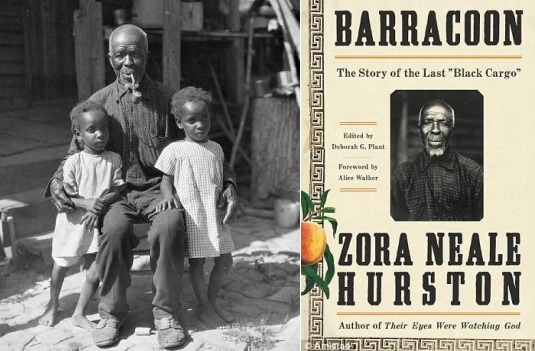
Cudjo Lewis, who was born as Kossola, was nearly 90 years old and living in Plateau, Alabama. He was thought to be the last African man alive who had been kidnapped from his village in West Africa in 1859 and forced into slavery in America aged 19.
Hurston, who was an anthropologist, documented her interviews with Lewis during the late 1920s and wrote a book in his own words about his life titled, ‘Barracoon: The Story of the Last ‘Black Cargo’.
But the manuscript she wrote was turned down by multiple publishers in 1931 who felt as though Lewis’s heavily accented dialect was too difficult to read.
For decades, Hurston’s manuscript of the book was tucked away inside Howard University’s archives until The Zora Neale Hurston Trust found a buyer for the book – more than 50 years after her death in 1960. On Tuesday, May 8, 2018. ‘Barracoon: The Story of the Last ‘Black Cargo’,’ was published by Amistad/HarperCollins.
Of her time spent with Lewis, Hurston wrote in a letter to her friend, fellow Harlem Renaissance author and poet Langston Hughes, that the experience left her deeply moved, according to her biography, ‘Wrapped in Rainbows: The Life of Zora Neale Hurston’ by author Valerie Boyd.
‘Tears welled in his eyes as he described the trip across the ocean in the Clotilda,’ Hurston wrote, as cited in Boyd’s biography.
‘But what moved Hurston most about the old man — whom she always called by his African name, Kossola — was how much he continued to miss his people back in Nigeria. ‘I lonely for my folks,’ he told her.
‘After seventy-five years he still had that tragic sense of loss…That yearning for blood and cultural ties. That sense of mutilation. It gave me something to feel about.’
One of the most powerful moments I experienced as an ancient history student was when I was teaching cuneiform to visitors at a fair. A father and his two little children came up to the table where I was working. I recognised them from an interfaith ceremony I’d attended several months before: the father had said a prayer for his homeland, Syria, and for his hometown, Aleppo.
All three of them were soft-spoken, kind and curious. I taught the little girl how to press wedges into the clay, and I taught the little boy that his name meant “sun” and that there was an ancient Mesopotamian God with the same name. I told them they were about the same age as scribes were when they started their training. As they worked, their father said to them gently: “See, this is how your ancestors used to write.”
And I thought of how the Ancient City of Aleppo is almost entirely destroyed now, and how the Citadel was shelled and used as a military base, and how Palmyran temples were blown up and such a wealth of culture and history has been lost forever. And there I was with these children, two small pieces of the future of a broken country, and I was teaching them cuneiform. They were smiling and chatting to each other about Mesopotamia and “can you imagine, our great-great-great-grandparents used to write like this four thousand years ago!” For them and their father, it was more than a fun weekend activity. It was a way of connecting, despite everything and thousands of kilometres away from home, with their own history.
This moment showed me, in a concrete way, why ancient studies matter. They may not seem important now, not to many people at least. But history represents so much of our cultural identity: it teaches us where we come from, explains who we are, and guides us as we go forward. Lose it, and we lose a part of ourselves. As historians, our role is to preserve this knowledge as best we can and pass it on to future generations who will need it. I helped pass it on to two little Syrian children that day. They learnt that their country isn’t just blood and bombs, it’s also scribes and powerful kings and Sun-Gods and stories about immortality and tablets that make your hands sticky. And that matters.

 wupacing