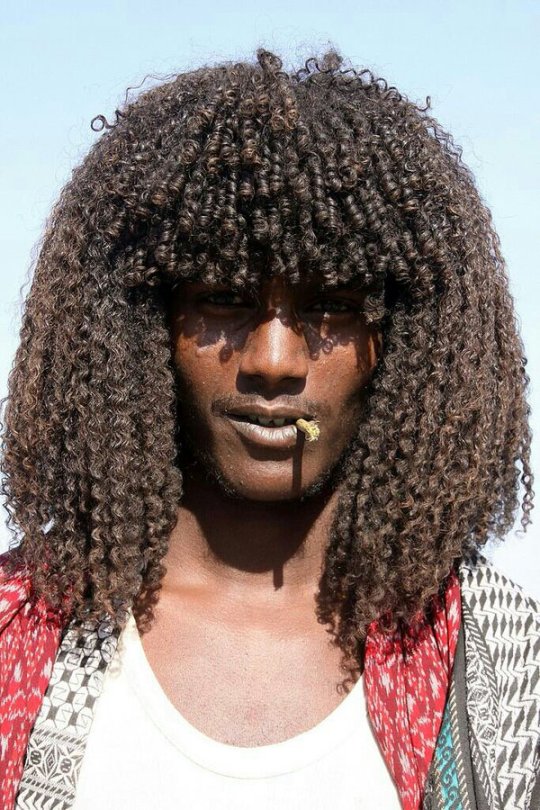
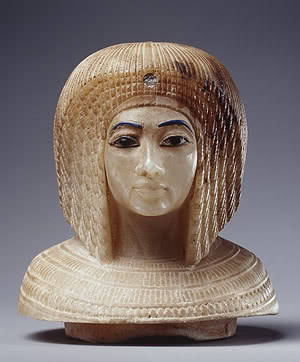
do you want to know something?? I always wondered what the hell kind of hairstyle the Ancient Egyptians were trying to portray with depictions like these
and this
until I did my hair this morning and
oh
welp
you can take the noses off our statues but until you find a way to take Egypt out of Africa we’re still going to find ourselves
I’m reblogging this post without all the salty, racist commentary because I’m sick of looking at it. please spread this around again in its pure form for posterity.
What’s funny is that white people thought they were hats/crowns 😂
And here’s some pictures of the Afar people, who still live on the horn of Africa today.
Cool, huh?
Beautiful
People thought it was Hats and Crowns? How could they not see hair?
The same reason archaeologists, upon finding a woman’s skeleton in the grave of a famous Roman gladiator, immediately wondered where the gladiator’s skeleton was: Old Straight White Man™ brand denial.
Same way they denied the Really Gay Egyptian Tomb, too. It’s kind of a Thing.
This post is amazing, I’m so glad it exists. I have learned.
There is so much greatness in this post and all white people care about is defending why they thought the depictions are hats. White people??? Why are you like this???
I’m salty as fuck that we were taught they were crowns at SCHOOL. For Christ sake.
I’m so pissed because we are taught that they are crowns in school
What I think is really interesting about the papyrus account of the workers building the tomb of Rameses III going on strike to demand better wages is really fascinating to me because if you look at the description given by the royal scribe you see that there was an attempt to satisfy the workers by bringing a large amount of food at once but that was rebuffed by the workers who declared that it wasn’t just that they were hungry at the moment but had serious charges to bring that “something bad had been done in this place of Pharoah” (is poor wages and mistreatment). They understood themselves as having long term economic interests as a -class- and organized together knowing that by doing so they could put forward their demands collectively. It so strongly flies in the face of narratives that are like “in this Time and Place people were happy to be serve because they believed in the God-King and maybe you get some intellectual outliers but certainly no common person questioned that”. If historical sources might paint that sorta picture of cultural homogeneity it is because those sources sought not to describe something true but invent a myth for the stability of a regime.
Since this is getting notes here’s a link to a translation of the papyrus scroll and here’s an article that gets further into the economic situation surrounding the strike and giving an explanation of the events. The workers didnt just refuse to construct Rameses III’s future tomb, they actually occupied the Valley of the Kings and were preventing anyone from entering to perform rituals or funerals. Basically they set up the first ever recorded picket line
Again the workers went on strike, this time taking over and blocking all access to the Valley of the Kings. The significance of this act was that no priests or family members of the deceased were able to enter with food and drink offerings for the dead and this was considered a serious offense to the memory of those who had passed on to the afterlife. When officials appeared with armed guards and threatened to remove the men by force, a striker responded that he would damage the royal tombs before they could move against him and so the two sides were stalemated.
Eventually the tomb workers were able to win the day and acquire their demands and actually set a precedent for organized labor and strikes in Egyptian society that continued for a long time
The jubilee in 1156 BCE was a great success and, as at all festivals, the participants forgot about their daily troubles with dancing and drink. The problem did not go away, however, and the workers continued their strikes and their struggle for fair payment in the following months. At last some sort of resolution seems to have been reached whereby officials were able to make payments to the workers on time but the dynamic of the relationship between temple officials and workers had changed – as had the practical application of the concept of ma’at – and these would never really revert to their former understandings again. Ma’at was the responsibility of the pharaoh to oversee and maintain, not the workers; and yet the men of Deir el-Medina had taken it upon themselves to correct what they saw as a breach in the policies which helped to maintain essential harmony and balance. The common people had been forced to assume the responsibilities of the king.
[…]
The success of the tomb-worker/artisan strikes inspired others to do the same. Just as the official records of the battle with the Sea Peoples never recorded the Egyptian losses in the land battle, neither do they record any mention of the strikes. The record of the strike comes from a papyrus scroll discovered at Deir el-Medina and most probably written by the scribe Amennakht. The precedent of workers walking away from their jobs was set by these events and, although there are no extant official reports of other similar events, workers now understood they had more power than previously thought. Strikes are mentioned in the latter part of the New Kingdom and Late Period and there is no doubt the practice began with the workers at Deir el-Medina in the time of Ramesses III.
Pair of ancient Egyptian rings (gold with glass, lapis lazuli, and carnelian inlay) depicting lotus flowers. Artist unknown; ca. 1400-1200 BCE (18th or 19th Dynasty, New Kingdom). Now in the Walters Art Museum, Baltimore. Photo credit: Walters Art Museum.
A small fat bird, like the above, is the hieroglyph used in Ancient Egyptian to mean “wicked” or evil”.
The phrase above him (the inscription should be read from the top down) is “Nb s3″ or “Lord of the son of”. Genitive is usually implied in this sort of phrase without a connecting word, meaning:
This birb has literally created the sentence and declared himself “ Lord of the Son of Evil”
God dammit, I realised I made a mistake doing this from memory- the first sign is “k” for “your”, not “nb” for “lord”. So this birb has declared himself “your evil son”, not “the lord of the son of evil”. Which is not quite as dramatic, but still very menacing. You go bird.
This little statuette, excavated in 1910 from the tomb of nomarch Senbi II at Meir, in Egypt, has become the beloved unofficial mascot of the Met. It was made during the 12th dynasty, between 1961 BCE and 1878 BCE. Just 11.2 cm tall, and 20 cm long, little William is painted blue faience and decorated with images of lotus flowers, buds, and leaves to symbolize regeneration.
He wasn’t just a cute figurine though. To the ancient Egyptians, hippos were powerful and dangerous man-killers. Perhaps that is why he was found with just one leg, to mitigate the damage he could do in the afterlife; the rest of the legs you see are modern add-ons.
Dude, don’t make it sound like this was some quaint Egyptian belief: hippos ARE powerful and dangerous man-killers. Unfortunately there’s no International Bureau of Animal Murder so nobody is really collecting statistics on this; most evidence is anecdotal and while news reports cite numbers from 500 to 2800 deaths per year by hippo, I can’t find any actual source for these numbers.
Hippos forage on land at night (where they do not defend territory, for the record) but they are mainly amphibious and their homes are rivers. They are typically not taller than human height, and they don’t actually swim well, so their homes are specifically near the shore, where they can walk or push themselves along the bottom with their nostrils above the surface. It’s hardly surprising then, that any African society or community that relies on rivers for water, food, or transportation is going to be wary of hippos.
That includes ancient Egyptians, who needed the Nile for all three. The fertility goddess Tawaret was the patroness of hippos, and hippos were also sometimes seen as symbolizing rebirth. Perhaps not coincidentally, she is one of the consorts of Set, a chaos deity who is sometimes depicted as a hippo, particularly in religious rituals that celebrated the defeat of Set by Horus. Ancient Egyptian society had a complicated relationship with these giant animals that ate their crops and could turn murderous in an instant, overturning boats and killing people; small wonder hippos became a symbol for a god of chaos. Egyptians seem to have admired hippos for their fierce protection of their young, but also to respect the strength and power of an animal that could absolutely fuck their shit up if the mood took it.
today i learnt that king tutankhamun made sure that he had a condom with him in his next life. i never want to hear a dude say he didn’t have the time to be prepared or didn’t remember to buy condoms. if king tut had the common decency of making sure someone put a condom in his resting place alongside one of the biggest treasures ever so he could practice safe sex in the afterlife no present day dude has an excuse for not wearing condoms.
here it is
it’s made of animal intestine
and they know it was his because they found residue inside that they were able to DNA-match to him
yes, that kind of residue
My mans Tutankhamun was already busting a nut when Osiris was measuring his soul to go see his ol man Ra like imagine having such guts.




 wupacing