IF IT HAS BEEN A VERY LONG DAY, YOU ARE ‘WEARY’. IF SOMEONE IS ACTING IN A WAY THAT MAKES YOU SUSPICIOUS, YOU ARE ‘WARY’.
ALL IN ‘DUE’ TIME, NOT ‘DO’ TIME
‘PER SE’ NOT ‘PER SAY’
THANK YOU
BREATHE – THE VERB FORM IN PRESENT TENSE
BREATH – THE NOUN FORM
THEY ARE NOT INTERCHANGEABLE
WANDER – TO WALK ABOUT AIMLESSLY
WONDER – TO THINK OF IN A DREAMLIKE AND/OR WISTFUL MANNER
THEY ARE NOT INTERCHANGEABLE (but one’s mind can wander)
DEFIANT – RESISTANT DEFINITE – CERTAIN
WANTON – DELIBERATE AND UNPROVOKED ACTION (ALSO AN ARCHAIC TERM FOR A PROMISCUOUS WOMAN)
WONTON – IT’S A DUMPLING THAT’S ALL IT IS IT’S A FUCKING DUMPLING
BAWL- TO SOB/CRY
BALL- A FUCKING BALL
YOU CANNOT “BALL” YOUR EYES OUT
AND FOR FUCK’S SAKE, IT’S NOT “SIKE”; IT’S “PSYCH”. AS IN “I PSYCHED YOU OUT”; BECAUSE YOU MOMENTARILY MADE SOMEONE BELIEVE SOMETHING THAT WASN’T TRUE.
THANK YOU.
*slams reblog*
IT’S ‘MIGHT AS WELL’. ‘MIND AS WELL’ DOES NOT MAKE GRAMMATICAL SENSE.
Getting away from the homophones, another thing I need to mention:
LOSE – when you don’t win, or if you have lost something
LOOSE – the opposite of tight.
If you lose weight, then your pants may be loose.
homie, those are homophones
No, lose has a harsher “s” sound, more like a /z/. BUT ANYWAY CHOCKING IS NOT WHAT HAPPENS WHEN YOU CAN’T BREATHE, YOU’RE CHOKING.
I’m also amused when people mess up phrases like “for all intensive purposes” which is supposed to be “for all intents and purposes”. This is why enunciation is important. If people only ever hear these, not read them, they’re so easy to get wrong.
With bated breath. As in: With breath abated or held.
Not “with baited breath”, like a raccoon that has raided a fishing cooler.
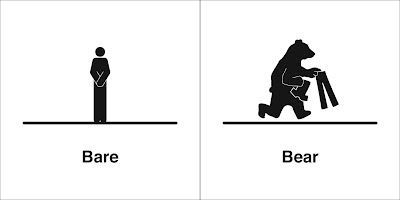
you BEAR heavy things, including the metaphorical weight of having children.
you BARE by uncovering something, like your body or your soul.
YOU DO NOT “BARE” CHILDREN UNLESS YOU’RE GETTING THEM READY FOR A BATH OR SOMETHING.
Meanwhile, “utter” works for the first (e.g., “you utter floorboard”) but somehow “utterly” doesn’t seem to work as well for the second (“I was utterly floorboarded”).
Utterly doesn’t work for drunk because it’s the affix for turning random objects into terms for *shocked*, obviously.
… huh. I thought that might just be the similarity to “floored”, and yet “I was utterly coat hangered” does seem to convey something similar.
I have to tell you, I am utterly sandwiched at this discovery.
Completely makes the phrase mean “super tired”.
“God, it’s been a long week, I am completely coat-hangered.”
Something is
Something is wrong with our language
Is it a glitch or a feature?
Feature
this neat feature is called collocative substitution, and it occurs when certain words are strongly linked to certain context and/or phrases. when you read/hear a pair of words that usually wouldn’t go together, your brain fills in the context with what would normally be inferred, given the originally phrased pairing. thus, finding out that there’s a term for this phenomenon may indeed leave you utterly sandwiched. lesser known or less strongly linked phrases and pairings may not be able to translate substituted words to appropriately fit the inferred context, so you were not utterly floorboarded at the club last night, but rather you were absolutely floorboarded, and as this explanation continues to drag on, you may by the end of it find yourself completely coathangered from read it all.
I, like all linguists I have met or even heard of, have a deep intricate love-hate relationship with the English Language because of complete and total coathangering like this
how did they learn to translate languages into other languages how did they know which words meant what HOW DID TH
English Person: *Points at an apple* Apple
French Person: Non c’est une fucking pomme
*800 years of war*
Fun fact: There are a lot of rivers in the UK named “avon” because the Romans arrived and asked the Celts what the rivers were called. The Celts answered “avon.”
“Avon” is just the Celtic word for river.
Fan Fact #2: When Spanish conquistadors landed in the Yucatán peninsula, they asked the natives what their land was called and they responded “Yucatán”. In 2015, it was discovered that in those mesoamerican languages, “Yucatán” meant “I don’t understand what you are saying”
W H E E Z E
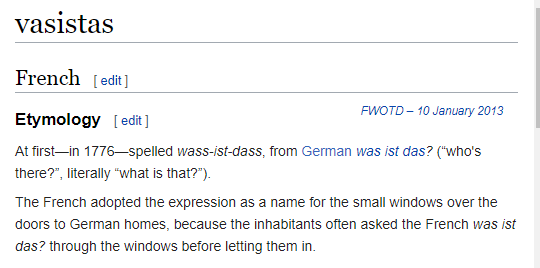
I love entomology so much because so many words kind of happened by accident or by a native speaker trying to say “WTF are you saying?“
i was speaking to a customer in Japanese once at work and my coworker overheard me and later in the break room he said to our other coworkers “man Andrew was over there speakin Naruto”
This doesn’t discuss the 13 missing letters from Old English, which to me is an oversight since they were in fact, part of English as a whole. “&” for example was a letter.
look man im a native english speaker and i’ve been mispronouncing a crap ton of words because i never looked up the pronunciation for any of them but if you make fun of how a foreigner pronounces an english word either because of their accent or having never heard that word before i will fucking fight you because english has shitty pronunciation rules and none of them make sense fuck off
So you know what I don’t get? Why people repeat words. (x)
Grammar time: it’s called “contrastive reduplication,” and it’s a form of intensification that is relatively common. Finnish does a very similar thing, and others use near-reduplication (rhyme-based) to intensify, like Hungarian (pici ‘tiny’, ici-pici ‘very tiny’).
Even the typologically-distant group of Bantu languages utilize reduplication in a strikingly similar fashion with nouns: Kinande oku-gulu ‘leg’, oku-gulu-gulu ‘a REAL leg’ (Downing 2001, includes more with verbal reduplication as well).
I suppose the difficult aspect of English reduplication is not through this particular type, but the fact that it utilizes many other types of reduplication: baby talk (choo-choo, no-no), rhyming (teeny-weeny, super-duper), and the ever-famous “shm” reduplication: fancy-schmancy (a way of denying the claim that something is fancy).
screams my professor was trying to find an example of reduplication so the next class he came back and said “I FOUND REDUPLICATION IN ENGLISH” and then he said “Milk milk” and everyone was just “what?” and he said “you know when you go to a coffee shop and they ask if you want soy milk and you say ‘no i want milk milk’” and everyone just had this collective sigh of understanding.
Another name for this particular construction is contrastive focus reduplication, and there’s a famous linguistics paper about it which is commonly known as the Salad Salad Paper. You know, because if you want to make it clear that you’re not talking about pasta salad or potato salad, you might call it “salad salad”. The repetition indicates that you’re intending the most prototypical meaning of the word, like green salad or cow’s milk, even though other things can be considered types of salad or milk.
Can I make love to this post?… Is that a thing that’s possible?
Can we please recognize that “fancy-shmancy” and the rest of the
“ever-famous “shm” reduplication" came into English usage through Yiddish. Thank you



 wupacing