Ancient moon priestesses were called virgins. ‘Virgin’ meant not married, not belonging to a man – a woman who was ‘one-in-herself’. The very word derives from a Latin root meaning strength, force, skill; and was later applied to men: virle. Ishtar, Diana, Astarte, Isis were all all called virgin, which did not refer to sexual chastity, but sexual independence. And all great culture heroes of the past, mythic or historic, were said to be born of virgin mothers: Marduk, Gilgamesh, Buddha, Osiris, Dionysus, Genghis Khan, Jesus – they were all affirmed as sons of the Great Mother, of the Original One, their worldly power deriving from her. When the Hebrews used the word, and in the original Aramaic, it meant ‘maiden’ or ‘young woman’, with no connotations to sexual chastity. But later Christian translators could not conceive of the ‘Virgin Mary’ as a woman of independent sexuality, needless to say; they distorted the meaning into sexually pure, chaste, never touched. —Monica Sjoo
Casual reminder that “virgin” in the modern/Christian sense of the word is literally a complete bullshit, made-up social construct, arbitrarily given a negative connotation.
how did they learn to translate languages into other languages how did they know which words meant what HOW DID TH
English Person: *Points at an apple* Apple
French Person: Non c’est une fucking pomme
*800 years of war*
Fun fact: There are a lot of rivers in the UK named “avon” because the Romans arrived and asked the Celts what the rivers were called. The Celts answered “avon.”
“Avon” is just the Celtic word for river.
Fan Fact #2: When Spanish conquistadors landed in the Yucatán peninsula, they asked the natives what their land was called and they responded “Yucatán”. In 2015, it was discovered that in those mesoamerican languages, “Yucatán” meant “I don’t understand what you are saying”
W H E E Z E
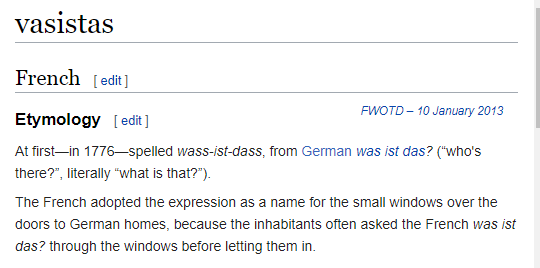
I love entomology so much because so many words kind of happened by accident or by a native speaker trying to say “WTF are you saying?“
This doesn’t discuss the 13 missing letters from Old English, which to me is an oversight since they were in fact, part of English as a whole. “&” for example was a letter.
Yep! This is called rebracketing. Another famous example would be “-burger”: the original food item is named after the German city, [Hamburg]+[er], but got semantically reinterpreted as [ham]+[burger]. Now it’s used as a suffix indicating a type of sandwich.

 wupacing