(Hey, not sure if you’re a continuation of the previous ask, or a separate thing? Regardless I wrote this to tack onto that one, but decided if you are separate, you should have yours answered separate. There is, though, wayyyy more information on the grieving/acknowledgement factor in my previous ask if you want to read that as well.)
In reference to acknowledging her death, that’s in the previous ask with the Machine and the team’s determination to finish the mission. They put their 110% effort into getting what Root always wanted. I think that’s the way they come to terms with this, and for a group of people who have no true identity outside of the world and no real way to share their feelings with the world, this is their grand gesture. Their ode to Root.
Root did not die alone.
I firmly believe that Root did not die alone. I mean, technically, if you want to point out that no one was there at the exact second of her last breath… maybe? The Machine is always in her ear, the Machine was even back to talking at that point and warned Root about the sniper. In her final moments, the Machine was at her side. I can’t speak for a scene that they didn’t show, but if I had to guess, I don’t think the Machine left Root with radio static.
Additionally, and the point that I’m getting at, dying alone really means to die with no one. Root had a team of people. When I see dying alone, I think Citizen Kane. A man who died without anyone in his life to remember and cherish him. At his death, he had the understanding that there was no one there for him in a sense of love, not a sense of physical proximity. When Root died, she was on good terms with Harold, good terms with John, good terms with Fusco, good terms with Shaw, and good terms with the Machine. She and Harold rarely saw eye-to-eye as they were in the final moments in the car, and John and Fusco are like the big brothers that she knows care about her despite any teasing or hard outer exterior. And she had Shaw, alive and well, back from being captured and with not only the promise of maybe someday, but the understanding that, while they weren’t a “couple” so to speak, they were something. They were something that Shaw cared about. And that always good enough for Root.
Root was alone the majority of her life. But I will never believe, for one second, that she died alone. She died knowing that there were people out there who cared, and who were doing everything they could to fight for her cause, and that she would be remembered beyond that ambulance or that hospital bed. There’s a difference between lonely and alone, and after joining the team, Root was never alone.
My 4 year old nephew loves to paint his nails. Any time he sees someone wear nail polish he asks if he can have some too. The most difficult part is getting him to decide what color, because he he wants all of them.
Nail polish is for everyone.
Update!!
The kid’s favorite football player responded with support.
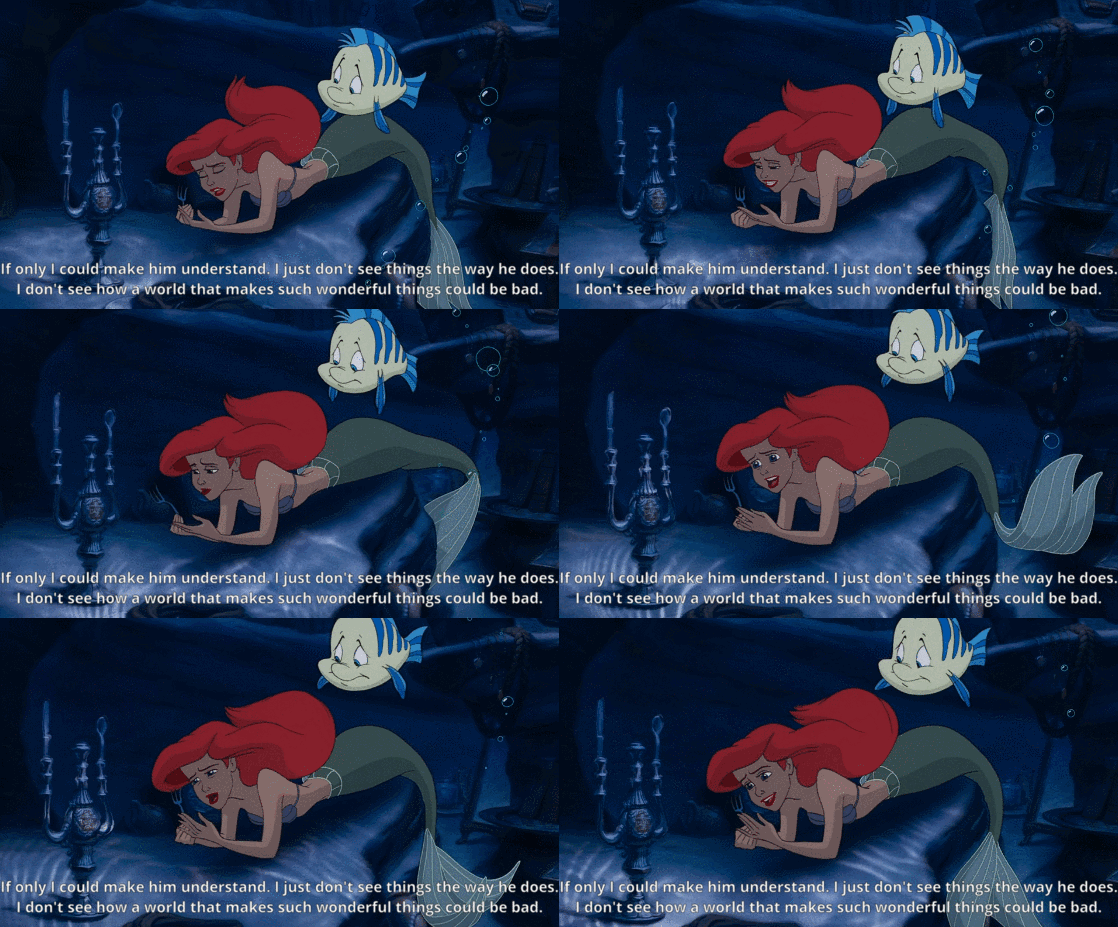
Since childhood, Ariel has been among my favorite Disney princesses. I connect with her deeply – and whenever someone (like Keira Knightley recently) brings up the old line that she is a ‘bad role model’ for young girls because she ‘gives up her voice for a man,’ my heart breaks.
That reading of Ariel’s character is reductive and inaccurate.
Everyone always mentions that Ariel was interested in the human world before meeting Eric, but not as many people point out how radical that makes her in the context of her own society.
Ariel lives in a society that is xenophobic towards humans, Triton at various points calls them “barbarians,” “savage,” and “incapable of any real feeling.” She lives in a society that constantly tells her that her interest in the human world is wrong and bad, something she struggles with at the start of Part of Your World:
By seeking a fuller understanding of the human world, Ariel actively challenges her father’s xenophobia, thinking for herself instead of accepting her society’s fears and prejudices.
The film goes out of its way to establish Ariel as an outsider within her own society. Think for a moment about the opening lines of Part of Your World:
Look at this stuff. Isn’t it neat? Wouldn’t you think my collection’s complete? Wouldn’t you think I’m the girl The girl who has everything? Look at this trove, Treasures untold How many wonders can one cavern hold? Lookin’ around here you’d think Sure, she’s got everything…
People who criticize Ariel so often mis-characterize her as simply a spoiled teenager. The very statement, “She gave up her voice for a man!” implies she’s a foolish girl who throws her life and agency away in a fit of pique.
Yet, the opening of Part of Your Worldanticipates that certain members of the audience will have a superficial understanding of Ariel’s pain and directly addresses that. On a superficial level, Ariel does seem like “the girl who has everything.” She is the daughter of the most important merman in Atlantica, she has countless treasures hidden away in her grotto…
But that’s the thing, you see. They’re hidden in her grotto. Ariel may be the daughter of the sea-king, but the sea-king hates and fears humanity. Part of Your World is the most heartbreaking rebuttal to anyone who sees Ariel as a shallow teenager because it shows how alone she truly is. Except for Flounder, she has no one under the sea she can genuinely confide in. (She confides in Sebastian, of course, but he was sent by her father to spy on her and he does betray her trust
– by mistake, but he does). Her sisters and the rest of Atlantica presumably do not question the prejudices that cause the human world to be forbidden to the sea folk.
Ariel is an outcast, forced to hide who she is from the people who should love her unconditionally.
The more Part of Your World goes on, the more devastating and resonant Ariel’s collection of artifacts becomes.
These artifacts represent a void in her life and, at the same time, are the only means she has of filling that void.
She longs to have knowledge, but her society imposes ignorance on her. She longs to see the human world herself, to ask questions and finally be answered – but it is all denied her. The imposed ignorance forces her to live vicariously through the artifacts she collects.
She cannot see a couple dancing, so she must content herself with a music box.
She can only experience the shadow of fire on oil and canvas.
Her collection perpetually reminds her that there is a world beyond her reach. At the same time, it is her central way of interacting with that world. Yes, she can go up to to the surface and talk to Scuttle, but her collection is something so much more personal. These are items she saved from the ruins of ships, sometimes at the risk of her own life… so she could study them, learn from them, and lament the unjust rules of her society that prevent her from learning more…
Her courage, her curiosity, her thirst for knowledge are all bound up in these precious possessions.
And yes, they are objects. Yes, she wants more than a collection of objects. But this collection is all she has. And, as far as Ariel knows, it is all she will ever have…
When you’re all but alone in the world and you have only meager scraps to cling to, those scraps mean the world to you.
And, I remind you, Ariel cannot even openly enjoy her collection of scraps, the shadows of a world she cannot touch. She has to hide even them, guard them, keep them secret.
Ariel’s grotto is a place of solace and security where she can be herself without fear of judgment.
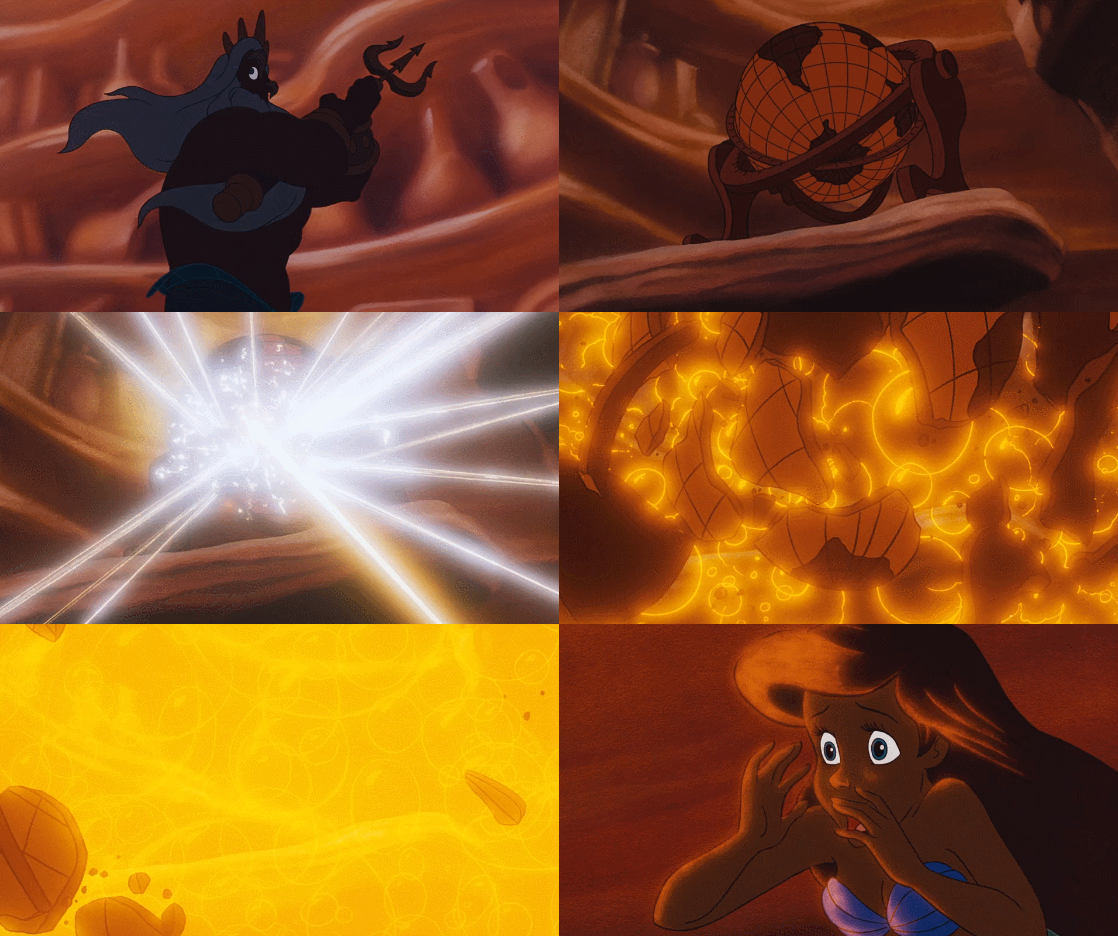
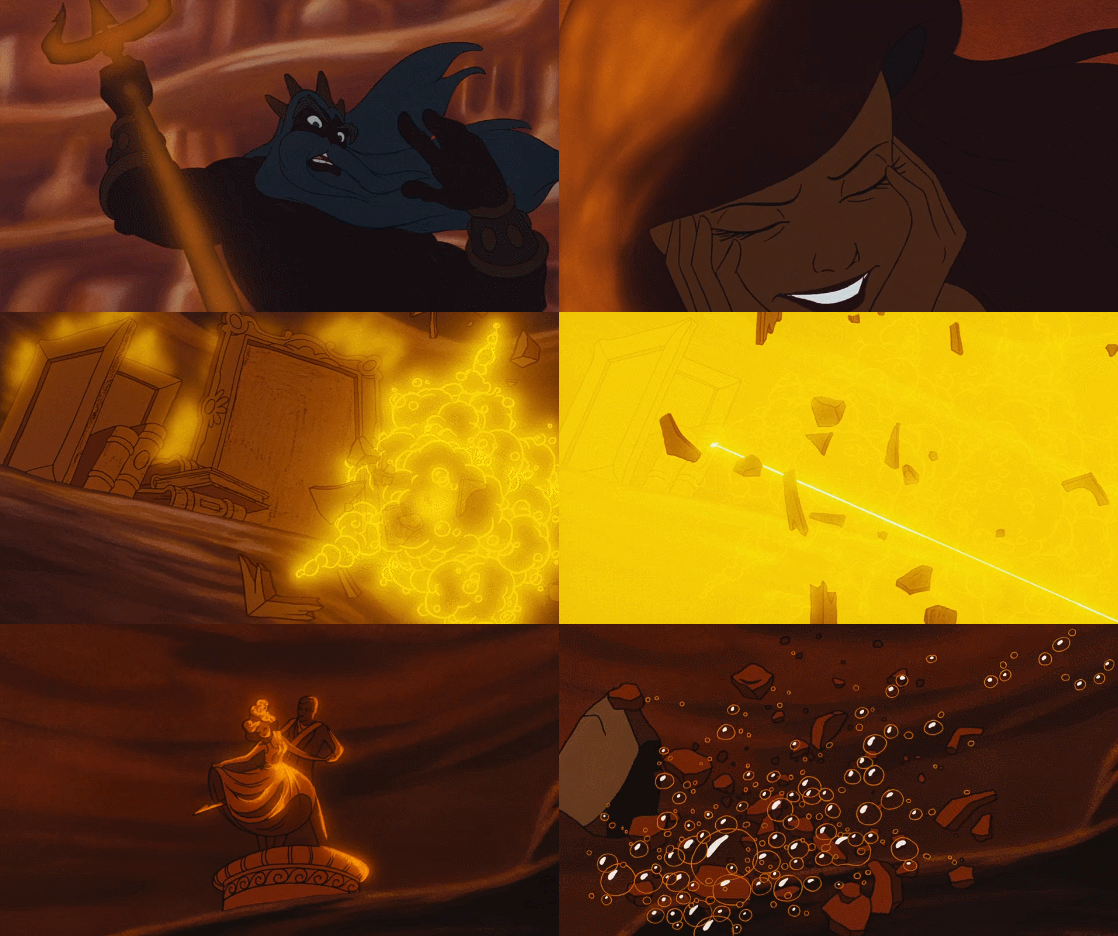
There is a reason the destruction of Ariel’s grotto harrowed me more as a child than any other scene in a Disney film. I could hardly watch it. I hid my face. I begged my family to skip scene. I was reduced to a sobbing mess. On a personal level, it harrowed me more than the destruction of Cinderella’s dress.
That reason is because, in watching the scene, I felt the pain of a place of refuge being invaded.
By the time we reach the destruction of the grotto, we are as emotionally invested in Ariel’s collection as she is because we see that the objects are more than objects. They are extensions of herself, encapsulating all her feelings of hope and hopelessness.
Destroying those items is like annihilating a part of her soul.
That is why I hate the “she gave up her voice for a man” line of thought so much. Because it so blatantly disregards the context of the film. Because it paints Ariel as a shallow teenager. Because it places blame for what follows solely on Ariel’s shoulders and absolves Triton of any wrongdoing.
I want to tread carefully here because, like Ariel, Triton is a nuanced and complex character. He has good intentions and cares about his youngest daughter.
Yet, even a well-intentioned individual can be in the wrong. Even an individual who is right about certain things (Ariel is indeed impetuous and reckless at times – though I hope my analysis reminds readers that those are not her sole character traits), can be wrong about other things.
And Triton’s confrontation with Ariel highlights his failings and his faults.
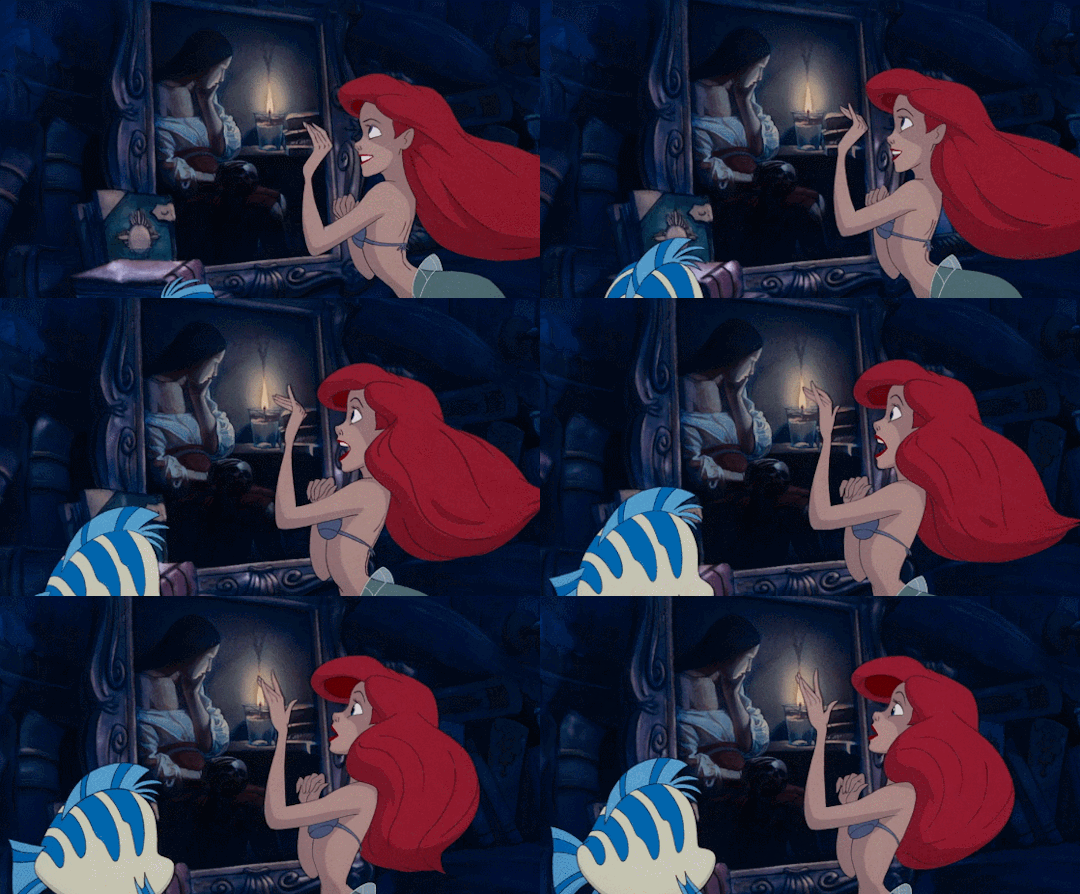
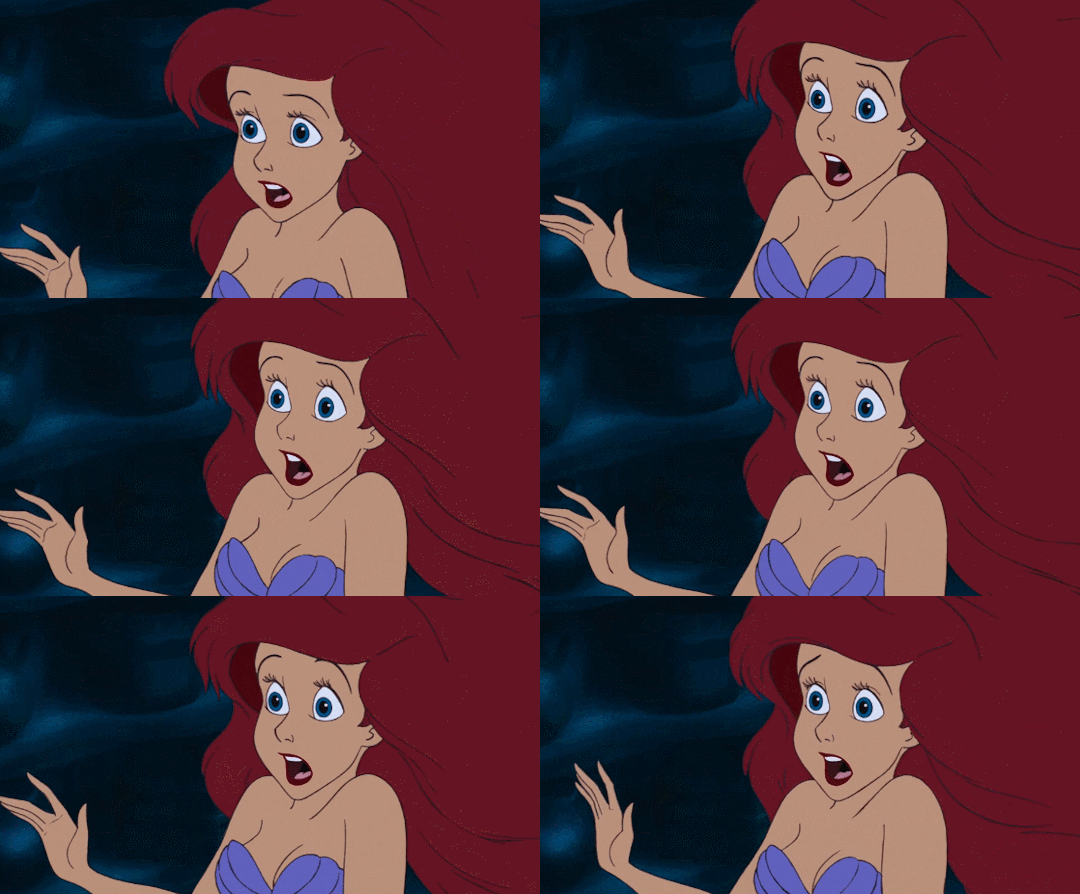
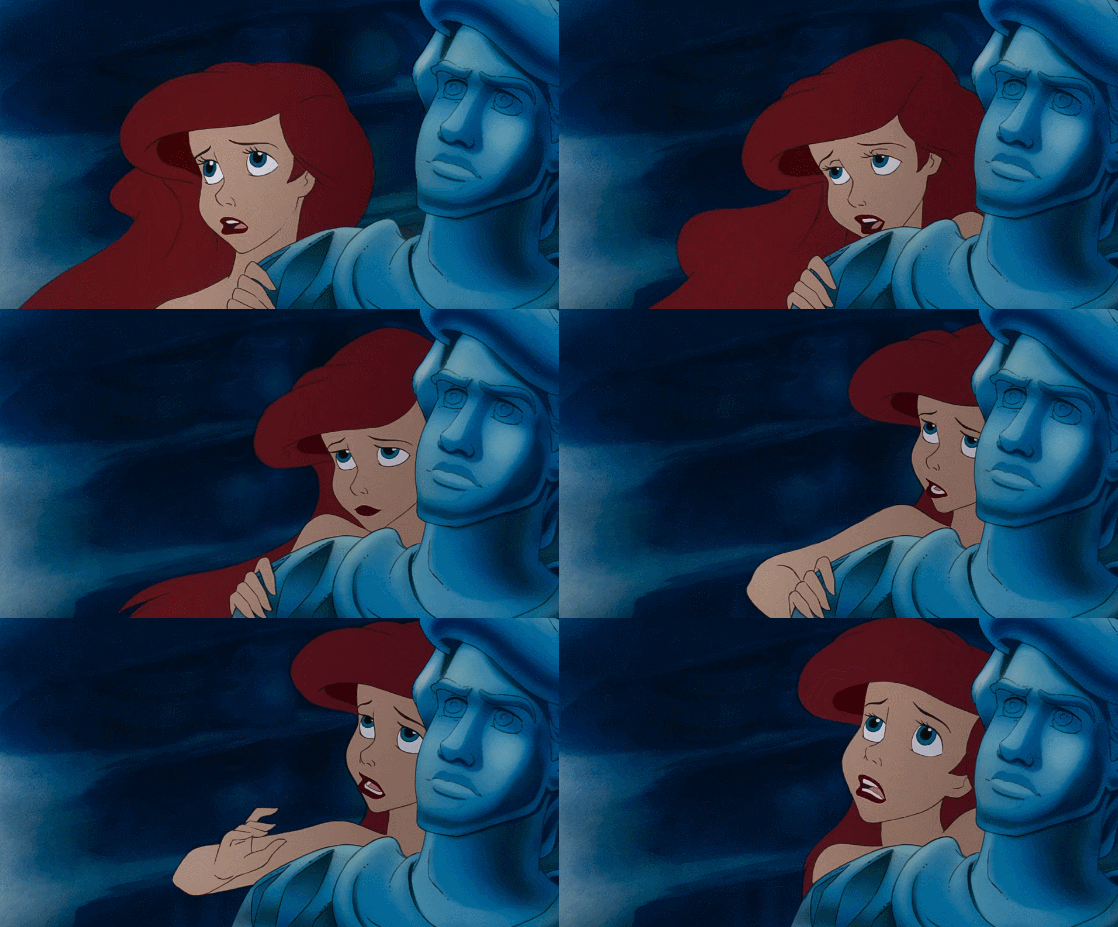
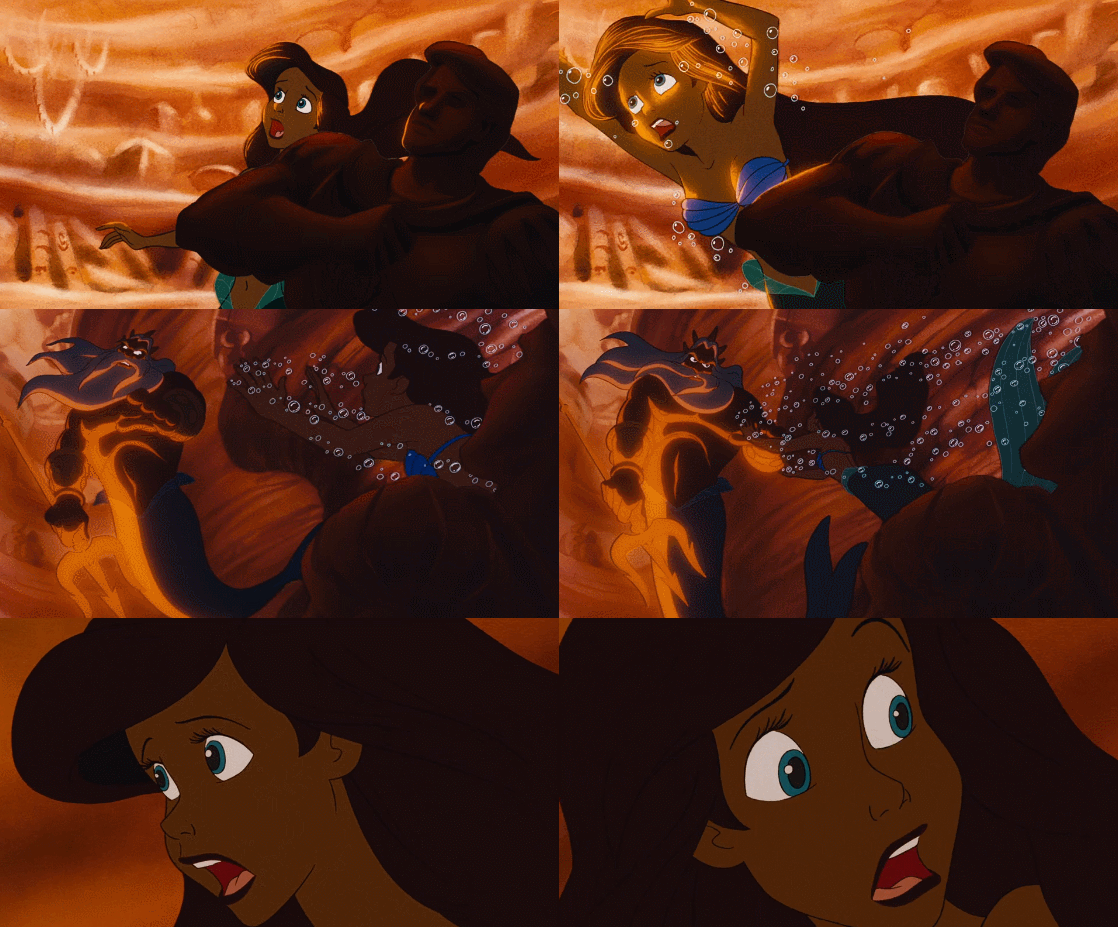
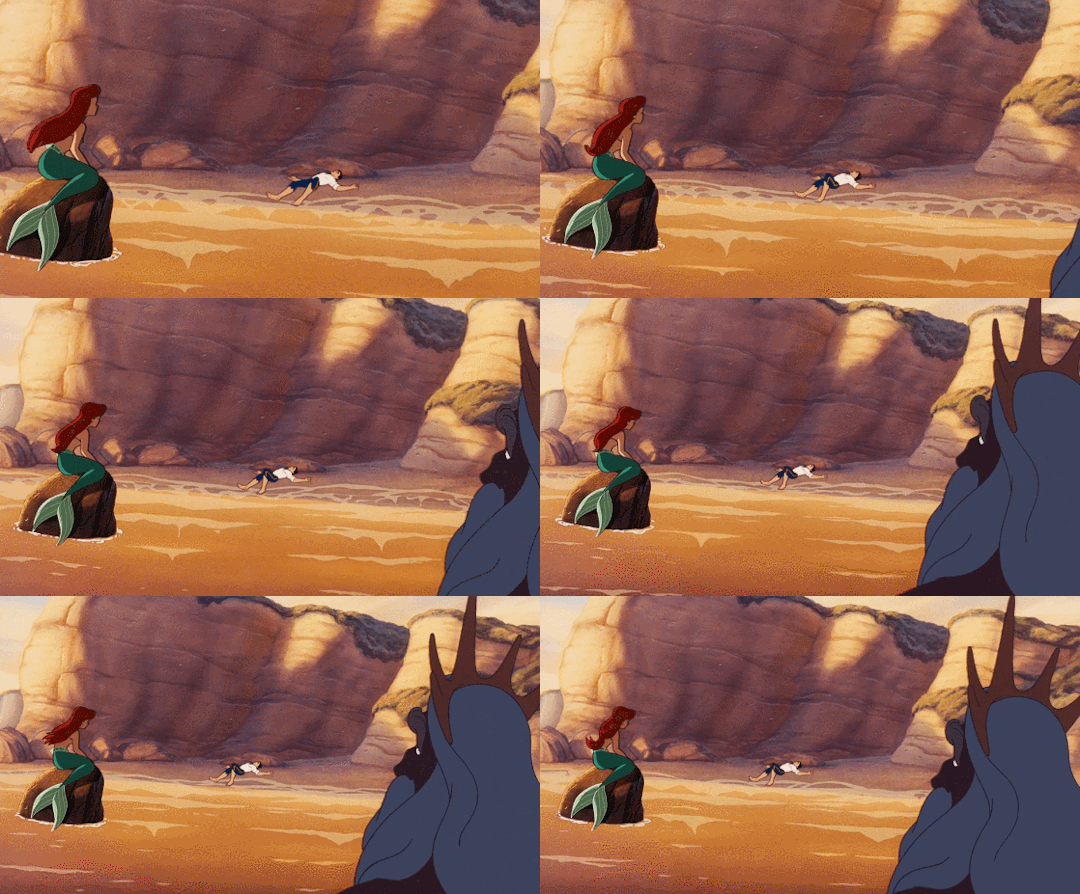
Look at Ariel’s face when she first sees her father in the grotto:
The enhancement of expression in animation allows the audience to clearly see the fear in her face.
Triton has created an environment where his own daughter is afraid of him.
No parent should do that to their child.
Confronting Ariel, Triton says, “I consider myself a reasonable merman. I set certain rules and I expect those rules to be obeyed.”
On one level, Triton is right to expect his children to respect the rules he sets in place.
What I feel Triton misses, however, is that respect is not the same as intimidation.
Since Triton wants Ariel to accept his rules based solely on his authority as her father, he makes it impossible for there to be any communication between himself and his daughter.
This dynamic means that he will not listen to Ariel even when Ariel is in the right and he is not. Children should listen to their parents, but in the same way, parents should listen to their children.
Triton may be in the right to worry about his daughter’s safety, but his fear is still born of bigotry – bigotry that Ariel recognizes and rejects.
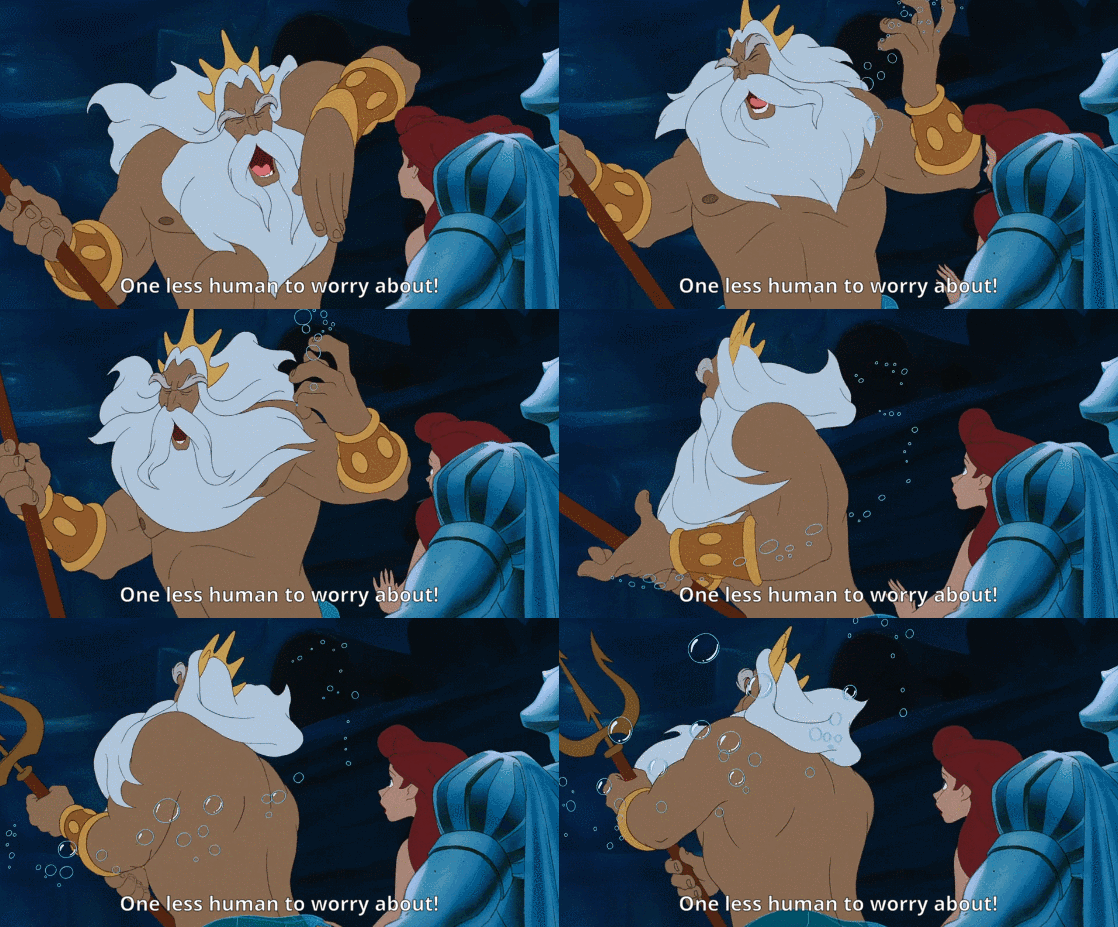
Triton, after all, grows angry at his daughter because she wouldn’t let another living being die. He specifically calls her out because she “rescued a human from drowning.”When Ariel counters that allowing someone helpless to miserably drown is cruel, he shuts her down with:
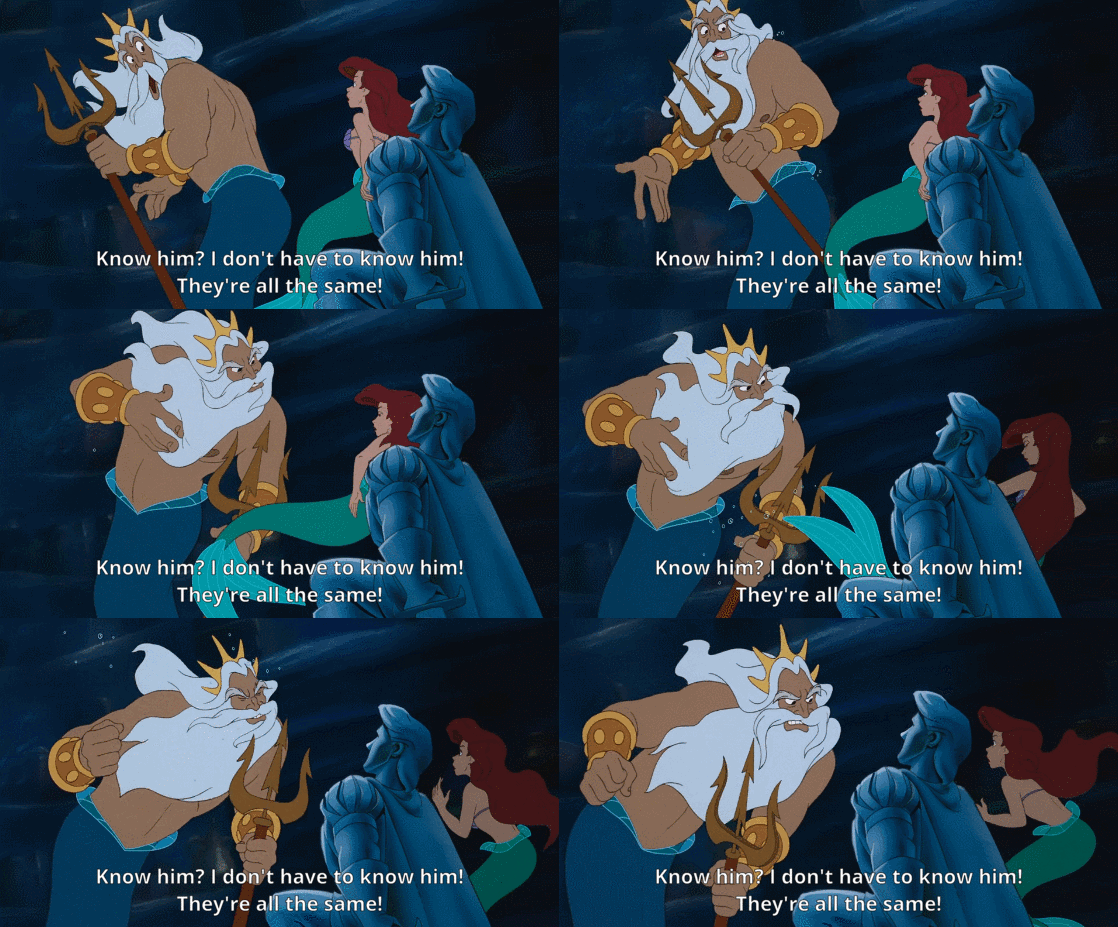
When Ariel points out the illogical nature of her father’s brutal line of thought and says, “You don’t even know him!”, Triton responds:
Even if a viewer is largely sympathetic to Triton, that viewer cannot ignore Triton’s prejudice in this moment.
He generalizes millions of people.
And if the rules he sets down include the tacit understanding, “Let innocents die because, by virtue of their humanity, their lives have no value,” then maybethose rules deserve to be broken.Maybe those rules need to be changed.
Ariel may be a teenager, but she is wiser than her father here.
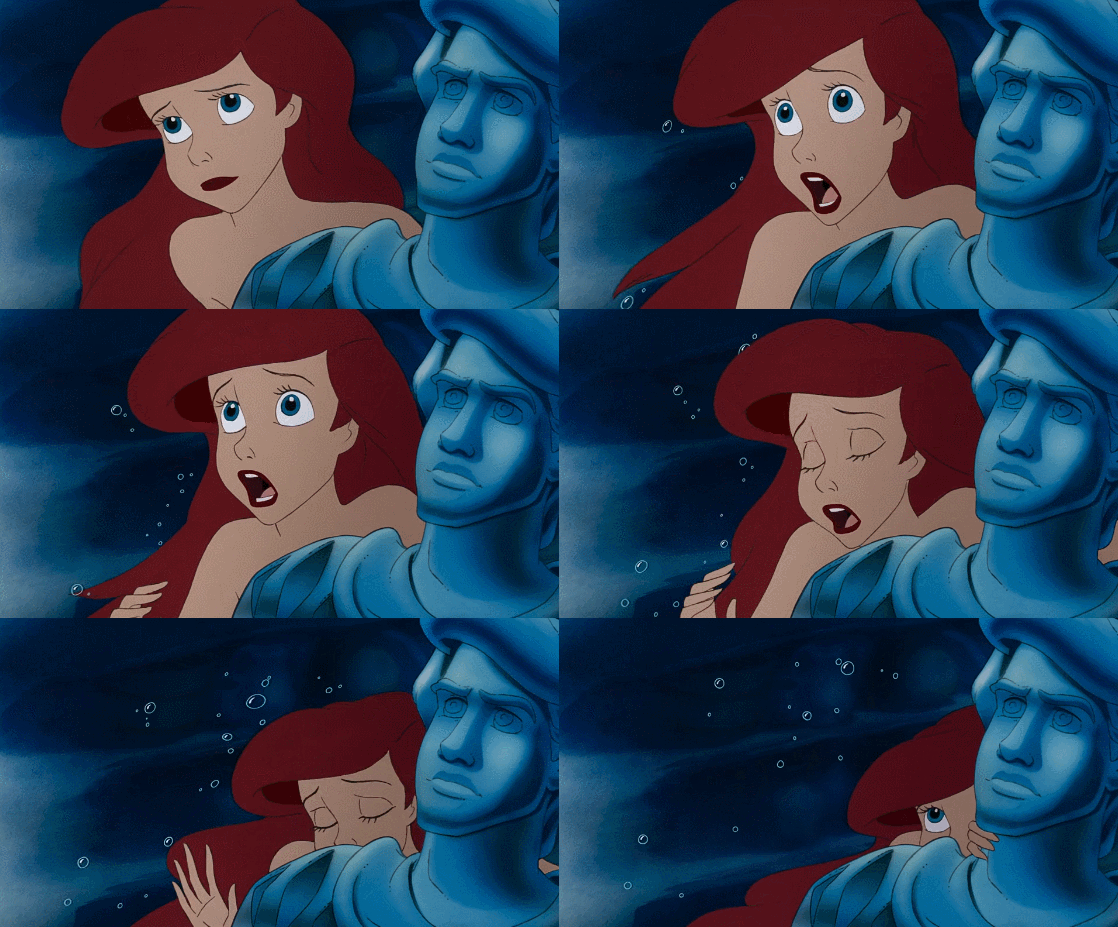
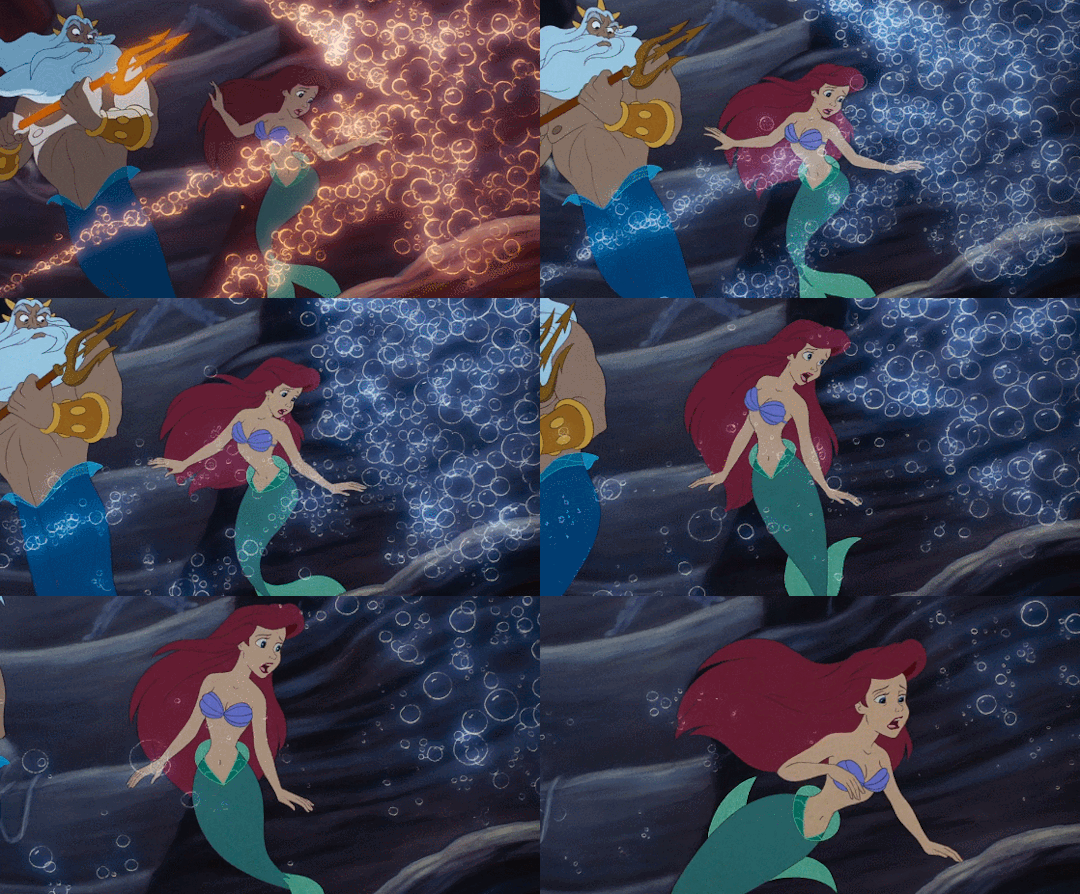
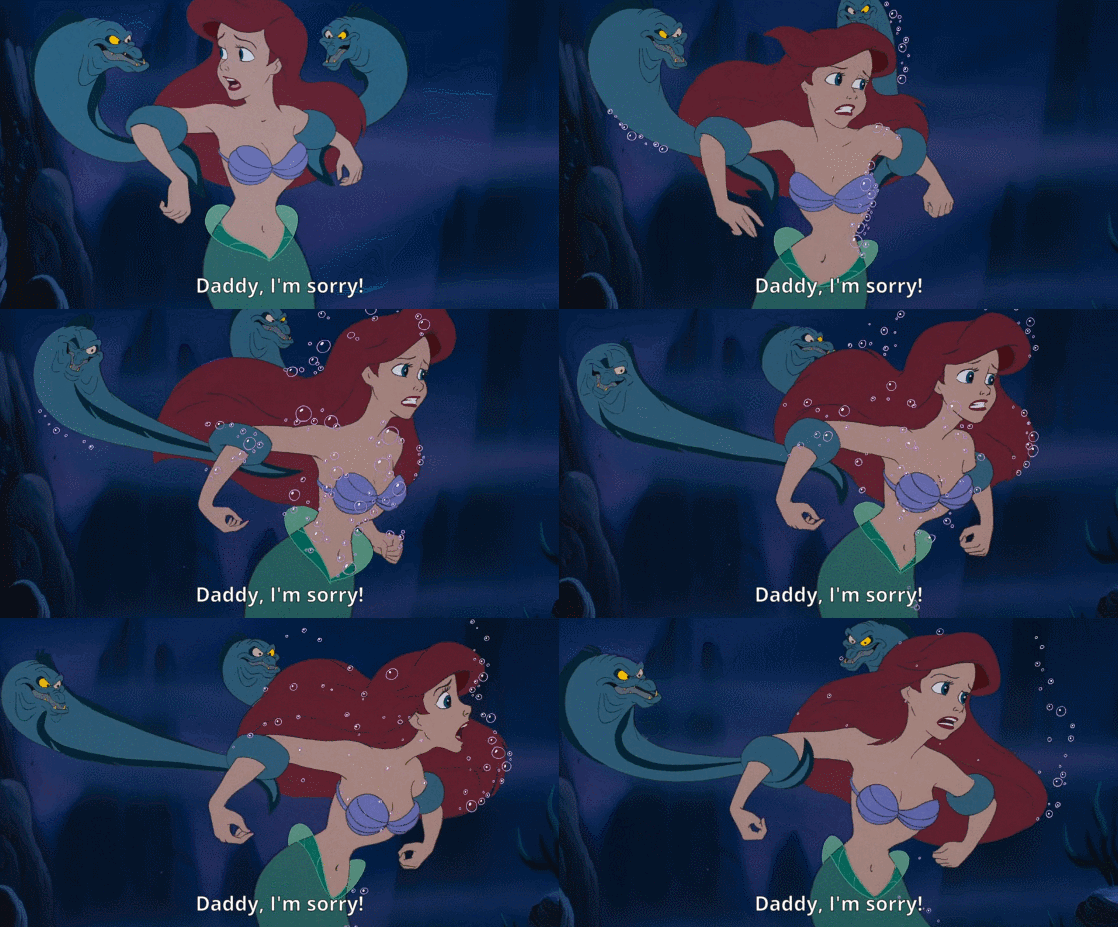
(Also, can I say that Ariel’s body language here breaks my heart every time I see it? She’s swimming away from her father, recoiling…
…until she’s cowering behind Eric’s statue. She looks like she’s about to cry as her father pours forth more vitriol…
…and after she bursts out with the exclamation, “Daddy, I love him!”, she’s terrified that she’s said it.)
Triton believes that he alone is in the right and destroys the grotto because he feels it is “the only way” to “get through to” his daughter. He believes he must be cruel only to be kind.
Yet, in the end…
…he only succeeds…
…in being cruel.
Triton’s unwillingness to listen to his daughter
– his unwillingness to treat her with the same respect he demands of her –
only widens the gulf between them.
Ariel does not go to the sea-witch because she has been mooning over a man.
Ariel goes to the sea-witch because she has no voice in her own home. Becoming human, she gains the ability to live life on her own terms. Becoming human, she ironically gains the voice she has been denied for so long.
Ariel goes to the sea-witch because her father sends a message to her – a message that she does not matter, that there is no place for someone like her in Atlantica.
Triton may never have meant to send that message, but send it, he did… and he should be held accountable for that.
Indeed, the film does hold him accountable for that.
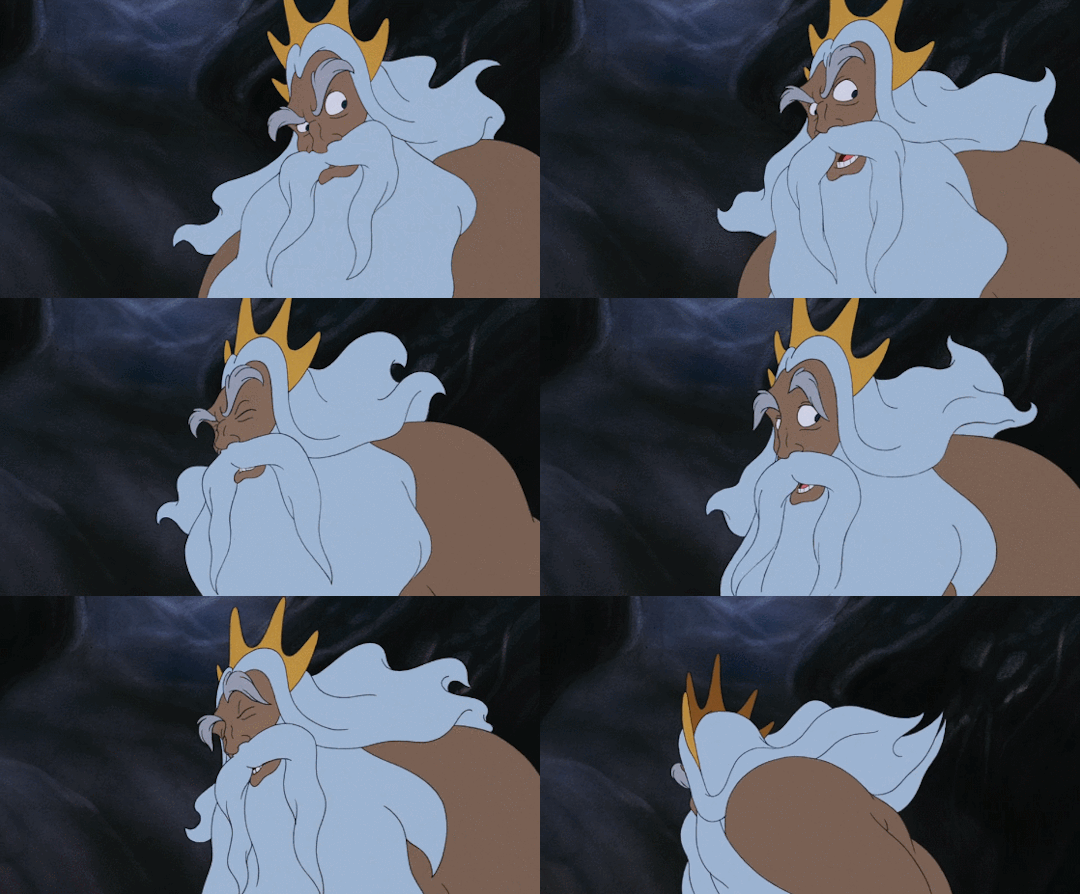
After destroying the grotto, Triton realizes he has done a horrible thing.
Look into his eyes after Ariel falls to weeping:
Look at the regret in his eyes. Look at the remorse. He knows he has gone too far. He never meant to hurt his daughter like this.
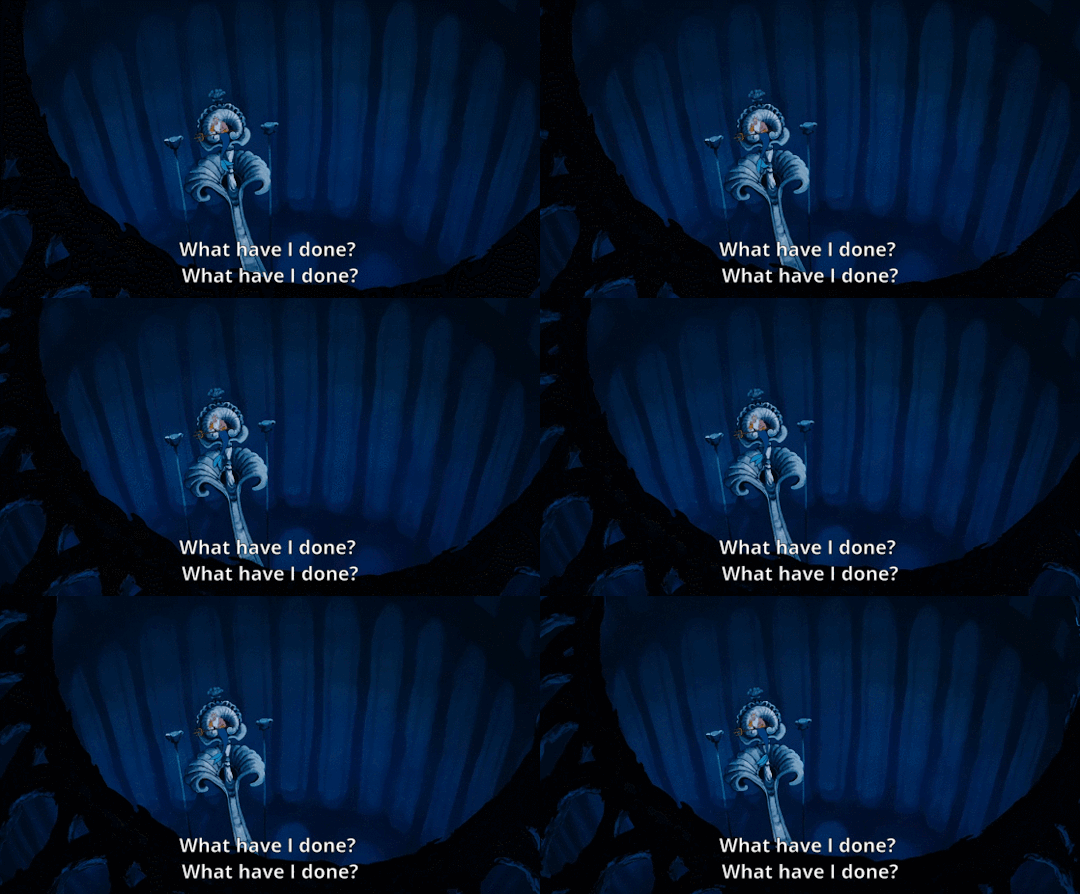
And when Ariel vanishes from Atlantica, Triton takes responsibility for his actions. What does he say when his daughter cannot be found? Does he say, “What folly has my daughter gotten herself into now?”
No. He says:
Simply saying that Ariel ‘gave up [her] voice for a man’ ignores the painful complexity of the situation in which she finds herself. It ignores the depth of her motivation. It ignores Triton’s culpability. It ignores her best character traits and only highlights her flaws (and yes, she has flaws, for she is a multifaceted, well-written character.)
But Ariel’s rejection of prejudice, her ability to see beauty in a group that nearly everyone around her demonizes, her courage and determination and love, are all venerable traits…
…and Ariel’s courage, determination, and love are what inspire Triton to open his heart and change.
Some people say that The Little Mermaid is more Triton’s story than Ariel’s. I disagree and feel that assessment unfairly dismisses Ariel’s emotional journey. Triton has a compelling arc in the film – but that arc is only set in motion because of Ariel’s agency.
He learns from his daughter’s example.
He grows because of her.
Why don’t we talk more about Ariel, the young woman who always challenged her father’s prejudice? Why don’t we talk more about Ariel, who actively spoke out about the flaws she saw in her society? Why don’t we talk more about Ariel, whose actions helped change that society for the better? Why don’t we talk more about Ariel, who formed a bridge between two worlds and enacted positive change?
Why don’t we talk more about that Ariel?
I know Ariel can be impulsive, but she is sixteen years old, and her impulsiveness only makes her character realistic. She makes mistakes but, like her father, she owns up to those mistakes and learns from them:
There are critics of Ariel’s character who want to make the story of The Little Mermaid black and white. Because Triton recognizes Ariel’s impulsiveness, they ignore Triton’s faults and trivialize Ariel.
Yet, the story the film presents is not so black and white. Ariel and Triton are not so one-dimensional.
They both learn from each other and grow together.
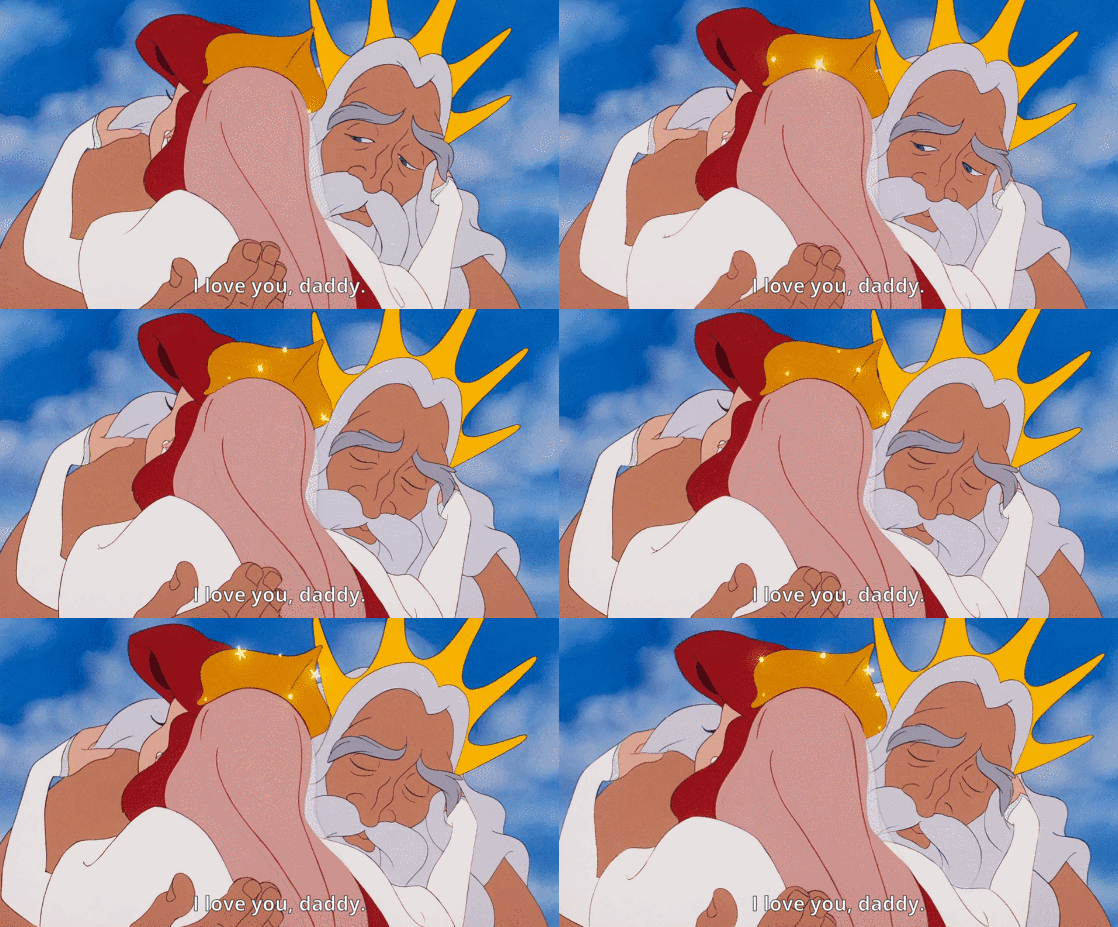
This embrace is so meaningful because, by the end of the film, Triton finally shows Ariel the same respect he asks of her and in so doing, he earns her respect.
Ariel, meanwhile, recognizes her own mistakes and gains a new appreciation for her father.
The Little Mermaid is a beautiful film and Ariel is a brave, inspiring, complex heroine.
I also want to point out, Howard Ashman, a gay man who died of AIDS, was a key creator in this film. He also had a key role in creating Beauty and the Beast. The films we worked on were about outcasts.
@the-blue-fairie thank you so much for putting into words what I felt but couldn’t explain! Ariel has always been my fave princess as well, and as I grow older I’ve come to realize more and more how she will never stop being a great representation of me. Exactly because of all what you wrote above. Thank you. I’m a complete emotional mess but happy, too. ♡
My dude, I have an entire PLUNNIE about transObi-Wan.
Obi-Wan was
born biologically female and decided while still in the creche, early in life,
that he had no business being a girl and being a boy was far more to his
tastes. The Jedi see enough species and differing genders that they were accommodating
to this desire: hormone treatments, clothing, full gender identity change—the only
thing they didn’t perform was the surgery Obi-Wan wanted, because it’s safer if
you’re fully grown before going under the knife. Obi-Wan was entirely fine with
that. His breasts are behaving themselves and remaining A-cups, thank you, and
he has an implant that means he isn’t inconveniently bleeding on an
inconvenient schedule.
That is,
Obi-Wan is fine with things right up until Qui-Gon gets himself killed and
saddles Obi-Wan with a Padawan. Now he doesn’t have time to go through the surgery and the recovery period, he has a
wild Anakin Skywalker on his hands.
There is no
avoiding telling Anakin, as they live in close quarters, but bitty Anakin just
blinks it off, shrugs, and wants to know why that matters. He was raised on the
Outer Rim in a port. This is not a new thing and is entirely cool, can we go
see Real Grass now? Real green grass is way more interesting than gender stuff.
Obi-Wan
shrugs, mutters under his breath, and just deals with it, because he promised
Qui-Gon a Knighted Anakin Skywalker. He’ll complete that task and then get the surgery, because he’d
like to be able to look at himself naked in the mirror and recognize the person
looking back at him.
But of
course, the universe is an asshole, and galactic civil WAR breaks out. Anakin
is Knighted, but they’re busy. He does not have time to recover from a surgery.
He doesn’t even have time to recover from the wounds he is receiving. Obi-Wan begins to wonder if the Republic supply
depots are spiking their food with stimulants just to keep them all upright.
The clones
are also totally fine with the
transgender thing. Obi-Wan discovers while speaking with Rex (in bed, because
that’s really the only time they have for anything resembling a conversation
not based on the war) that there are female
clones in the ranks, quietly living and doing their jobs as men because the
Kaminoans promised the Republic an army of Fett clones, so the girl deviations
had to conform.
This does
not please Obi-Wan. Or Anakin. or Plo Koon. Or any of the few remaining Jedi
who do not have their entire heads up their asses, spelunking through their own
intestines.
The female
clones get to grow their hair, if they want, and be referred to as their
preferred gender. Several of the male clones jump ship to be women; some of
them give no fucks; some of the women remain men; some of them really don’t
want to have to deal with gender anything,
can we just go blow shit up now??
Dooku dies.
Obi-Wan really doesn’t give a fuck that Anakin executed Dooku after the battle.
It’s a bit vicious, but not only has the Republic already declared in a Senate
session to execute Dooku as a traitor (which is…questionable) but Dooku has
tried to kill Obi-Wan so often that he rather enjoys the idea that Dooku won’t
ever try to kill him again. Either way, if they take down Grievous, then those
are the major military players. The war might be ending.
Obi-Wan
tries breaking his leg by kicking Grievous. Not his best moment, but he still
wins. They’re that much closer. He can feel it.
Too bad he
was feeling the wrong thing. The Purges happen. Cody tries to kill him. The 501st
marches on the Temple and executes every living being inside.
Mustafar.
Anakin. Anakin who knelt before the Emperor and became Vader. Anakin tried to
kill Padme, and then does his best to kill Obi-Wan until Anakin proves he’s fucking nuts by taking that
leap from a lower position.
Obi-Wan has
no idea what is going on, or why his belly aches like Grievous kicked him (no,
he did not), or why Anakin suddenly went entirely mad.
He does not
have long to contemplate it. Right after he retrieves Padme and gets C-3PO to
pilot them off this horror-rock, he collapses.
R2-D2 takes
some time away from freaking out about Anakin losing his mind to mutter about
having two hapless idiots on his
hands. C-3PO can only carry one idiot at a time!
Padme does not die. Fuck that Losing
the Will to Live shit. Padme was Momma Bear incapsulated, taking on the entire
Republic, before she had kids. After? Man, she would fight the universe to see her kids safe.
Everything
at Polis Massa is great, except for the fact that Padme is giving birth to
twins (!??!) and a medic is telling Obi-Wan that he’s pregnant. (!!!!?!???)
Bail is kind
enough to help clean him up after Obi-Wan vomits in the ’fresher for about an
hour and a half. Then he asks who the baby’s father is.
Obi-Wan
pauses, thinking that Rex adores kids and so does Cody, and Cody will just
never stop teasing him over this—
He decides
he’s just going to keep dry-heaving for a while. It’s kinder than thinking
about any of them.
Then he goes
and tears a medic a new one because he has an implant, this can’t happen.
The medic
asks Obi-Wan when was the last time he had the implant swapped out. They only
last so long before their effectiveness at preventing this sort of thing begins
to deteriorate.
Polis Massa’s
walls echo with the shout of “FUCK!”
Padme has
twins. Luke and Leia. She’s feeding the baby girl when she asks Obi-Wan if he’s
going to abort the baby.
Obi-Wan
stares at her, because it hadn’t even occurred to him to do so. Most of the
known Force sensitives in the galaxy were just wiped out. He can’t bear the
thought of helping the Emperor succeed.
Fuck. Fuck,
this is not fair. Why can’t he put this fetus in an incubator to gestate like
at least five different sentient species he knows of just off the top of his
head? WHY?
Fine. FINE!
Obi-Wan is going to have a child while they’re on the run from the Empire, and
then he is going to have that fucking surgery or he will chew his way through duracrete.
Obi-Wan asks
Padme what it’s like to be pregnant. Padme looks at him, blinks a few times,
and then grimaces.
Duracrete
and durasteel, then.
Obi-Wan and Padme decide to hide from Vader together. Bail does
not get one of the twins. Padme listens to Yoda’s reasons, tells him he’s full
of shit, and tells Bail that there are so many war orphans to choose from,
Breha could raise an entire horde if she likes.
Bail looks
entirely too pleased by this idea. She almost feels sorry for his older
sisters, who have been nattering on for Bail and Breha to have children for
years.
Padme is the
one to suggest that they go to Tatooine. She can’t go home to Naboo, but at
least Tatooine has Anakin’s family. That is her brother-in-law and
father-in-law and—according to the last message she received, she now has a
sister-in-law in Beru Whitesun Lars as well.
Yoda
actually agrees that hiding on Tatooine is a fabulous idea; off you go, shoo,
shoo.
Obi-Wan did
not need that education in what happened on Tatooine with the Tusken Raiders.
He was heartbroken enough. This is almost worse.
Also, he
really was not expecting his father to have quit the Mid-Rim, moved to
Tatooine, and married Anakin’s mother. He is also entirely freaked out about
endangering these people—these near strangers,
no matter their blood—when Padme assures him that Anakin swore an actual blood
oath that he was never setting foot on Tatooine again. They both doubt that
Vader will suddenly forget that sort of vow just to go trolling for victims.
Owen is not okay with Obi-Wan being his brother
instead of his sister, especially with Obi-Wan pregnant but still saying he’s a
man. Obi-Wan tells him to sod off and grow up. Beru laughs when Owen turns
bright red and stomps out of the room.
Padme and
Cliegg assure Obi-Wan that yes, he is handling siblinghood correctly.
They find a
nice, remote farmstead that is larger than Obi-Wan’s quarters in the Temple.
Which is…kind of pathetic, actually. Cliegg and Owen (after Beru threatens her
husband with castration) help to build additional rooms onto the place so that
they have bedrooms for each of them. Obi-Wan and Padme might tell people that
they’re spouses, but Obi-Wan does not want to be anything except Padme’s
friend. Padme is struggling to grieve while also being bright and happy for
twin babies who are far too sensitive for their own good. Obi-Wan is trying to
figure out how to anchor himself back to existence.
The last
room to be built is a nursery for the twins. Obi-Wan stares often at that third
cradle, waiting for a new baby, and wonders what in the entire fuck happened to
his life. He can’t grow a beard right now to save his life because his estrogen
levels are overcompensating after years of being suppressed, his breasts are
larger (FUCK), and he is starting to waddle like the pregnant man he is.
Thank the
Force that Beru loves children and all but moves in with them to babysit as
often as possible. They might have lost their minds that first year without
her.
On the day
Obi-Wan’s daughter is born, he finally sees Qui-Gon’s ghost for the first time.
Unfortunately
for the asshole who up and died on him, it’s during labor. Obi-Wan throws
everything within reach at the ghost, because HOW DARE HE and THIS IS YOUR IDEA
OF TIMING? while Padme holds his hand and tries not to giggle as Obi-Wan
apparently destresses by yelling at a figment of his imagination.
Obi-Wan
names his little girl Anna. Ani for short.
After nearly
a year of holding tight to her grief, Padme finally breaks down and sobs.
EXCUSE ME I WAS USING THOSE FEELS!!!! And holy CARP I desperately hope someone adopts this because AAAAAAAAAAHHHHHH SO! MANY! FEELS! AND! AWESOMENESS!






 wupacing