I periodically feel so fucking sad for women in history. I feel like birth control in countries where it is widely used has made women forget an aspect of male cruelty and sociopathy that is now less apparent (giving the illusion that men have improved when only women’s defences against men have)—the fact that for most of history men could live with a woman for decades and not care that they were slowly killing her with endless back-to-back pregnancies which not only resulted in early death more often than not, but also in a total smothering of the woman’s spirit and talents. I saw a quote by Anne Boyer the other day that called straight relationships for women “not only deadly, but deadening”—as I was reading Jill Lepore’s Book of Ages, a biography of Benjamin Franklin’s sister Jane, who was bright and loved reading and wrote some poetry, but had little time to make anything of her life in between her 12 pregnancies. Benjamin Franklin’s mother had 10 sons and 7 daughters. What could they possibly accomplish when their husbands kept impregnating them year after year after year throughout their entire adult life?
Charlotte Brontë eschewed marriage longer than most (writing to Ellen Nussey that she wished they could just set up a little cottage and live together) but she finally married at 38, became pregnant, and died before her 39th birthday. If she had married younger would Jane Eyre exist? I was reading that biography of Charity & Sylvia last month and comparing their life together in their little cottage to the life of their married female relatives, which was honestly hell on earth. One of Charity’s sisters had 18 children. Charity’s mother had 10 living ones, and probably some additional stillbirths. She gave birth to her first child age 19, in 1758, then to a pair of twins in 1760, then another child in 1761, another in 1763, another in 1765, another in 1767, another in 1769, another in 1771, another in 1774, another in 1777. Charity was the last child and her mother had been sick with tuberculosis for months when she became pregnant with her, and she died soon after giving birth.
I wish people would call this murder—this woman was murdered by her husband, like countless other women who do not ‘count’ as victims of male violence because straight sex is natural, pregnancy is natural, childbirth is natural. But when after 20 years of nonstop pregnancies this woman had tuberculosis and suffered from severe respiratory distress, severe weight loss, fever and exhaustion, and her husband impregnated her again, her death was expected. He must have known; he just didn’t care. This woman’s sister—Charity’s aunt—remained a spinster and outlived all of her married sisters by several decades, living well into her eighties. (Ironically, male doctors in her century asserted that sex with men was necessary for women’s health. The biographer quoted from a popular home health guide which said that old maids incurred grievous physical harm from a lack of sex with men.) And this aunt had the time and liberty to develop her skill for embroidery to such an extent that two museums still preserve her embroidered bed drapes. She accomplished something, she nurtured her talent and self. Her name was also Charity, and I find it interesting that Charity’s mother named her last daughter, whose pregnancy & birth killed her, after her childless, unmarried sister.
When I see women reblog my post about Sophia Tolstoy’s misery with her 13 children, adding comments like “thank god marriage is no longer synonymous with this”, I wonder if they realise that men have not magically become any kinder or more concerned about their female partner’s health and fulfillment, it’s just that women now have access to better ways of protecting themselves from their male partner’s indifference to their health and fulfillment.
We should be more pro-active or we’ll see more of such sad fates of honest people.
And the utterly ironic thing is I’ve seen repeated tumblr posts of that iconic photo absolutely slagging the shit out of Peter Norman as “lol white guy so uncomfortable” “Why the fuck isn’t he supporting them”, etc etc.
One of the most powerful moments I experienced as an ancient history student was when I was teaching cuneiform to visitors at a fair. A father and his two little children came up to the table where I was working. I recognised them from an interfaith ceremony I’d attended several months before: the father had said a prayer for his homeland, Syria, and for his hometown, Aleppo.
All three of them were soft-spoken, kind and curious. I taught the little girl how to press wedges into the clay, and I taught the little boy that his name meant “sun” and that there was an ancient Mesopotamian God with the same name. I told them they were about the same age as scribes were when they started their training. As they worked, their father said to them gently: “See, this is how your ancestors used to write.”
And I thought of how the Ancient City of Aleppo is almost entirely destroyed now, and how the Citadel was shelled and used as a military base, and how Palmyran temples were blown up and such a wealth of culture and history has been lost forever. And there I was with these children, two small pieces of the future of a broken country, and I was teaching them cuneiform. They were smiling and chatting to each other about Mesopotamia and “can you imagine, our great-great-great-grandparents used to write like this four thousand years ago!” For them and their father, it was more than a fun weekend activity. It was a way of connecting, despite everything and thousands of kilometres away from home, with their own history.
This moment showed me, in a concrete way, why ancient studies matter. They may not seem important now, not to many people at least. But history represents so much of our cultural identity: it teaches us where we come from, explains who we are, and guides us as we go forward. Lose it, and we lose a part of ourselves. As historians, our role is to preserve this knowledge as best we can and pass it on to future generations who will need it. I helped pass it on to two little Syrian children that day. They learnt that their country isn’t just blood and bombs, it’s also scribes and powerful kings and Sun-Gods and stories about immortality and tablets that make your hands sticky. And that matters.
One of my favorite things about history is how little bits of it are preserved through traditions and mythology and we don’t even notice it. Like how we still say “’Tis the season” at Christmastime. Who says ‘tis anymore? No one, it’s dead except in this tiny phrase. I had a friend once tell me that she noticed the only group of people who could consistently identify a spinning wheel were girls between the ages of 4 and 7. Why? Sleeping Beauty. There are little linguistic quirks that have been around for centuries, bits of slang we use that people 400 years ago would recognize, but unless you showed someone a 400 year old dictionary, they’d never believe it. Whispers of the past are always there.
precisely! There’s far more of them than you’d realize. A pothole is from when potters used to harvest clay from the side of the road. Pot. Hole.
Your phone goes boinkey bleep but we still call it ringing, from when phones had actual bells on the outside of actual boxes.
Have you ever had to explain to a Gen Z why we “roll down” a car’s window?
Lowercase and uppercase are from typesetting, storing lead letters into boxes or cases for print.
The daily grind is from when a day’s use of grain was ground for bread.
“Fire!” as the command to shoot, in English, only picked up with gunpowder, as you’d light or fire the guns. To fire is to set fire to something. Prior to that, the command for a bunch of archers isn’t and has never been Fire, it’s Loose. Notice this little anachronism in most medievaloid films.
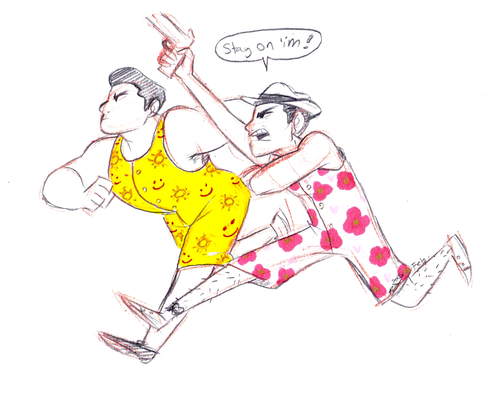
everytime u see a old photo of a snazzy 1920s dude in a suit remember what lurks beneath
okay why are you guys reblogging this and tagging it as reference do you plan on drawing 20s gangsters in their underwear i better see these
I couldn’t help myself
To be fair, underwear that fully covers the body from neck to knees makes a lot of sense when you’re wearing a dry-clean-only suit as your everyday outfit; it prevents sweat from soiling the garment’s inner layer, and thus lets you go longer between launderings. The development of modern underwear tracks pretty much directly with the shift to washable daywear, which removes much of the need for such extensive protection.
The part that makes least sense is how it’s sleeveless and thus doesn’t protect suits from armpit sweat. Surely the armpit is one of the most important places to put this kind of undergarment? T-shirts were originally designed as an undergarment that does protect clothing from armpit sweat, but they weren’t popularized yet in the 20s.
Most union suits did indeed have full or partial sleeves; the ones pictured in the original post are more fashionable than functional, probably intended to be worn with eveningwear.
Wow this was informative
Eveningwear? So… this is 1920s men’s lingerie. GTK
Bring back prissy gangster lingerie 2k16
Bring back prissy gangster lingerie 2k18
@thegaypumpingthroughyourveins I tag you as herald of the Percival Fandom but you’re reading this, you’re encouraged to imagine prissy magical Gatsby lingerie 2k18
Musical prodigy Alma Deutscher aged 11 (seen here with younger sister Helen), is staging her first full-length opera, Cinderella.
Composer, pianist, violinist… Alma learned to read music before she could read words. She began playing the piano aged two and at four years old she was composing her own music.
for those not in the know, night witches were russian lady bombers who bombed the shit out of german lines in WW2. Thing is though, they had the oldest, noisiest, crappest planes in the entire world. The engines used to conk out halfway through their missions, so they had to climb out on the wings mid flight to restart the props. the planes were also so noisy that to stop germans from hearing them combing and starting up their anti aircraft guns, they’d climb up to a certain height, coast down to german positions, drop their bombs, restart their engines in midair, and get the fuck out of dodge.
their leader flew over 200 missions and was never captured.
how the fuck is this not taught in every single history class ever
pilots (◡‿◡✿)
girl pilots (◕‿◕✿)
girl pilots killing nazis ✧・゚: *✧・゚:* (◕ヮ◕✿)/ *:・゚✧*:・゚✧
But, remember, women never did anything in history.
I’m reblogging this again. Always reblogging. Always
And the Nazis called them “Night Witches” because you couldn’t fucking hear them. They basically appeared out of the night as if they were flying on brooms and dropped bombs.
Hell yeah
There’s actually a song about them by Sabaton, it’s fucking amazing and it’s called “Night Witches”
an edible cracker with just one side. mathematically impossible and yet here I am monching on it.
‘scuit’ comes from the french word for ‘bake’, ‘cuire’ as bastardized by adoption by the brittish and a few hundred years
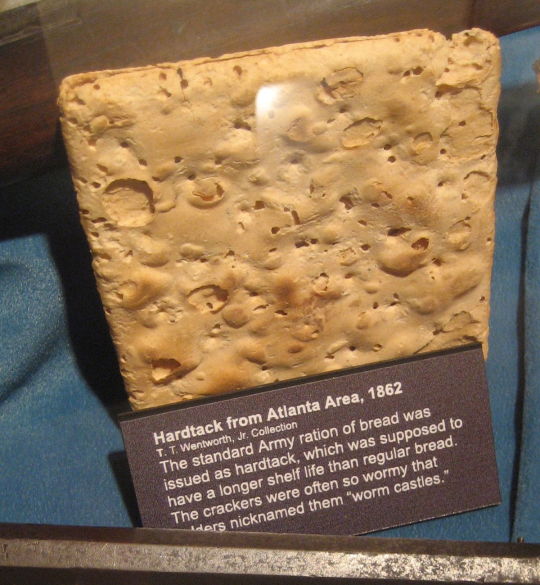
‘biscuit’ meant ‘twice-baked’, originally meaning items like hardtack which were double baked to dry them as a preservative measure long before things like sugar and butter were introduced. if you see a historical doccument use the word ‘biscuit’ do not be fooled to think ‘being a pirate mustve been pretty cool, they ate nothing but cookies’ – they were made of misery to last long enough to be used in museum displays or as paving stones
‘triscuit’ is toasted after the normal biscuit process, thrice baked
thus the monoscuit is a cookie thats soft and chewy because it was only baked once, not twice
behold the monoscuit/scuit
Why is this called a biscuit:
when brittish colonists settled in the americas they no longer had to preserve biscuits for storage or sea voyages so instead baked them once and left them soft, often with buttermilk or whey to convert cheap staples/byproducts into filling items to bulk out the meal to make a small amount of greasy meat feed a whole family. considering hardtack biscuits were typically eaten by dipping them in grease or gravy untill they became soft enough to eat without breaking a tooth this was a pretty short leap of ‘just dont make them rock hard if im not baking for the army’ but didnt drop the name because its been used for centuries and people forgot its french for ‘twice baked’ back in the tudor era, biscuit was just a lump of cooked dough that wasnt leavened bread as far as they cared
thus the buttermilk biscuit and the hardtack biscuit existed at the same time. ‘cookies’ then came to america via german and dutch immigrants as tiny cakes made with butter, sugar/molasses, and eggs before ‘tea biscuits’ as england knew them due to the new availability of cheap sugar- which is why ‘biscuit’ and ‘cookie’ are separate items in america but the same item in the UK
the evolution of the biscuit has forks on its family tree
I love it when a shitpost turns into an actually interesting post.








 wupacing