not to start drama in the history fandom but some of yall out there have really bad opinions and also no critical thinking skills
also while I’m here: historical figures aren’t your fandom faves. they’re real people who had profound and often terrible effects on other real people. you can’t apply fandom logic to them. you can’t fill in the blanks with no evidence other than you like the idea. you can’t vilify some of them while simultaneously stanning over “”misunderstood babies”” who committed equal atrocities. and perhaps most importantly of all, you can’t treat real history as “canon” and develop AUs where your fave is exactly how you want them to be with none of the nasty bits attached. that’s not how you read history. that’s how you get a painfully obvious bias which makes your conclusions and contributions useless.
it’s ok u can say hamilton
full disclosure i was talking about the soviet union idk what’s going on in the hamilton sphere and i wanna keep it that way
Woke up to this. If you are unaware, Nationalist is code word for Nazi. White Nationalists are Nazis with a different name. They are for “ethnic cleansing” which means Genocide. Nazi announces he is a Nazi.
And he wants to get rid of trans/non-binary folks. The same thing first happened back then when Nazis took down the Institut für Sexualwissenschaft (Institute of Science of Sexuality). They had so much data about trans folks in general and Nazis burnt it down with all the records and data. This is how a fascist regime starts.
Hi by the way, high fives are gay. Just so you know, they belong to the gays.
Officially stolen
Not even stolen!! They’re originally gay.
The first high five was between baseball players Glenn Burke and Dusty Baker of the Los Angeles Dodgers when Glenn welcomed Dusty back to home plate during a game.
They kept doing it and so did the rest of the team, and it got super popular. The team was selling merch based on it, it spread throughout baseball, then other sports, then became the thing as we know it now.
But… Glenn was gay. And when he was outed by an ex-partner in a newspaper article he was kicked off the team and out of baseball for good.
As a form of revenge I suppose, to reclaim the thing Glenn had started that was now making the team that had rejected him a tonne of money, the same ex-partner proclaimed that it was a gay pride symbol. He called it “a legacy of two men’s hands touching.“
So high fives are gay.
So double high fives = Super gay?
so some asshole outed his ex and tried to redeem himself by making the high-five symbolic.
Ruby Bridges was the first black child to desegregate the all-white William Frantz Elementary School in Louisiana during the New Orleans school desegregation crisis in 1960.
This movie made me cry, I was so heart broken by how Ruby Bridges was treated! She was only 6, but was so strong. She is a very brave girl and she did not care what the white folks called her.
People are simply disgusting to minimize people by skin color!
Ruby you might not think you’re a hero… But to other people you are! You are A HERO and you are A PERSON WHO MADE AMERICA CHANGE!
this is white culture, this is their history, this is their legacy…being enraged at a damn baby just because she’s black.
she’s still alive by the way
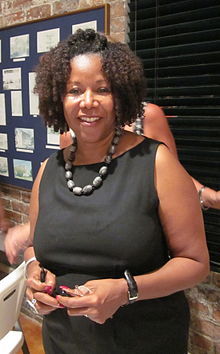
Ruby Bridges in 2010
“As Bridges describes it, “Driving up I could see the crowd, but living in New Orleans, I actually thought it was Mardi Gras. There was a large crowd of people outside of the school. They were throwing things and shouting, and that sort of goes on in New Orleans at Mardi Gras.“ Former United States Deputy Marshal Charles Burks later recalled, “She showed a lot of courage. She never cried. She didn’t whimper. She just marched along like a little soldier, and we’re all very very proud of her.“
U.S. Marshals escorted Bridges to and from school
As soon as Bridges entered the school, white parents pulled their own children out; all the teachers refused to teach while a black child was enrolled. Only one person agreed to teach Ruby and that was Barbara Henry, from Boston, Massachusetts, and for over a year Henry taught her alone, “as if she were teaching a whole class.”
Every morning, as Bridges walked to school, one woman would threaten to poison her; because of this, the U.S. Marshals dispatched by President Eisenhower, who were overseeing her safety, allowed Ruby to eat only the food that she brought from home.
Another woman at the school put a black baby doll in a wooden coffin and protested with it outside the school, a sight that Bridges Hall has said “scared me more than the nasty things people screamed at us.” At her mother’s suggestion, Bridges began to pray on the way to school, which she found provided protection from the comments yelled at her on the daily walks.”
THIS SHIT WAS ONLY 58 YEARS AGO. PEOPLE WHO PARTICIPATED IN THIS RACIST TERRORISM AND ACTS LIKE IT ARE STILL ALIVE, AND THEIR KIDS ARE IN THEIR 40′S AND 50′S.
DON’T LET RACISM APOLOGISTS GET AWAY WITH “WHY ARE YOU LIVING IN THE PAST,” BULLSHIT ARGUMENTS. WE ARE LITERALLY STILL DEALING WITH THE FAMILIES THAT FORMED HATE MOBS OVER BLACK CHILDREN ATTENDING SCHOOL WITH WHITE KIDS.
This was her then:
This is literally how she looks in 2017.
She’s literally not even old.
Some of those people in that crowd are VOTING this year. Their children raised by them are voting this year. And they want to Make America Great Again.
did you know that in 1953 eisenhower issued an executive order which banned gay people from being employed in government
and it was specifically to root out lesbians who enjoyed the job security of government work
“To protect their careers, lesbian government workers moderated their behavior to avoid suspicion. They refused to socialize with other lesbians in public, attended social functions with gay men as their ‘dates,’ and carefully chose their wardrobes and makeup to project a feminine persona. Male employees who resented reporting to a female boss could trigger an investigation into her sexuality.” – Robert J Corber “Cold War Femme”
this era was called the lavender scare and was both a direct result of mccarthyism and the classification of homosexuality as a mental illness during ww2. over 10,000 lesbians and gay men lost their jobs and as a result the daughters of bilitis (the first ever lesbian activist group in the u.s.) formed in order to protect themselves and gay men
“Never did like that much,” is a baller and superb way to express your irritation with the way the patriarchy refuses to acknowledge how badass you are.
Word.
Before World War I, she shot a cigarette out of the mouth of the Kaiser of Germany at his request.
After the war started she sent him a letter asking for another chance, as she was afraid her aim might’ve been a little off.
I find a big stumbling block that comes with teaching Romeo and Juliet is explaining Juliet’s age. Juliet is 13 – more precisely, she’s just on the cusp of turning 14. Though it’s not stated explicitly, Romeo is implied to be a teenager just a few years older than her – perhaps 15 or 16. Most people dismiss Juliet’s age by saying “that was normal back then” or “that’s just how it was.” This is fundamentally untrue, and I will explain why.
In Elizabethan England, girls could legally marry at 12 (boys at 14) but only with their father’s permission. However, it was normal for girls to marry after 18 (more commonly in early to mid twenties) and for boys to marry after 21 (more commonly in mid to late twenties). But at 14, a girl could legally marry without papa’s consent. Of course, in doing so she ran the risk of being disowned and left destitute, which is why it was so critical for a young man to obtain the father’s goodwill and permission first. Therein lies the reason why we are repeatedly told that Juliet is about to turn 14 in under 2 weeks. This was a critical turning point in her life.
In modern terms, this would be the equivalent of the law in many countries which states children can marry at 16 with their parents’ permission, or at 18 to whomever they choose – but we see it as pretty weird if someone marries at 16. They’re still a kid, we think to ourselves – why would their parents agree to this?
This is exactly the attitude we should take when we look at Romeo and Juliet’s clandestine marriage. Today it would be like two 16 year olds marrying in secret. This is NOT normal and would NOT have been received without a raised eyebrow from the audience. Modern audiences AND Elizabethan audiences both look at this and think THEY. ARE. KIDS.
Critically, it is also not normal for fathers to force daughters into marriage at this time. Lord Capulet initially makes a point of telling Juliet’s suitor Paris that “my will to her consent is but a part.” He tells Paris he wants to wait a few years before he lets Juliet marry, and informs him to woo her in the meantime. Obtaining the lady’s consent was of CRITICAL importance. It’s why so many of Shakespeare’s plays have such dazzling, well-matched lovers in them, and why men who try to force daughters to marry against their will seldom prosper. You had to let the lady make her own choice. Why?
Put simply, for her health. It was considered a scientific fact that a woman’s health was largely, if not solely, dependant on her womb. Once she reached menarche in her teenage years, it was important to see her fitted with a compatible sexual partner. (For aristocratic girls, who were healthier and enjoyed better diets, menarche generally occurred in the early teens rather than the later teens, as was more normal at the time). The womb was thought to need heat, pleasure, and conception if the woman was to flourish. Catholics might consider virginity a fit state for women, but the reformed English church thought it was borderline unhealthy – sex and marriage was sometimes even prescribed as a medical treatment. A neglected wife or widow could become sick from lack of (pleasurable) sex. Marrying an unfit sexual partner or an older man threatened to put a girl’s health at risk. An unsatisfied woman, made ill by her womb as a result – was a threat to the family unit and the stability of society as a whole. A satisfying sex life with a good husband meant a womb that had the heat it needed to thrive, and by extension a happy and healthy woman.
In Shakespeare’s plays, sexual compatibility between lovers manifests on the stage in wordplay. In Much Ado About Nothing, sparks fly as Benedick and Beatrice quarrel and banter, in comparison to the silence that pervades the relationship between Hero and Claudio, which sours very quickly. Compare to R+J – Lord Capulet tells Paris to woo Juliet, but the two do not communicate. But when Romeo and Juliet meet, their first speech takes the form of a sonnet. They might be young and foolish, but they are in love. Their speech betrays it.
Juliet, on the cusp of 14, would have been recognised as a girl who had reached a legal and biological turning point. Her sexual awakening was upon her, though she cares very little about marriage until she meets the man she loves. They talk, and he wins her wholehearted, unambiguous and enthusiastic consent – all excellent grounds for a relationship, if only she weren’t so young.
When Tybalt dies and Romeo is banished, Lord Capulet undergoes a monstrous change from doting father to tyrannical patriarch. Juilet’s consent has to take a back seat to the issue of securing the Capulet house. He needs to win back the prince’s favour and stabilise his family after the murder of his nephew. Juliet’s marriage to Paris is the best way to make that happen. Fathers didn’t ordinarily throw their daughters around the room to make them marry. Among the nobility, it was sometimes a sad fact that girls were simply expected to agree with their fathers’ choices. They might be coerced with threats of being disowned. But for the VAST majority of people in England – basically everyone non-aristocratic – the idea of forcing a daughter that young to marry would have been received with disgust. And even among the nobility it was only used as a last resort, when the welfare of the family was at stake. Note that aristocratic boys were often in the same position, and would also be coerced into advantageous marriages for the good of the family.
tl;dr:
Q. Was it normal for girls to marry at 13?
A. Hell no!
Q. Was it legal for girls to marry at 13?
A. Not without dad’s consent – Friar Lawrence performs this dodgy ceremony only because he believes it might bring peace between the houses.
Q. Was it normal for fathers to force girls into marriage?
A. Not at this time in England. In noble families, daughters were expected to conform to their parents wishes, but a girl’s consent was encouraged, and the importance of compatibility was recognised.
Q. How should we explain Juliet’s age in modern terms?
A. A modern Juliet would be a 17 year old girl who’s close to turning 18. We all agree that girls should marry whomever they love, but not at 17, right? We’d say she’s still a kid and needs to wait a bit before rushing into this marriage. We acknowledge that she’d be experiencing her sexual awakening, but marrying at this age is odd – she’s still a child and legally neither her nor Romeo should be marrying without parental permission.
Q. Would Elizabethans have seen Juliet as a child?
A. YES. The force of this tragedy comes from the youth of the lovers. The Montagues and Capulets have created such a hateful, violent and dangerous world for their kids to grow up in that the pangs of teenage passion are enough to destroy the future of their houses. Something as simple as two kids falling in love is enough to lead to tragedy. That is the crux of the story and it should not be glossed over – Shakespeare made Juliet 13 going on 14 for a reason.
I saw this in my emails and couldn’t see why I’d been tagged in it (all the while nodding vehemently along) and then I saw my tags and ah. Yep. Still forever mad at how badly Shakespeare is taught in most schools.
The Dutch resistance was widely believed to be a man’s effort in a man’s war. If women were involved, the thinking went, they were likely doing little more than handing out anti-German pamphlets or newspapers.
Yet Freddie Oversteegen and her sister Truus, two years her senior, were rare exceptions — a pair of teenage women who took up arms against Nazi occupiers and Dutch “traitors” on the outskirts of Amsterdam. With Hannie Schaft, a onetime law student with fiery red hair, they sabotaged bridges and rail lines with dynamite, shot Nazis while riding their bikes, and donned disguises to smuggle Jewish children across the country and sometimes out of concentration camps.
In perhaps their most daring act, they seduced their targets in taverns or bars, asked if they wanted to “go for a stroll” in the forest — and “liquidated” them, as Ms. Oversteegen put it, with a pull of the trigger.
“We had to do it,” she told one interviewer. “It was a necessary evil, killing those who betrayed the good people.” When asked how many people she had killed or helped kill, she demurred: “One should not ask a soldier any of that.” […]







 wupacing
