The opposite of albinism called melanism, a recessive trait where the skin and fur are all black.
nature & real talk
Holy shit that’s majestic.
Yes, the powers of Photoshop are indeed majestic
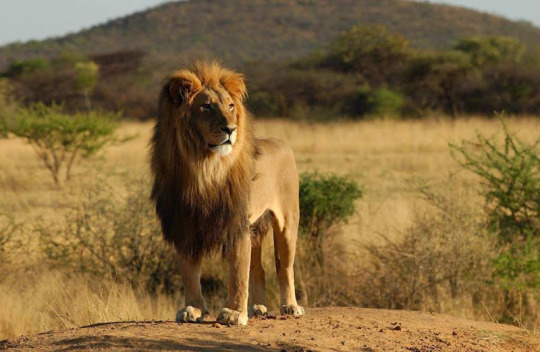
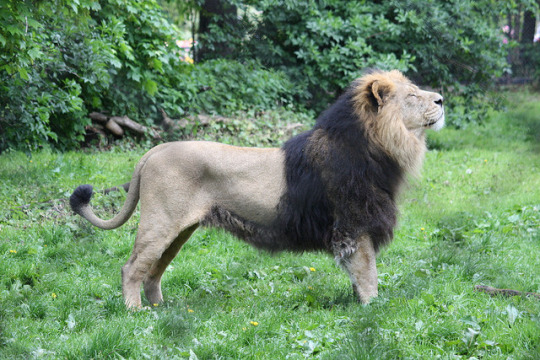
So far the closest thing we have to melanistic lions are the black-mained Asiatic lions
(Panthera leo persica), and it’s not known whether lions are even able to be melanistic!
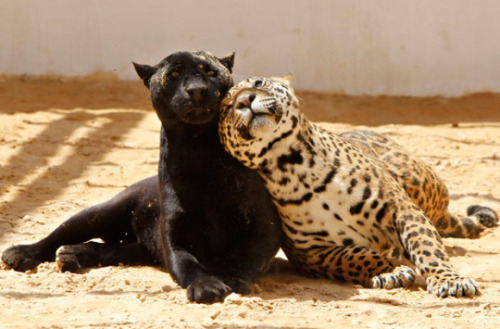
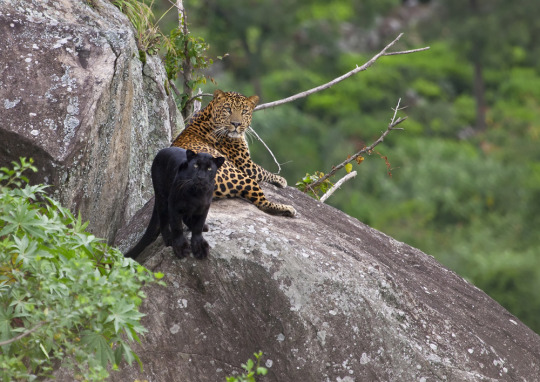
The only melanistic big cats we know of are jaguars…
…and leopards.
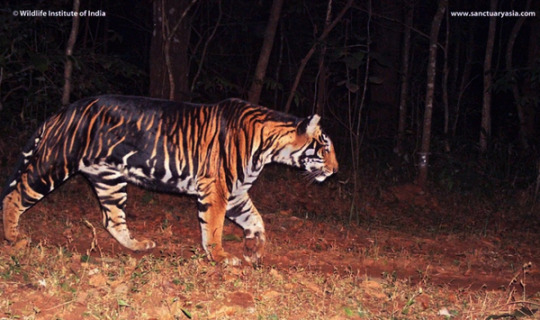
We do, however, know of abundism in other big cats! What’s abundism you may ask? Well, it’s basically when places that normally have a lot of melanin end up producing an abundance of it. So an abundistic tiger looks like this:
And an abundistic cheetah looks like this:
And just for good measure, here’s an abundistic leopard:
The San Diego Zoo has achieved another milestone this spring, after 4-year-old Amur leopard, Satka, (pronounced Saat Ka) gave birth to two cubs—the first time Amur leopard cubs have been born at the Zoo since the rare species first arrived in 2011. The cubs were born April 5th and are now spending more time outside of their den and in public view. Over the past few weeks, Satka has been introducing the young ones to their habitat, slowly allowing them to explore, climb and play, before corralling them into the den for feedings or to rest. Animal care staff said that so far, they haven’t had much contact with the cubs. Instead, their objective is to allow Satka to take the lead in their care. More info here.
I was so fortunate to see this and have the reflexes to actually hit the shutter as I sat amazed. The Mother and first cub had already crossed before our truck emerged from behind the bushes. (Thanks Joseph Sengeny!)
Not to critique evolution, but I would think orange and black stripes wouldn’t be as good for camouflage in a forest as, say, green and black would.
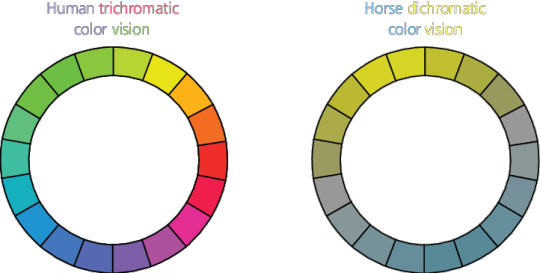
It turns out a lot of animals can’t see the difference between orange and green! Elephants, for instance, have dichromatic vision (two types of cones, rather than three like most humans.)
Check out this diagram from ResearchGate. It deals with the color vision of horses, who are also generally dichromatic. (I think, though I’m not sure, that zebras would have the same color vision as horses.) See how orange and green look to them?
Not to critique evolution but I think prey animals should be better at telling when their predator is dressed like a traffic cone.
It doesn’t matter what zebras see, because tigers are not native to Africa and do not naturally hunt zebra. Tigers are Asian and mostly hunt animals like deer, elk, and buffalo. These aren’t animals with great color vision. They don’t need to have it because they don’t eat fruit and so don’t need to know when the berry is ripe vs when it’s not. Good color vision is too expensive to have if you don’t need it. Deer put their vision stats in a wide field of vision that is sensitive to motion, low light capabilities, and possibly seeing UV light. They don’t have great color and lack a lot of acuity, but have a great sense of smell and good hearing. That’s way more useful if you’re prey. Deer see well in the blue end of the color spectrum and less well in the red. This makes sense because deer are most active in the dawn and dusk periods, when there is more blue in the light. Tigers are taking advantage of deer eyesight by being orange.
We see tigers are being obviously colored because tigers are fruit colored to our tree ape brains.
I don’t know what the best part of this is: implying that deer chose their attributes on a character sheet, or the fact that we get to see tiger colors because they look like a snack.
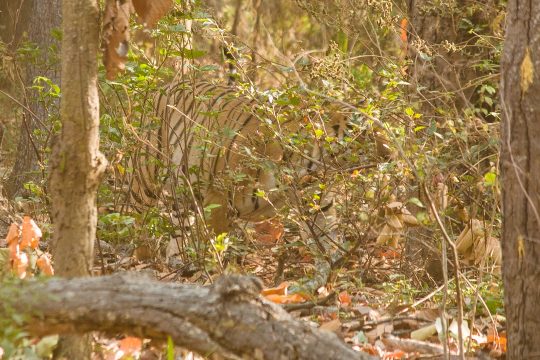
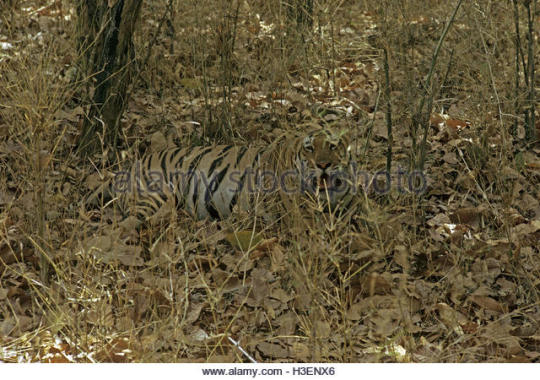
Ok but like, I think you underestimate just how well they blend in when actually in the environment. Like, just using tigers as an example.
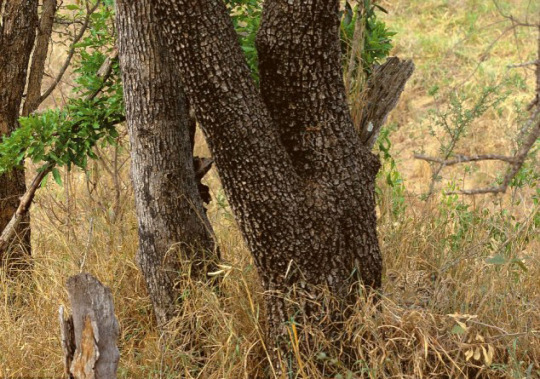
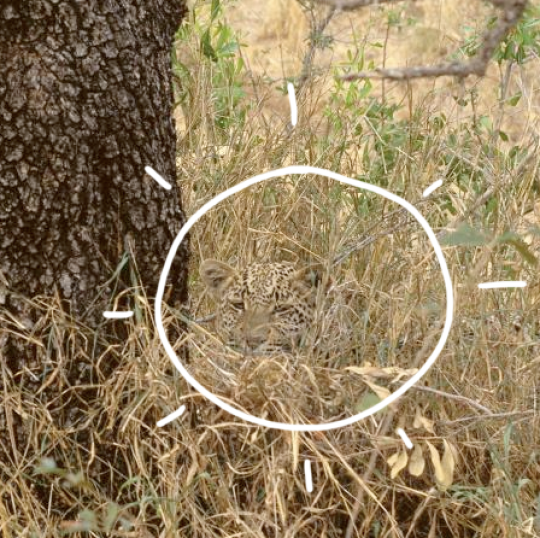
or how about a leopard?
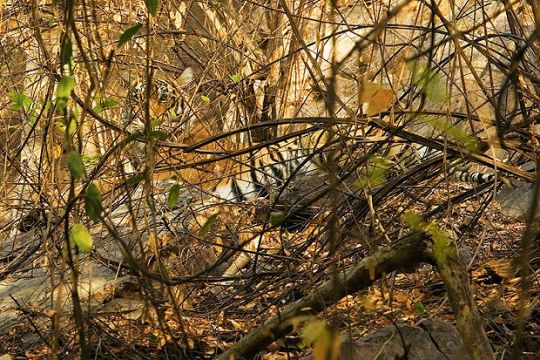
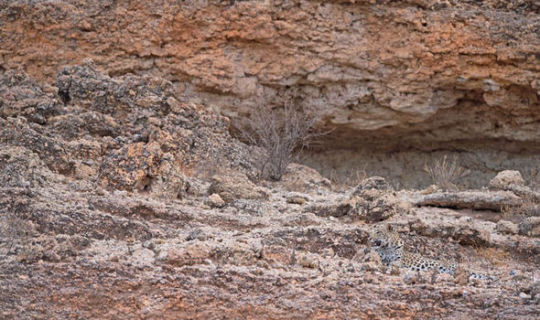
It’s called ‘disruptive colouration’ because the markings help to break up the animal’s outline against the grasses or rocks. And the rosettes on leopards and jaguars? Sun spots shining through the trees and leaves on the ground.
And this is how hard it is to spot them WITH colour vision. Now imagine the above images but with the limited coloured mentioned above?
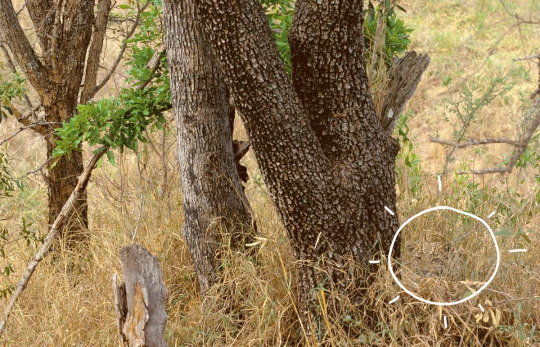
I’m sorry but there is not an animal in that first leopard picture
Are you, sure about that?
“Tigers are fruit colored” is my new favorite phrase.



 wupacing