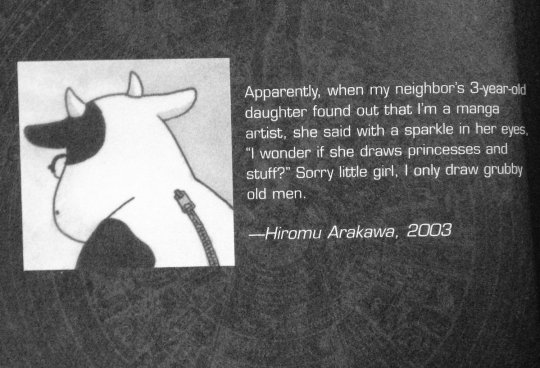
What’s actually funniest about this is the fact that Arakawa wrote that note in the bottom that says Ed is standing on something off camera or else he wouldn’t be tall enough
nothing will ever ruin me as much as this tiny little scene in Pluto. Dr. Ochinomizu finds a broken dog robot in a park and spends hours trying to fix it, to save it. he calls in favors, makes parts with his own hands. but the dog still wants to get up and play because it sees that he’s so sad.
and then it dies anyways.
and I know this has some keen foreshadowing to later events but it’s been years since the first time I read this, and I still can’t get through this chapter in one sitting. dammit Urasawa. in a story full of musings on hatred, suffering, and the power of emotions, this one hurts the most.
Can I talk for a moment about visual storytelling, cause, I feel like it’s something that a lot of adaptations forget about in lieu of trying to replicate their source material.
It’s a problem you see most often in anime derived from manga or light novels, but it’s also present in movies based on YA novels, and you gotta know what I’m talking about, start on black, opening narration, fade in as the main character explains the world and environment. This works in a book since the reader can’t see anything, they need the specifics of the world explained, but it feels like the movies are just like “well it worked for the book, it’ll work for us right?
I’d say it’s worse in anime, where characters will go on long internal soliloquies trying to explain their thought processes and complex emotions, which again, works for the manga, in a manga movement is very expensive, every single motion requires it’s own panel, which takes up the artist’s time, printed space, and a moment in the narrative, so it’s important to only show what absolutely needs to be shown. But animation is different, it’s all movement and the details are what sells it more than the dialogue.
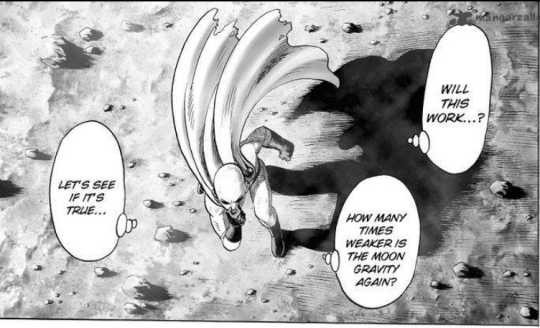
The reason I wanted to make this post is because of one scene in One Punch Man that perfectly exemplifies how to translate a written thought process into visual storytelling. After getting punched to the moon (err, spoilers), Saitama has this thought process
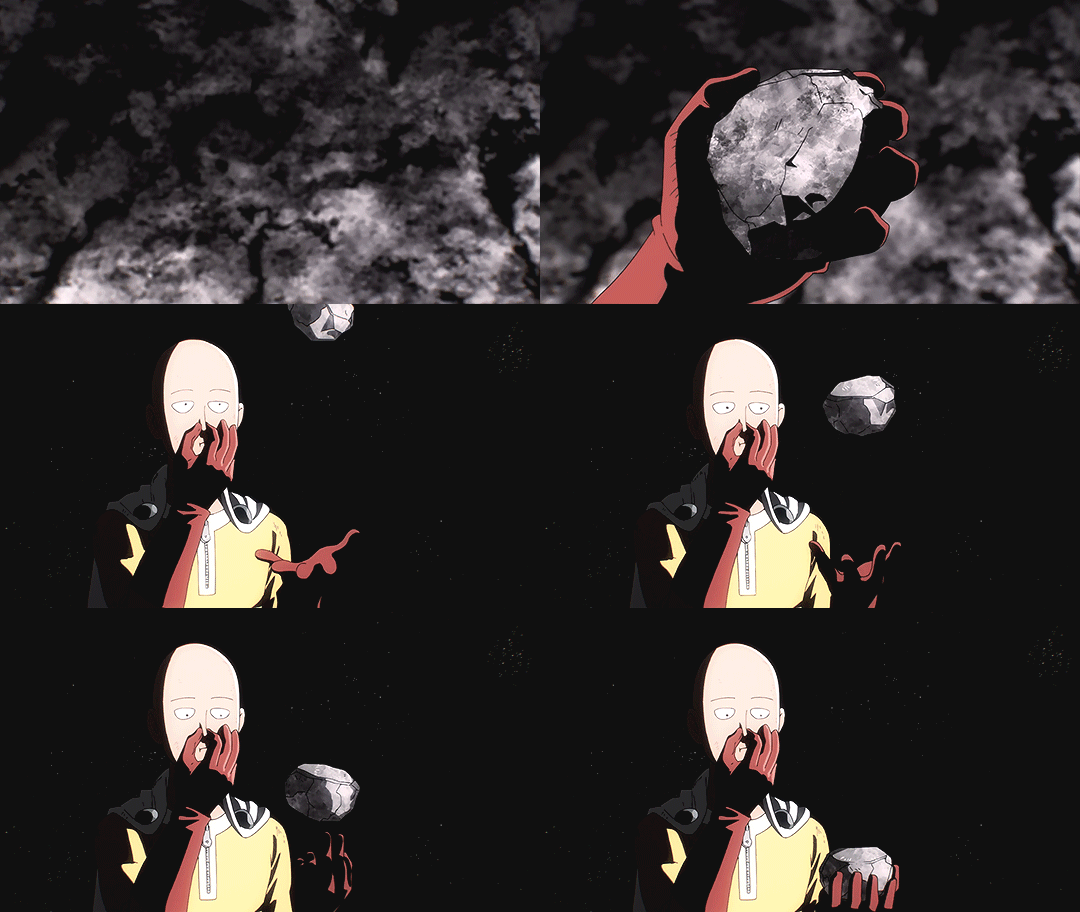
and it’d be easy to translate that entirely literally in the anime, Saitama crouches, has an internal monologue as he tries to figure out how much force he needs to put into his jump, and then he launches. Instead though, the scene is done completely silently, to sell the fact that he’s in space, but the thought process isn’t removed, it’s just show visually.
He throws a bit of moon rock to gauge the moon’s gravity, then launches, it’s a much more thoughtful approach to the scene and the audience’s ability to interpret visual information.
I just, really wish more adaptations realized the inherent strength of the visual medium instead of relying entirely on the source material’s structure and reliance on its own medium.
It is an amazing manga with an almost entirely LGBT+ cast and talks a lot about gender identity, sexuality and troubles faced by those within the LGBT+ community (especially for younger members). Also it is fucking BEAUTIFUL.
Kamatani Yuuki’s use of imagery and visual metaphors never fails to take my breath away.
Shimanami Tasogare is a story written by a trans author about the beauty and necessity of intergenerational queer communities and honestly I need it to never end.






 wupacing