How important do you have to be to have been “assassinated” instead of “murdered”?
That is…a good question
If the motivation is political, then it’s assassination. Otherwise it’s murder. You cannot be assassinated by accident.
If a jilted ex murders the Prince of Placeland, it’s just a murder.
If a jilted ex is also a member of a rival political faction, it may be assassination.
If a jilted ex is driving home in tears and accidentally runs over the Prince of Placeland in the middle of the night in a neighborhood where the streetlights are out because of the prince’s questionable infrastructure policy, it’s manslaughter.
Thanks murder side of tumblr
But what if the jilted lover hires someone to do it? Would a hit be considered assassination or murder?
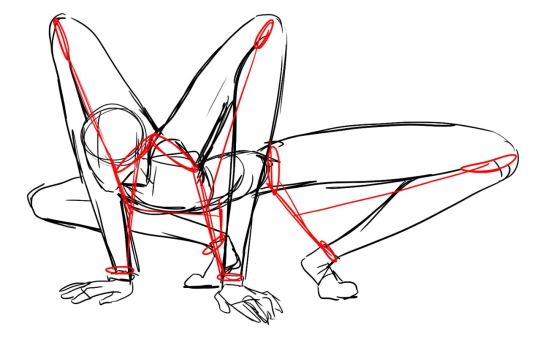
the first version is the easier but also boring for the eye, the sequence rectangular-square-square and repetitive, try to use diagonal cut, open space and vertical cut to help the movement of the story and action.
how have i never heard of archive.org until today.. it’s an internet library that functions just like a real one, as in you borrow the books for 2 weeks and then they are returned to the archive. you can dl pdfs as well, but you’ll lose access after the 2 week period. it’s all free tho, literally just like a real library. i was searching for a cheap copy of this serial murder book from the 90s for my thesis and i found it for free on here. there’s like.. no gimmick at all? i’m so amazed. i literally just signed up and now i’m reading a super hq scan of this book for free. i love libraries.
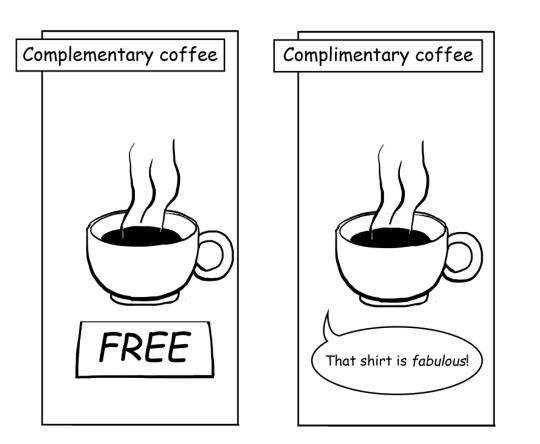
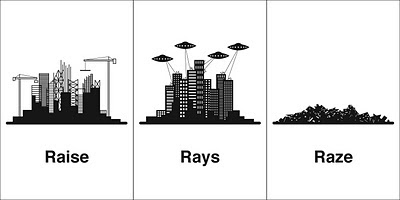
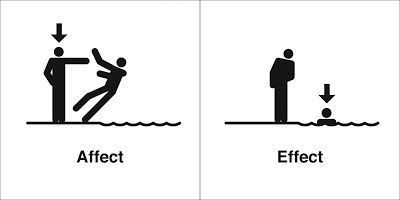
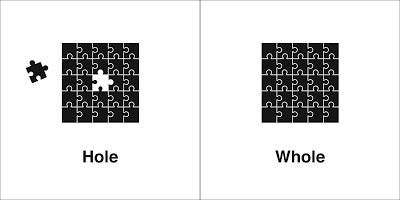
IF IT HAS BEEN A VERY LONG DAY, YOU ARE ‘WEARY’. IF SOMEONE IS ACTING IN A WAY THAT MAKES YOU SUSPICIOUS, YOU ARE ‘WARY’.
ALL IN ‘DUE’ TIME, NOT ‘DO’ TIME
‘PER SE’ NOT ‘PER SAY’
THANK YOU
BREATHE – THE VERB FORM IN PRESENT TENSE
BREATH – THE NOUN FORM
THEY ARE NOT INTERCHANGEABLE
WANDER – TO WALK ABOUT AIMLESSLY
WONDER – TO THINK OF IN A DREAMLIKE AND/OR WISTFUL MANNER
THEY ARE NOT INTERCHANGEABLE (but one’s mind can wander)
DEFIANT – RESISTANT DEFINITE – CERTAIN
WANTON – DELIBERATE AND UNPROVOKED ACTION (ALSO AN ARCHAIC TERM FOR A PROMISCUOUS WOMAN)
WONTON – IT’S A DUMPLING THAT’S ALL IT IS IT’S A FUCKING DUMPLING
BAWL- TO SOB/CRY
BALL- A FUCKING BALL
YOU CANNOT “BALL” YOUR EYES OUT
AND FOR FUCK’S SAKE, IT’S NOT “SIKE”; IT’S “PSYCH”. AS IN “I PSYCHED YOU OUT”; BECAUSE YOU MOMENTARILY MADE SOMEONE BELIEVE SOMETHING THAT WASN’T TRUE.
THANK YOU.
*slams reblog*
IT’S ‘MIGHT AS WELL’. ‘MIND AS WELL’ DOES NOT MAKE GRAMMATICAL SENSE.
Getting away from the homophones, another thing I need to mention:
LOSE – when you don’t win, or if you have lost something
LOOSE – the opposite of tight.
If you lose weight, then your pants may be loose.
homie, those are homophones
No, lose has a harsher “s” sound, more like a /z/. BUT ANYWAY CHOCKING IS NOT WHAT HAPPENS WHEN YOU CAN’T BREATHE, YOU’RE CHOKING.
I’m also amused when people mess up phrases like “for all intensive purposes” which is supposed to be “for all intents and purposes”. This is why enunciation is important. If people only ever hear these, not read them, they’re so easy to get wrong.
With bated breath. As in: With breath abated or held.
Not “with baited breath”, like a raccoon that has raided a fishing cooler.
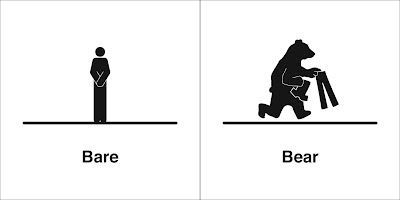
you BEAR heavy things, including the metaphorical weight of having children.
you BARE by uncovering something, like your body or your soul.
YOU DO NOT “BARE” CHILDREN UNLESS YOU’RE GETTING THEM READY FOR A BATH OR SOMETHING.
File this under “super obvious yet I always seem to forget it.”
I don’t write romance (I totally respect people who do, though!) but this is also great writing advice in general! What is preventing the protagonist from achieving their goal?
Why can’t these two people be together now?
Why can’t the mystery be solved now?
Why can’t they overthrow the evil overlord now?
If you don’t have a solid answer for these questions, that’s a good indicator that the plot could use some more work.
Also test your answer a little bit. If it’s as thin as they’re just refusing to sit down and have a simple conversation, you might want to re-think how things are going.
As a beta reader/editor, I tend to ask this question a lot: “Why are they doing it this way when there’s a much easier path available?” That’s not to say that they should take the easier path, because that would usually be boring. Instead, the point is that the question needs an answer–either eliminate the easier path or give them a very clear reason for not taking it. (And if I’m asking the question, that reason isn’t as clear as you think it might be.)
I find it very difficult to root for characters who have a sensible option available and just don’t take it. If the only reason is “Because there wouldn’t be a story otherwise,” you haven’t actually found the story yet.
And this is why the Big Misunderstanding as a primary plot device is almost universally disliked.
Writers: Bad people are still people with their own problems and emotions, even when they cause problems and distress and hurt other people.
Tumblr Gremlins: Problematic. Blocked.
If you portray bad people as good people, then you’re normalizing abuse. Of course that’s fucking problematic.
Newsflash: people and good people are not synonymous.
If you portray a villain, that villain has thoughts, emotions, desires. Maybe even loved ones. They have things they want. They have reasons for what they do. And none of this excuses their villainous acts.
If you portray a good person, all of the same things apply. Thoughts, emotions, desires, loved ones, things they want, reasons, etc. And when you look at the acts they commit, you think to yourself, “That is a good person. I consider this person heroic, someone worth emulating.” Whereas when you see what the villain does, you think, “Man, that is fucked up.”
The entire difference between a good person and a bad person is not whether or not they are people, but whether the things they do and their reasons for doing them are good or bad. So you can portray a bad person, who abuses people, as having emotions, and desires, and thoughts, and they can still be a bad person.
So yeah. The OP says “bad people should be written as if they are people.” This is true. “Normalizing abuse” is what happens when you write bad people as if they are incomprehensible evil monsters with no common humanity with the rest of us, because this tells abuse victims, most of whom love their abusers, “You’re not really being abused because the person you love is not a bad person! Bad people are 100% evil monsters and the person who is hurting you obviously has feelings!” No. Bad people are people. When you write an abuser, write them as a person, with thoughts and feelings, because real abuse victims know that their abusers are people, and you don’t want to convince them that their abusers can’t be abusers because only monsters are abusers. You want them to understand that abusers are human too, because they already know the person abusing them is human. What they don’t know is whether or not they can consider what’s happening to them to be abuse.
^^^
Antis: “Only good people are actually fully human beings! This totally isn’t fascist or anything!”
“If you write well-rounded, deep, believable characters you’re a fucking abuse apologist!”
This is way too similar to that god damn “if you write characters being traumatized/in traumatizing situations then you are fetishizing abuse and you’re bad!” Like stories need conflict and sometimes being involved in conflict can be traumatizing, do you really want to consume only media that is entirely Good People Doing Good Things, Everyone Is Happy And Nothing Bad Ever Happens?? Because that’s sounds like a whole lot of boring to me
Given the alternative that we’ve had forever now, where characters go through intensely traumatic shit but have absolutely no trauma whatsoever – thus conveying the message that the problem is YOU, YOU’RE the only one who breaks like that – I’m gonna have to say I’ll take the realistic portrayals of trauma.
There is something, I think, to us as a whole, as humans, that is INSANELY disturbing and difficult about viewing irredeemable, evil people as PEOPLE. Like, we cannot accept that people who do things like commit genocide or murder people or abuse people are, in a lot of ways, just like us. That they have families and feelings and complex inner lives. And my gf just summed up why the portrayal of evil people as something apart from human is such a problem:
Because it keeps us from confronting evil when it DOES actually show up. It keeps us from confronting other people, who we know, who espouse hatred. Because how can this person, whom we know , who maybe we are even friends or family with, be an empty evil husk? It’s what keeps us from addressing things like racism, fascism, white supremacy- you name it.
When we dress up evil people as something apart from us, when we act like humans are inherently better than the evil people we see in media, it means that come being faced with a person who is doing abhorrent things, we are unable to process that. Because we feel like humanity and evil are incompatible.
You know it’s funny but we really need more bad people depicted as real people because it’s meant to be a warning to what you can become if you aren’t careful. Antis are good examples of that because they genuinely don’t realize how evil their behavior is because they think they are doing it for the greater good or with the best intentions justifies it. People are always the hero of their own story and if you can’t recognize that you are capable of being a monster then you will become a monster because you see everything that you do as good. It takes any complex thinking about morals out of the picture because you aren’t a laughing disney villain so why should you be concerned if your decisions hurt people if it wasn’t apart of the big picture or plan you have.
Think the Original The Lorax where the bad guy was viewed as complex and had good points even though he still was the bad guy. He was complicated and Kids could understand it through Seuss’s writing that he was just a person. Then look at say Ursula or Makeficent who had the complexity of a wet napkin and few kids could imagine themselves becoming. Obviously some kids can imagine themselves as them but which story really teaches you that good people do bad things or bad people don’t always realize they are bad.
It’s not some evil pro villain thing to make bad guys real. It’s a warning that you need to be careful because you could easily become the bad guy even if you have the best intentions.
i really like the advice “write marginalized characters but don’t write about marginalization unless you experience it”
absolutely i think cis people should expand their horizons and write trans characters, but they shouldn’t write stories about being trans. likewise i think allistic / NT authors should write about autistic characters! but not stories about being autistic.
represent us. absolutely. but don’t tell our stories. let us do that.
This is an excellent way of exploring/explaining that division, which is hard to express succinctly. Brilliant. 👏🏼



 wupacing
