ive been reading a book that basically explains how so-called “brain differences” between the genders is the result of gendered socialization and not the cause of it. i honestly expected the book to be very cis-centric but its actually the opposite, the author stresses that testimony from trans ppl is actually indispensable because we’ve, in a sense, “lived both experiences”
more cis feminists should have this mindset
one of the first examples that she uses to introduce her point about how perception by others can shape a person’s performance actually uses a trans woman. it explains that as a certain trans woman became to be seen as a woman more and more frequently, the ppl arond her eventually started viewing her as being ill equipped for tasks that they did not bother her about pre-transition. eventually she even found herself underperforming in these tasks herself.
I knew it was this book before I’d finished reading the first two lines. Honestly this book is indispensible if you want to debunk any gender determinism people claim is science. I can’t recommend it enough.
(Bonus bonus: I am myself a neuroscientist, and the old white men mentioned above – who are not – could not have missed the point harder if they’d actively tried. Which. Maybe?)
How You’d Survive the Zombie Apocalypse – Disability Edition
Because I saw a post that hit my emotional bone with a sledgehammer, and as a writer that wants to do her damndest to to include everyone, here’s how it would work.
For those fucks that say they would just leave people behind.
– You’re blind? Shoot, zombies are loud. You’d hear them a mile away. Added bonus if this is the type of Zombie Apocalypse where everything goes kinda steampunk: give your character a hoover cane that doubles as a weapon. If Ash from The Evil Dead can put a fucking chainsaw on his hand stump, you can put something cool on a cane. Be creative!
-You’re deaf? Have the single electronic hearing aid for miles that can pick up radio frequencies. You hear voices in your head that lead your group to safety, not to mention you could teach others sign language. Great tool for an apocalypse for silence!
– You don’t have certain limbs, or they are perhaps not fully formed or damaged? One less thing for the undead fuckers to bite. If you’ve ever known someone that doesn’t, you *know* that they get around in their own unique ways with or without. Also, see Ash from The Evil Dead example. Give them a chainsaw! Or a turret gun foot, like the Scotsman from Samurai Jack.
That too Not Real? Fine, how about this. Let’s say there’s a disabled character that survived DVT in one of their legs. This damaged the blood flow permentantly to that leg. Now they’re in a wheelchair. But how is the Zombie virus commonly spread? Bites, you get their liquids into your blood and boom, brain eater. What would happen if your blood flow is already compromised and you got bit in the leg by a crawler? It wouldn’t be able to spread. Your disability would save your life.
Not to mention you could trick the hell out of a wheelchair. Give it spikes, a machine gun, you name it.
– Do you have fibro? Are you always in pain? You are an absolute *godsend* when it comes to identifying medications, or knowing natural remedies. You were surviving an internal apocalypse long before the Zombie one came. You’re the toughest fucker in the world by default. Pain and you are old pals. The only difference is now you can physically smash it with a baseball bat.
“You were surviving an internal apocalypse long before the Zombie one came.”
*Slides into this conversation holding mental illnesses like a gift basket*
Anxiety? You already know how to deal with panic and are always noting (consciously or unconsciously) safe locations where you can have a breakdown if you need it. You will not only survive but be the reigning Rescuer.
ADD/ADHD? An adrenaline rush all you need to feel centered and human? This is your playground. You will be our #1.
Depression? There’s nothing like running from zombies with a bunch of other people to get your endorphines flowing and keep you from feeling isolated.
PTSD? You’re hardwired to protect yourself against danger now, so you become Most Valued Zombie Lookout. PLUS, everyone around you now has PTSD from whatever they’ve witnessed in the apocalypse, so you’re surrounded by people confirming reality and working through it together.
I’m not saying the zombie apocalypse might actually end up being a giant group therapy session…but it’ll certainly be to our benefit.
What about surviving with cerebral palsy and you don’t have a wheelchair to help you move faster?
Your legs work, just not enough to run
You’re now the getaway driver who runs zombies over while people are shooting and stabbing
Your friend Delaney took down two with a rifle while you plowed through ten with your truck
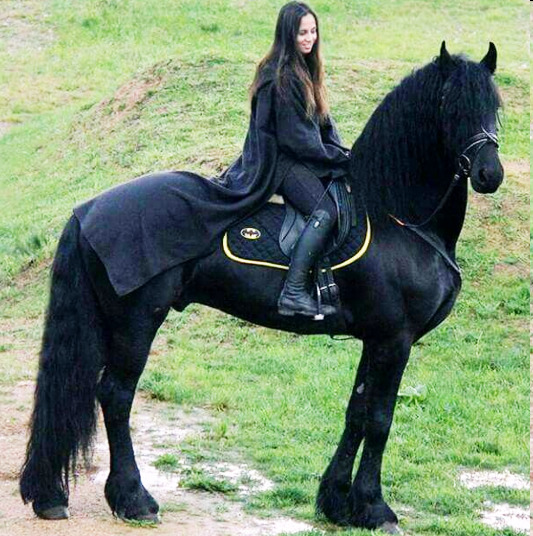
Big Horses are a Very New Thing and they Likely Didn’t Exist in your Historical and/or Fantasy Settings.
You’ve all seen it in every historical piece of media ever produced. Contrary to popular belief, a big black horse with long legs and long flowing mane is not a widespread or even a particularly old type of horse.
THIS IS NOT A MEDIEVAL THING. THIS IS NOT EVEN A BAROQUE THING. THIS IS A NINETEENTH CENTURY CITY CARRIAGE HORSE.
All the love to fancy Friesian horses, but your Roman general or Medieval country heroine just really couldn’t, wouldn’t, and for the sake of my mental health shouldn’t have ridden one either.
Big warmblood horses are a Western European and British invention that started popping up somewhere around 1700s when agriculture and warfare changed, and when rich folks wanted Bigger Faster Stronger Thinner race horses. The modern warmblood and the big continental draught both had their first real rise to fame in the 1800s when people started driving Fancy Carriages everywhere, and having the Fanciest Carriage started to mean having the Tallest and Thinnest Horses in the town.
Before mechanised weaponry and heavy artillery all horses used to be small and hardy easy-feeders. Kinda like a donkey but easier to steer and with a back that’s not as nasty and straight to sit on.
SOME REAL MEDIEVAL, ROMAN, OTTOMAN, MONGOL, VIKING, GREEK and WHATEVER HISTORICALLY PLAUSIBLE HORSES FOR YOU:
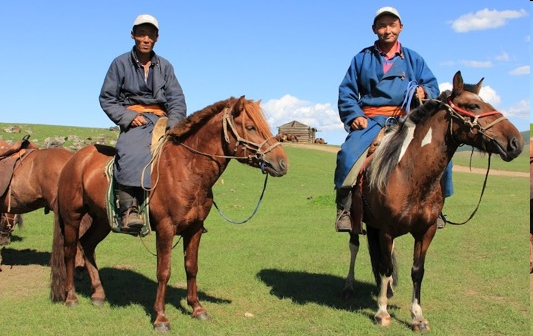
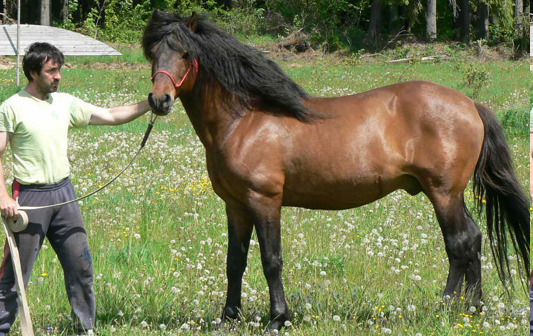
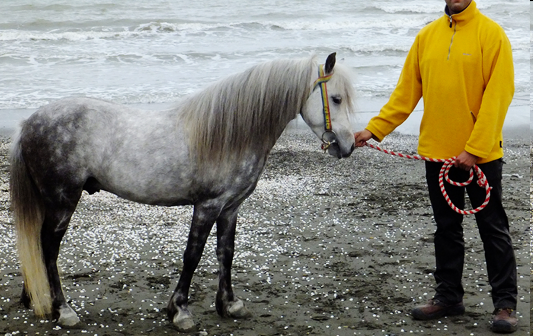
“Primitive”, native breeds all over the globe tend to be only roughly 120-140 cm (12.0 – 13.3 hh) tall at the withers. They all also look a little something like this:
Mongolian native horse (Around 120-130 at the withers, and decendants of the first ever domesticated horses from central Asia. Still virtually unchanged from Chinggis Khan’s cavalry, ancestor to many Chinese, Japanese and Indian horses, and bred for speed racing and surviving outdoors without the help of humans.)
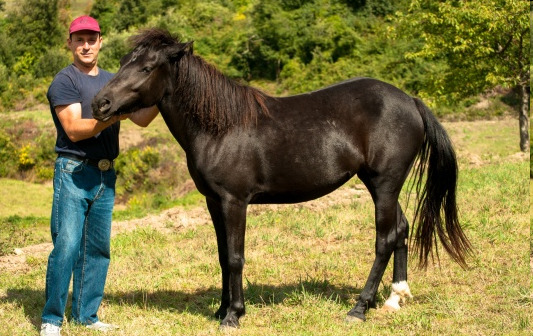
Carpathian native horse / Romanian and Polish Hucul Pony (Around 120-150 at the withers, first mentioned in writing during the 400s as wild mountain ponies, depicted before that in Trajanian Roman sculptures, used by the Austro-Hungarian cavalry in the 19th century)
Middle-Eastern native horse / Caspian Pony (Around 100-130 at the withers, ancestor of the Iranian Asil horse and its decendants, including the famous Arabian and Barb horses, likely been around since Darius I the Great, 5th century BC, and old Persian kings are often depicted riding these midgets)
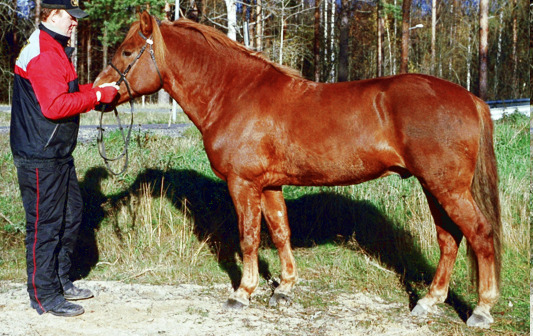
Baltic Sea native horse / Icelandic, Finnish, Estonian, Gotland and Nordland horses (Around 120-150 at the withers, descendant of Mongolian horses, used by viking traders in 700-900 AD and taken to Iceland. Later used by the Swedish cavalry in the 30 years war and by the Finnish army in the Second World War, nowadays harness racing and draught horses)
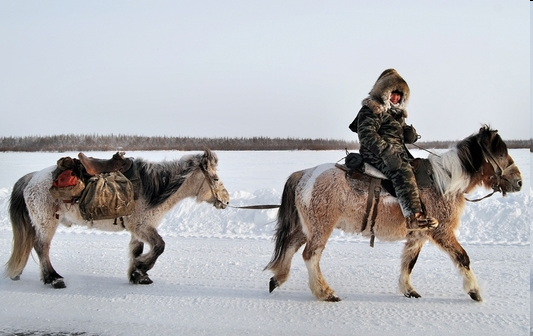
Siberian native horse / Yakutian pony (Around 120-140 at the withers, related to Baltic and Mongolian horses and at least as old, as well-adapted to Siberian climate as woolly mammoths once were, the hairiest horse there is, used in draught work and herding)
Mediterranean native horse / Skyros pony, Sardinian Giara, Monterufolino (Around 100-140 at the Withers, used and bred by ancient Greeks for cavalry use, influenced by African and Eastern breeds, further had its own influence on Celtic breeds via Roman Empire, still used by park ranger officers in Italy)
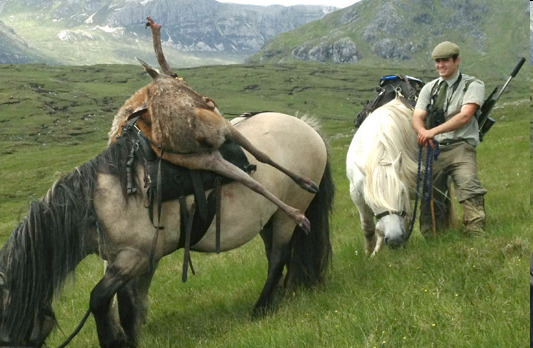
British Isles’ native horse / various “Mountain & Moorland” pony breeds (Around 100-150 at the withers, brought over and mixed by Celts, Romans and Vikings, base for almost every modern sport pony and the deserving main pony of all your British Medieval settings. Some populations still live as feral herds in the British countryside, used as war mounts, draught horses, mine pit ponies, hunting help and race horses)
So hey, now you know!
How the hell do you ride some of these things into battle?
I feel like I’d break the damn things riding them, much less a 200 pound knight in half plate.
Easily! First of all, people used to be smaller back in history.
Second of all, riding a horse demands fitness, no matter the size of the horse. The weight of the rider matters less if they are in good physical shape. A rider out of shape at 60 kilos / 133 lbs / 9.4 stone with no control over their seat shaking about in a slumped position will feel heavier for the horse than a rider at 70 kg / 155 lbs / 11 stone if they have good control over their own balance and muscles.
Third, heavy plate armour is one of the first reasons for breeding heavier horses, and came into fashion in the 16th century. But even a half plate jousting armour usually weighs only about 50kg. The modern weight guide for riding an Icelandic horse is around 80-100 kg / 177-220 lbs / 12.5-15.7 stone, so they can carry a lot of weight compared to their size. And Icelandic horse wasn’t even bred for heavy armour!
If you wear a heavy plate armour, you need a heavy horse. Still doesn’t mean tall. I gathered some draught horse / cavalry / knight type pictures for you.
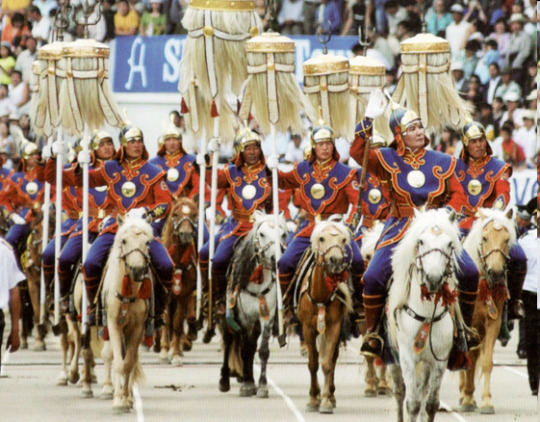
Mongolian riders with Mongolian horses in Naadam parade garb. Traditionally light cavalry, for archers and lancers, or long-distance travel.
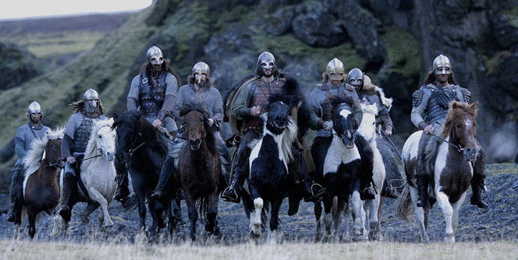
Icelandic riders with Icelandic horses in Viking-type armour, traditionally light cavalry or long-distance travel. They wear chainmail and lamellar armour.
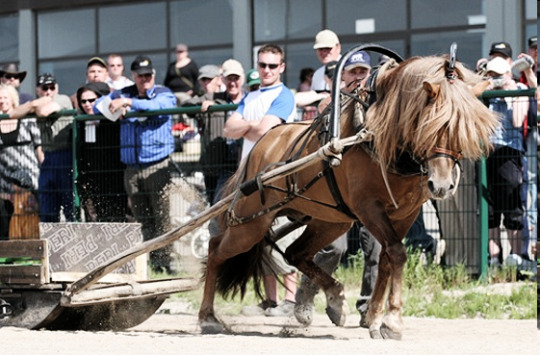
When pulling, horses are even stronger than when carrying. The Finnhorse is not a heavy continental draught, but compared to its size it’s one of the strongest breeds in existence. An average draught horse pulls around 80% of its weight. This is pony-sized (138 cm / 13.2 hh) Finnhorse stallion Vuohimäen Havu, weighing at 340 kg / 750 lbs, and his weight pull record is206% of his own weight. He could haul around another horse twice his size.
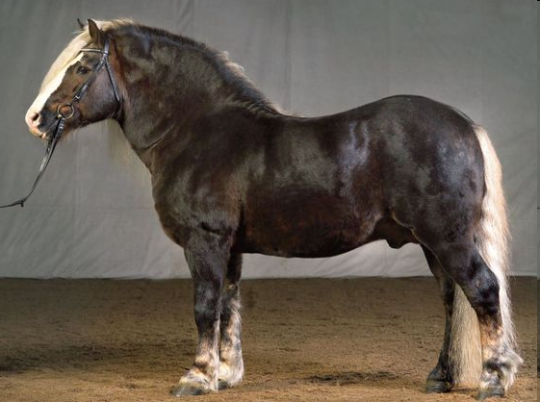
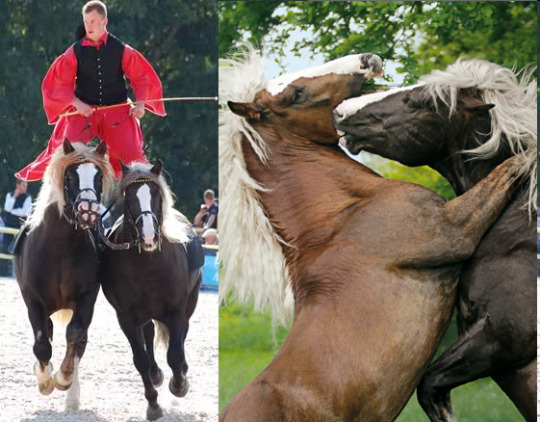
And if we take a heavier continental-type draught horse, for example the Black Forest Horse from Germany (Schwarzwälder), you’ll see that heavy horse doesn’t have to be tall. The average height ranges from only 14.2 hh (pony-sized) to 15.3 hh, and in centimetres that’s 147-160. Still I doubt you could crush one of these tractors even if you tried.
People and horses before you have already tested that. They weigh around 550-640 kg or 1200-1400 lbs. The Finnish stallion above could pull the dead weight of one of these and vice versa.
Via Schatky with thanks to Lickal0lli for the translation
This is actually such an amazingly motivational post because it explains visually exactly what art block is. Do you know what art block is?
Art block is that moment when you realise your skills could be so much more then they currently are. It frustrates you to draw because you can finally see your drawings differently. You can see where they can be better and you want them to be better. It’s not a matter of “I can’t draw today”, it’s a matter of “I imagined this would turn out so much better” and “there’s something missing, I just know it. What technique did I miss.” You’ve got past that temporary phase of analysing and researching and now you’re able to incorporate it in your own work, you just need to figure out how, and when you get past that art block. Well, you’ll see the improvement before you know it. Slowly, but it’s there. And once you get comfortable with using those new skills you’ll move on and start analysing again, and you’ll see where you can improve.
Stay experimental and open to learn, it’s the quickest way to get over art block.
((Some inspiration to all the lovelies struggling with an art block right now~))
Free Graphic Novels (DC, Marvel, Image, etc), Music, TV shows, and music on HOOPLA.
Free music that you can KEEP on FREEGAL
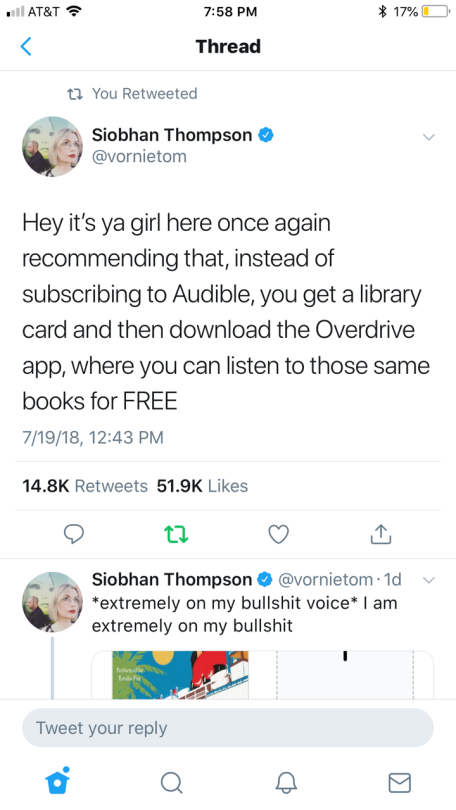
You are PAYING for all this with your tax money – USE THEM. Most likely systems will have all 3 or 2 out of 3, so if you aren’t sure call your local library’s reference/information desk and how you can get set-up or started.
Mr. Rogers had an intentional manner of speaking to children, which his writers called “Freddish”. There were nine steps for translating into Freddish:
“State the idea you wish to express as clearly as possible, and in terms preschoolers can understand.” Example: It is dangerous to play in the street.
“Rephrase in a positive manner,” as in It is good to play where it is safe.
“Rephrase the idea, bearing in mind that preschoolers cannot yet make subtle distinctions and need to be redirected to authorities they trust.” As in, “Ask your parents where it is safe to play.”
“Rephrase your idea to eliminate all elements that could be considered prescriptive, directive, or instructive.” In the example, that’d mean getting rid of “ask”: Your parents will tell you where it is safe to play.
“Rephrase any element that suggests certainty.” That’d be “will”: Your parents can tell you where it is safe to play.
“Rephrase your idea to eliminate any element that may not apply to all children.” Not all children know their parents, so: Your favorite grown-ups can tell you where it is safe to play.
“Add a simple motivational idea that gives preschoolers a reason to follow your advice.” Perhaps: Your favorite grown-ups can tell you where it is safe to play. It is good to listen to them.
“Rephrase your new statement, repeating the first step.” “Good” represents a value judgment, so: Your favorite grown-ups can tell you where it is safe to play. It is important to try to listen to them.
“Rephrase your idea a final time, relating it to some phase of development a preschooler can understand.” Maybe: Your favorite grown-ups can tell you where it is safe to play. It is important to try to listen to them, and listening is an important part of growing.
Rogers brought this level of care and attention not just to granular
details and phrasings, but the bigger messages his show would send.
Hedda Sharapan, one of the staff members at Fred Rogers’s production
company, Family Communications, Inc., recalls Rogers once halted taping
of a show when a cast member told the puppet Henrietta Pussycat not to
cry; he interrupted shooting to make it clear that his show would never
suggest to children that they not cry.
In working on the show,
Rogers interacted extensively with academic researchers. Daniel R.
Anderson, a psychologist formerly at the University of Massachusetts who
worked as an advisor for the show, remembered a speaking trip to
Germany at which some members of an academic audience raised questions
about Rogers’s direct approach on television. They were concerned that
it could lead to false expectations from children of personal support
from a televised figure. Anderson was impressed with the depth of
Rogers’s reaction, and with the fact that he went back to production
carefully screening scripts for any hint of language that could confuse
children in that way.
In fact, Freddish and Rogers’s philosophy of
child development is actually derived from some of the leading
20th-century scholars of the subject. In the 1950s, Rogers, already well
known for a previous children’s TV program, was pursuing a graduate
degree at The Pittsburgh Theological Seminary when a teacher there
recommended he also study under the child-development expert Margaret
McFarland at the University of Pittsburgh. There he was exposed to the
theories of legendary faculty, including McFarland, Benjamin Spock, Erik
Erikson, and T. Berry Brazelton. Rogers learned the highest standards
in this emerging academic field, and he applied them to his program for
almost half a century.
This is one of the reasons Rogers was so
particular about the writing on his show. “I spent hours talking with
Fred and taking notes,” says Greenwald, “then hours talking with
Margaret McFarland before I went off and wrote the scripts. Then Fred
made them better.” As simple as Mister Rogers’ Neighborhood looked and sounded, every detail in it was the product of a tremendously careful, academically-informed process.
That idea is REALLY worth learning to talk to the kiddos. Mr. Rogers still has a lot to teach us–especially for our own kids.
It’s okay to take a break.
– We all need time to recharge, and your fans will still be there when you get back!
It’s okay to go from fandom to fandom.
– Nobody is going to criticize you for following your muse, and if they do, then you know who not to associate with in the future!
It’s okay to have a niche.
– If smut is where it’s at, then write smut. If you’re all about the fluff, then schmoop away. If angst is what does it for you, then invest in tissues. Nobody has the right to tell you that you should be doing something else if that isn’t what interests you!
It’s okay to be critical of your own work.
– Just don’t allow yourself to become so self-deprecating that you freeze!
It’s okay to ask for help.
– If you’re unsure of a trope, concept, fact or universe, reach out to your circle of friends. Chances are, they’ll be more than happy to help you because they want to see you succeed!
It’s okay to ignore criticism.
– Constructive criticism is only constructive if it helps you. If someone says something that doesn’t assist or improve you in any way, then please feel free to ignore whatever nugget they are imparting, because chances are good they don’t have the best of intentions for you!
It’s okay to stop writing all together.
– Your fans will miss you (and chances are good you have way more than you realize,) but sometimes, you just gotta do you!
It’s okay to write with whatever method works for you.
– Long writing marathons where you bang out 12,000 words in one day? Great! Linear, dry style that means you occassionally get stuck because you can’t figure out this scene, but it’s all worth it in the end? Rad! Piecemeal work that you thread together at the end? Fabulous! As long as it works for you, there is no wrong way to write!
It’s okay to have fun.
– I think this goes without saying, no? But it seems that sometimes, authors need permission. So consider this permission to wile the hell out, and enjoy the ride!
I think there’s a few of us needing this right now, myself included.

 wupacing