OH GOD THOSE POOR BABIES i am sobbing i am laughing so hard
In the last pic the cat is all “oh thank god I found ground NO WAIT COME BACK GROUND”
THOSE POOR BABIES OMG WHY AM I LAUGHING AT THIS
Astronaut: We need to fund 1.4 billion dollars. NASA: FOR WHAT?! Astronaut: We want to put kitties in space and have them float around in zero gravity. NASA: Here is all the money. God bless.
Those cats are just ?????????????!!!!!!!!!!!!!!!!????!?!?!?!?!?!?!!!
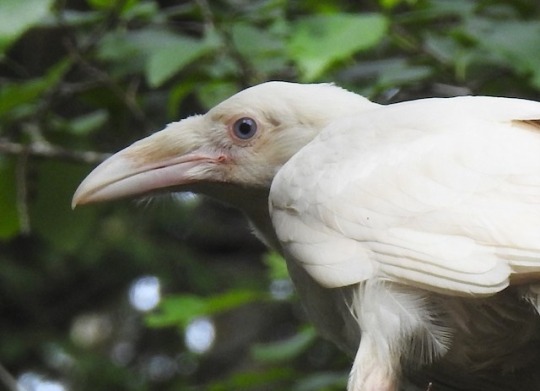
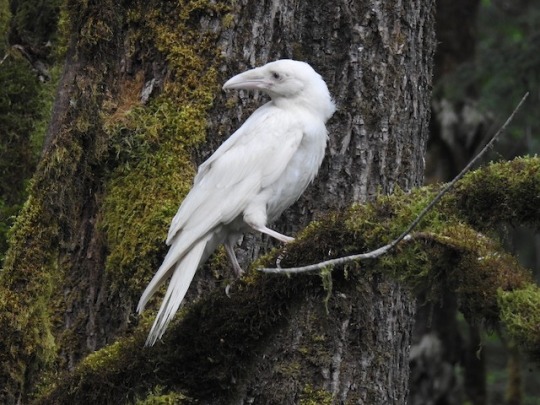
a common raven with leucism. leucism is similar to albinism, but is a partial lack of many pigments, not a complete loss. ravens are known for their black pigmentation; pure white birds like this one suffer from increased visibility to predators, as well as sometimes being rejected socially.
An excellent gentlebird and scholar, and one whom I would willingly friend!
I don’t think this bird isn’t leucistic, this is full albinism. Note the pale eyes, bill, and legs. Leucistic corvids tend to vary from various shades of cinnamon to piebald-like patches of white.
Here’s a great example of partial leucism in a crow that presents as ‘patches’ of white.
Pale eyes and pink gape are here a sign of this being a young animal, recently fledged. It was still begging parents, according to the photographer.
Textbook total leucism – lack of pigment on feathers, but beak, eyes, and feet are still pigmented.
I was DELIGHTED to see this potential correction in my notes, as it is an invitation to talk about a FAVORITE THING. I didn’t challenge the OP’s description myself as, to me, this is actually textbook leucism.
Albinism is the complete loss of melanin, so you’re either albino or you’re not, but leucism is considered to be a spectrum; in terms of melanin loss, it can be any decrease in melanin between albino and wild-type. So the instant that I saw this proposed correction, I took off my hat and threw it on the floor and shouted “I am READY to aRGUE that this bird is leucistic – just with higher degree of color loss than we may have expected to see. YEEHAW.” I was extremely excited and happy about the opportunity.
The reason I felt so confident is the blue shade of the eyes and the beige-y beak. Blue eyes are perfectly on-brand for leucistic animals, as blue eyes in animals (and humans) are caused by partial deposits of melanin; albinism is usually characterized by pink- or red-appearing eyes, because there is no cloud of melanin between the surface of the eye and the blood vessels behind it. If there is enough melanin to make a blue eye, then you can make the argument that the animal is leucistic.
I would also expect to see pink legs and beak rather than pale ones, like the OP bird has. Albinos also have a watery-pink sort of look around the eyes, which are generally not sparkling/bright, and I feel like there is a sort of raggedness about the feathers of an albino bird, probably due to the difficulty they have with poor vision.
Above is an albino magpie from an article in the Nautilus, with that sort of pinkish transparency and watery, ragged look I associate with a bird that has poor vision. With this visual comparison, I honestly would look at the bird in the OP and still call it leucistic, even though @birdsbugsandbones produces a good and compelling argument. (ETA, if it isn’t clear! I think they made a very VERY good argument and I definitely re-examined everything carefully and joyfully because of it! I am really happy to be talking about this! They make some great points!)
But let us never forget that Birdwatching People Are Mad with a Fulgent and Glittering Madness. So after throwing down my hat on a point of pedantry, I then proceeded to cheat by tapping into the rich seam of Birdwatching Madness that I expected lurked behind the photo in the OP. And boy, did it pay the FUCK off.
The source, the Macaulay Library, kindly tells us (after a lightyear of scrolling through entries for the Common Raven, Jesus Christ, Cornell, Pull Your Shit Together) that the two photos in the OP were taken by Cos van Wermeskerken on 6 Jul 2018, in Nanaimo, British Columbia, Canada. Thanks, Cornell!
However, within thirty miles of the excellently-documented sighting in the OP are the Qualicum White Ravens, which are very exciting to birders. Apparently this area of British Columbia is just CRAWLING with ‘white ravens,’ which are happily documented in the media because birdwatchers will literally cross the planet to shove a camera up the ass of a weird bird. And apparently they have a good chance of doing so on Vancouver Island.
This raven family – led by two normal black parents – appears to have produced off-colored offspring in this specific area for Years. They’re based around Qualicum Beach, and I remind you that the bird in the OP was spotted in Nanaimo.
That’s under 30 miles apart AS THE CROW FLIES! (Finger guns.) I would predict with some certainty that the bird in the OP photos is a member of this famous family.
“Jasper” was photographed in Courtenay. The parents of the white raven offspring are strongly associated with Qualicum Beach. Again, the bird in the OP was photographed in 2018 in Nanaimo. The sightings are clearly in a very specific area.
Despite what internet memes suggest, parent ravens do not eat their white offspring, said Kaeli Swift, a doctoral candidate at the University of Washington.
“They are often more subordinate, so they get picked on by other birds. But (the parents) don’t just take them out,” she said.
The Qualicum white ravens are not albinos — which have no pigment at all. Rather, they are the product of a genetic defect that dilutes their colour.
“You can also get all-white birds, but you can also get caramel-coloured birds, cappuccino colour, or crazy white stripes,” said Swift.
The Coombs bird likely has genetic anomalies that prevent the formation of two of the three types of melanin pigments, eumelanin and pheomelanin, according to Ildiko Szabo, a forensic ornithologist and curator at the Beaty Biodiversity Museum.
Most black birds have a mixture of those pigments — the Coombs bird probably has little of either.
“When that happens, it results in this extremely pale cafe au lait plumage,” Szabo said.
The “Coombs bird” they are referring to is a white raven that has been sighted around a farm near Qualicum Beach in July 2018:
Since these sightings of a pale-colored raven were in the same month, and about 20-something miles apart, in an area known for its white ravens, I would say that the Coombs bird is a relative of the OP bird, or perhaps even the same individual bird.
And it has been strongly and consistently argued that this specific bird, and the Qualicum white ravens generally, are leucistic and not albino.
So we must now decide if we can trust the word of Ildiko Szabo, forensic ornithologist and curator at the Beaty Biodiversity Museum, when she described the Coombs bird as probably having partial melanin deposits (and therefore not albino). Here is a video I found of her discussing the case of a single bird that flew from Asia to Canada (she is gesturing with the actual body of the bird here):
She looks like the type of person who could say ANYTHING about ANY bird, and I’d personally accept it. I would immediately give her my hat. She’s wearing a bird shirt and gesturing with a dead bird that she just stuffed, she’s a forensic ornithologist, she coauthored a 2018 paper in Nature on raven genetics. If she says a white raven spotted on Vancouver Island in July 2018 was probably leucistic, and she thinks it’s because it has less eumelanin and pheomelanin, then heck! Okay by me! If she wants to say it has “extremely pale cafe au lait plumage” rather than white, then sure! I’ll follow your lead on that, Ildiko!
Anyway, we could all be wrong, and whoever is right can GLADLY have The Hat. I’ve been raven on the topic long enough! But I’m happy to keep the OP raven in the Leucism Channel, where I will argue that it belongs.
@elodieunderglass Oh heck yes, what a reply! This is why I love running a science blog, chances are one post is someone out there’s Whole Deal and leap at the chance to share more info! Love that! I am delighted to be provided with more context and I’m stoked to see that the OP bird is kind of studied? That paper is so honkin’ interesting to boot. Corvid phylogenetics must be ridiculous.
Ildiko Szabo
is career goals in a nutshell, gosh, forensic ornithologist?! I didn’t even know that was a thing!
Suffice it to say my reply is: Birds and their many types of pigment, chemical and structural, are a nightmare when it comes to any kind of abundism or dilution, let alone partial expression. I will happily concede, given the info above, to the OP raven being an exceptionally strong example of leucism.
I will ad as a sidebar: “..I feel like there is a sort of raggedness about the feathers of an
albino bird, probably due to the difficulty they have with poor vision…” This might not actually be due to vision (which I think you might be implying might make them poor at preening? Please correct me if I’m wrong). There seems to be some evidence to support melanin being important not only as a visual component of feathers, but structural support! Thusly, feathers lacking melanins may be more fragile and wear easier than melanin-pigmented feathers. This is a pretty under-studied aspect of feather structure though, so jury is still out though. The overall physical structure of the feather might have more to do with it, at least according to Butler and Johnson. Their paper is a nice read on the subject, if you want something to add to your reading pile!
HEY:
I am in love with this post. It just keeps getting better.
@risilovesink , my darling, someone was singing your song.
The sun is probably the closest thing we’ll ever have to a true Eldritch Abomination. Hear me out here-
Older than recorded history; was here longer than any of us and will be here long after we leave. Has a finite beginning and end but is still incomprehensibly ancient
Burns itself into your vision instantly and can blind you if you look for too long
Further prolonged exposure can cause cancerous growths
Non-humanoid shape floating through space; colossal flaming tentacles angrily lash out on occasion
Sort of just appeared one day and is now surrounded by the corpses of its stillborn children
People used to sacrifice other people to appease it
I keep trying to like red wine like a grown-up but like … it’s rotten grapes, guys. You can drink things that don’t taste like rotten grapes. Why
Okay I don’t know when this post is from (I came across it stalking multiple blogs). But in case this might help, here is a brief science/wine lesson.
To start off, some facts:
-White wine is made from sweet pulp inside of the grape (minus the seeds).
-Red wine is made from both the skin and the grape (and the seeds and stems…sometimes? Can’t remember).
-Tannin is the substance found in red wines, coffee, dark chocolate. Tannins are responsible for the bitter taste in those foods.
-Tannins are found in the skin of the grape, as well as the seeds and the stems. Therefore, most red wines will have tannins, versus most whites will not have tannins.
-Red wines vary in level of tannins, depending on variety of grape, climate, and fermentation process. Pinot noir tends to be very low tannin. Shiraz/Syrah, choice of poison for our beloved brunette surgeon, is very heavy on the tannins.
-Some white wines (most commonly Chardonnay) are aged in oak barrels instead of metal containers. Oak barrels have tannins, which seeps into the wine during the fermentation process. That’s why Chardonnays tend to be “drier” aka it has tannins.
-White wines like Sauvingnon Blancs are usually fermented in steel barrels (aka no tannins. Aka usually very fruity and light and sweet).
Your ability to taste tannins is genetic.
There is a genetic marker determining whether your taste cells are sensitive to tannins.
Basically two people can drink the exact same wine and have wildly different reactions because: 1. Person A can’t taste tannins, so they taste the actual wine flavor. 2. Person B can taste tannins, and that tends to overpower ALL the other flavors in the wine. Basically all they taste is tannins and none of the wine.
I am super tannin sensitive, so if I drink a wine like Cabernet Sauvignon (very tannin heavy, aka “very dry”, it tastes like bitter ethanol alcohol to me, whereas my best friend can’t taste tannins so the same wine is maybe a little bitter but they can actually taste the grape and different flavors. To her, a wine like Sauv Blanc is too sweet, tastes like sugar water. But to me it tastes good.
So unless it’s the taste of the alcohol or all wines you hate, chances are you might hate the taste of red wine, especially the heavier red wines, because taste the tannin overpowers everything else. And all you taste is bitter bitter ethanol bitter more ethanol.
More tannin info: -Tannins bind to fat.
-This is why tannin heavy wines are recommended with fatty foods (Shiraz and steak). Whenever you eat food with high fat content, the fat builds up on your tongue. A sip of red wine will bind with the fat on your tongue and clear it away. That’s why the sip of wine between bites of fat heavy foods is considered a palate cleanser.
-By that logic, this is why white wines are recommended with low fat foods, like fish. Salmon is fattier than most fish, which is why Chardonnay (tannin heavy white wine) or Pinot Noir (low tannin red wine) is recommended with salmon.
-People who are sensitive to tannins can drink tannin heavy red wines with fatty food and generally the wine won’t taste gross. The fat on your tongue (from that steak) will bind with the tannin and neutralize the tannin taste. Aka the only time I ever drink Cabernet Sauvignon or Shiraz is with a steak or heavy, creamy pasta. Aka never bc I don’t often eat either.
-The reason dairy helps coffee taste better is because the fat in milk/creams binds with the tannins in coffee and neutralizes the bitter taste. This is why people who can’t taste tannins can generally drink coffee black without milk (sugar is a different story). It’s also why almond milk in coffee is the worst idea (almond milk is already bitter and has no fat).
More wine facts: -90% of the “aromas” of wine are marketing BS
-You know the labels that say like “cherry with a hint of blackberry?” There’s no real way to infuse cherry or blackberry into grape wine without screwing with the fermentation process. It’s all created by the wine marketing industry to sell you win. Sometimes if you smell cherry before you drink the wine, you might taste it in the wine (because majority of flavor comes from smell). Or if you think there is cherry flavor in the wine, your brain can trick your taste buds into tasting it.
-The only true flavors found in real grape wine are grapes (obviously), oak/earthy flavor (the barrels), vanilla (barrels, oak sticks), tannins. (There are a few others but can’t remember. I think maybe cinnamon?).
-People’s perception of wine often affect how good it tastes to them. Social psychology studies show that people will rate the exact same wine differently if they’re told the wines are different in price. (They rated the more expensive wine as tastier).
tl;dr Whether you can taste tannins is genetic. Exact same wines taste different for different people depending on your genetic makeup. If you’re sensitive to tannins, red wines won’t taste like anything other than bitter alcohol. Genetics/tannins are why people generally have preferences for red or whites.
this is extremely informative and i have learned a thing about myself, which is that i CLEARLY inherited the tannin-tasting genes from my teatotaling mother and not from my dad who subsists entirely on espresso and cabernet sauvignon.
Milk punches strip the tannins out of wine through that fatty process. Honestly I strongly reccomend using said fat with tannins in it as a spread on toast.
This is very informative but also now I’m even more confused as to why all alcohol tastes of ethanol alcohol to me.
Not Yelling At Children is Better Than Yelling At Children, More At 11
Water is wet? We been knew?
Every time you fucking morons dismiss these things as obvious. Every time you show that for all your “concern”, you know nothing about how these things work.
No matter how obvious, there being studies matters, because next time, when people are denouncing bad parenting and they are asked for scientific proof, instead of saying “Water is wet? We been knew?”, they can point to the study that legitimizes and proves it, and they can say “here’s the evidence, shitheads, now start being good fucking parents/acknowledging the bad that you cause”.
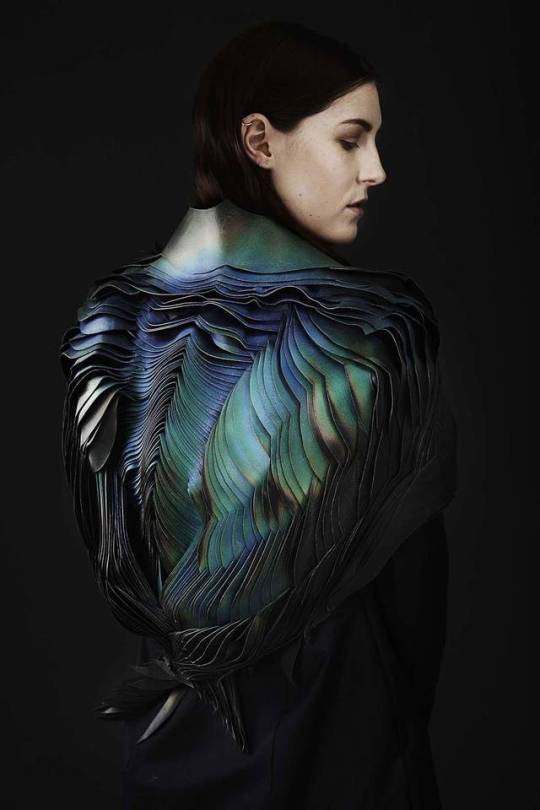
Fashion designer and scientist Lauren Bowker designs clothes that transform depending on the environment. This jacket has been injected with wind reactive ink that changes colour upond contact with the air around us.
I remember first learning that you can cry from any emotion, that emotions are chemical levels in your brain and your body is constantly trying to maintain equilibrium. so if one emotion sky rockets, that chemical becomes flagged and signals the tear duct to open as an exit to release that emotion packaged neatly within a tear. Everything made sense after learning that. That sudden stability of your emotions after crying. How crying is often accompanied by the inability to feel any other emotion in that precise moment. And it is especially beautiful knowing that it is even possible to experience so much beauty or love or happiness that your body literally can’t hold on to all of it. So what I’ve learned is that crying signifies that you are feeling as much as humanely possible and that is living to the fullest extent. So keep feeling and cry often and as much as needed
SHIT WHAT
Also let yourself cry. It really is a biochemical release valve to dump out all the chemicals that make you feel stuff.
I honestly think one reason men in western culture have so many problems is that we don’t let them cry, and literally their brains get stuffed with all this crap that doesn’t have a release valve. Men, please cry. You’ll feel better. It’s ok. You are not lesser for taking care of your health.
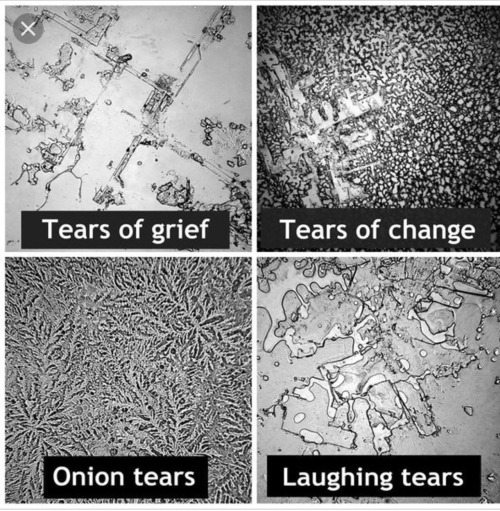
This is why tears from different emotions look different under an electron microscope. They’re literally made up of different things.
Happy tears are structurally different than sad tears than angry tears than overwhelmed tears etc.
I looked it up, cuz that tidbit was dope to me and..
glad to see science finally agrees with me that onion is an emotion
Okay, this makes me want to carry a microscope around with me if I ever have another severe mixed episode, so I can analyse the tears and work out wtf emotion I’m feeling.
No, that is NOT what this is. You’ve taken an amazing medical invention, a total game changer, and made up some stupid, faux-deep sentence fragment for it that is a complete falsehood. You should be embarrassed and ashamed, honestly.
This is a ghost heart. What they’ve done is taken a pig heart and stripped it down to, basically, a cell framework that they can use to BUILD A NEW HEART UPON. You could inject stem cells into this framework so that a newly formed personalized heart can be transplanted into a donor with a significantly reduced chance of rejection. FUCKING AMAZING. It’s not been done with human tissue yet, but the promise this given to people who need hearts – or kidneys or livers or whatever – is beautiful. Science is beautiful.
And it’s IMPERATIVE to mention that a woman, Doris Taylor, at the Texas Heart Institute developed this. And she started with a rat heart and worked up to he bigger, more complex (and more human) pig heart. What a total bad ass.
So look, quit making shit up, learn to do a reverse image search on stuff you find on the internet, and STOP ERASING WOMEN IN SCIENCE.
Reblogging for:
The corrected information
WOMEN IN SCIENCE
The fact that rejection rate would be LESS which is VITAL
Next time you go walking around barefoot in the water…
NOPE
No worries, that’s a Bobbit Worm. They live on the ocean floor, and unless you’re able to withstand a ton of pressure, you likely wouldn’t have your toesies nipped off by one since they live deeper than people walk on the ocean floor.
Bobbit Worms are kinda cool. And they were named after Laurena Bobbit, who cut off her abusive husband’s penis and threw it out of her car window as she drove off.
Scientists have discovered how to make glow-in-the-dark cats by
inserting the jellyfish genes that create fluorescent proteins into feline eggs.
I needed to check that this was real, and apparently, it is. What’s more, the end goal in these experiments was to fight feline AIDS, creating glow-in-the-dark cats was a side effect. That might be the greatest sentence I write this year.




 wupacing