I cannot believe we’re still tearing Cinderella down! 2018 only has a few months left and we’re still doing this, we’re still painting her as the weakest Disney princess and we’re still painting her weakness as a bad thing?
Why?
Why are people so caught up on bashing this princess?
“The movie is so simplistic—”
In what way is it possibly simplistic?!
“She didn’t work hard—”
YES, SHE DID!
“Well, okay, but the fairy godmother still had to come in—”
Yep, I remember the movie too, and the countless stories on which it’s based.
“So the fairy godmother was the one who caused the happily ever after.”
She sure was, now, what’s your point?
No, really, what’s your point? Is the point that Cinderella is somehow weak because she wasn’t 100% in control of her own life? Seems like a pretty disgusting opinion to have when the whole movie is about an abuse victim finding a way out of her horrible situation. So Cinderella wasn’t the one who got herself out. So what? Instead of looking the movie at its bare surface, maybe try analyzing it with a bit more thought and tact. You might see something a little different. A magical transformation, if you will.
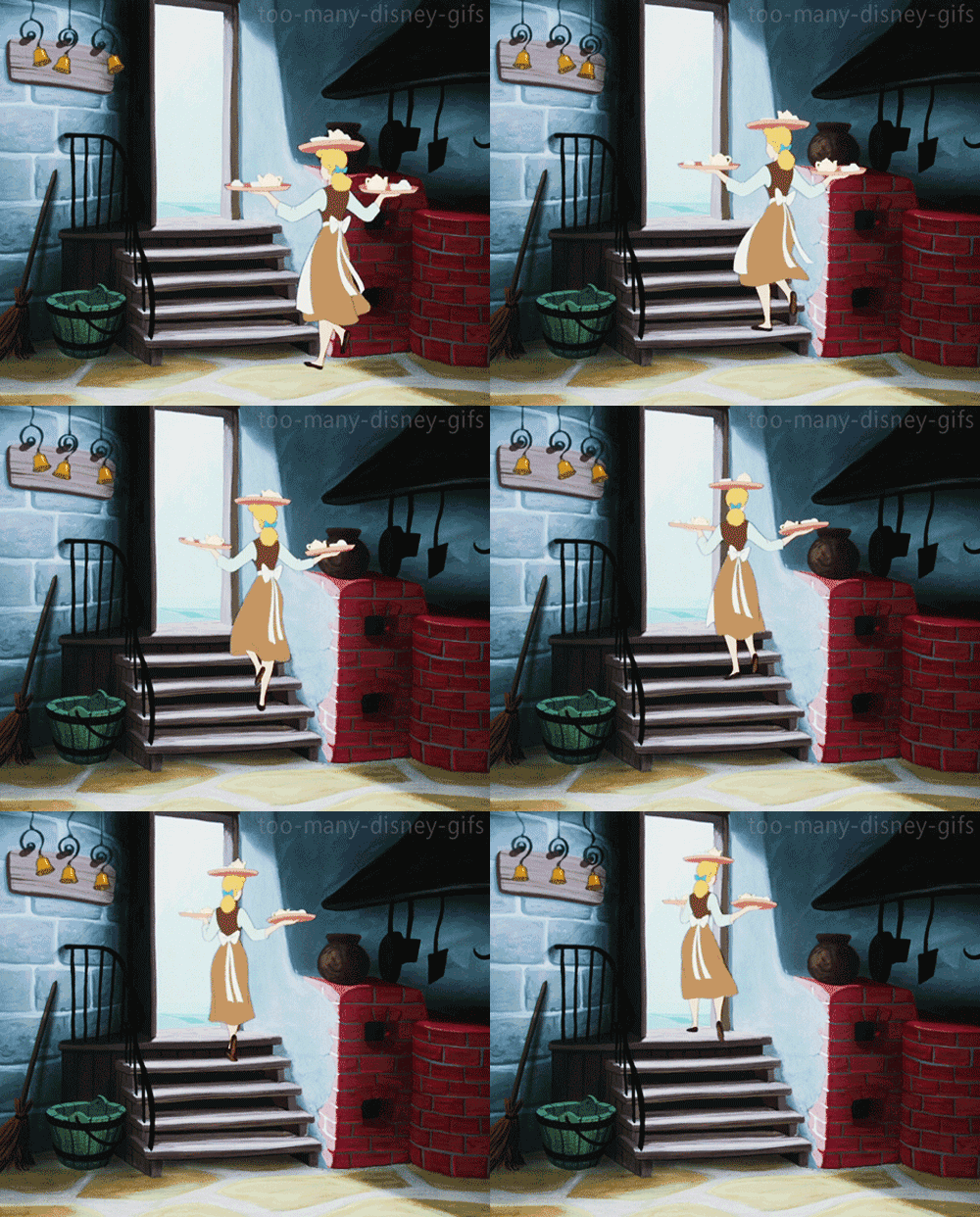
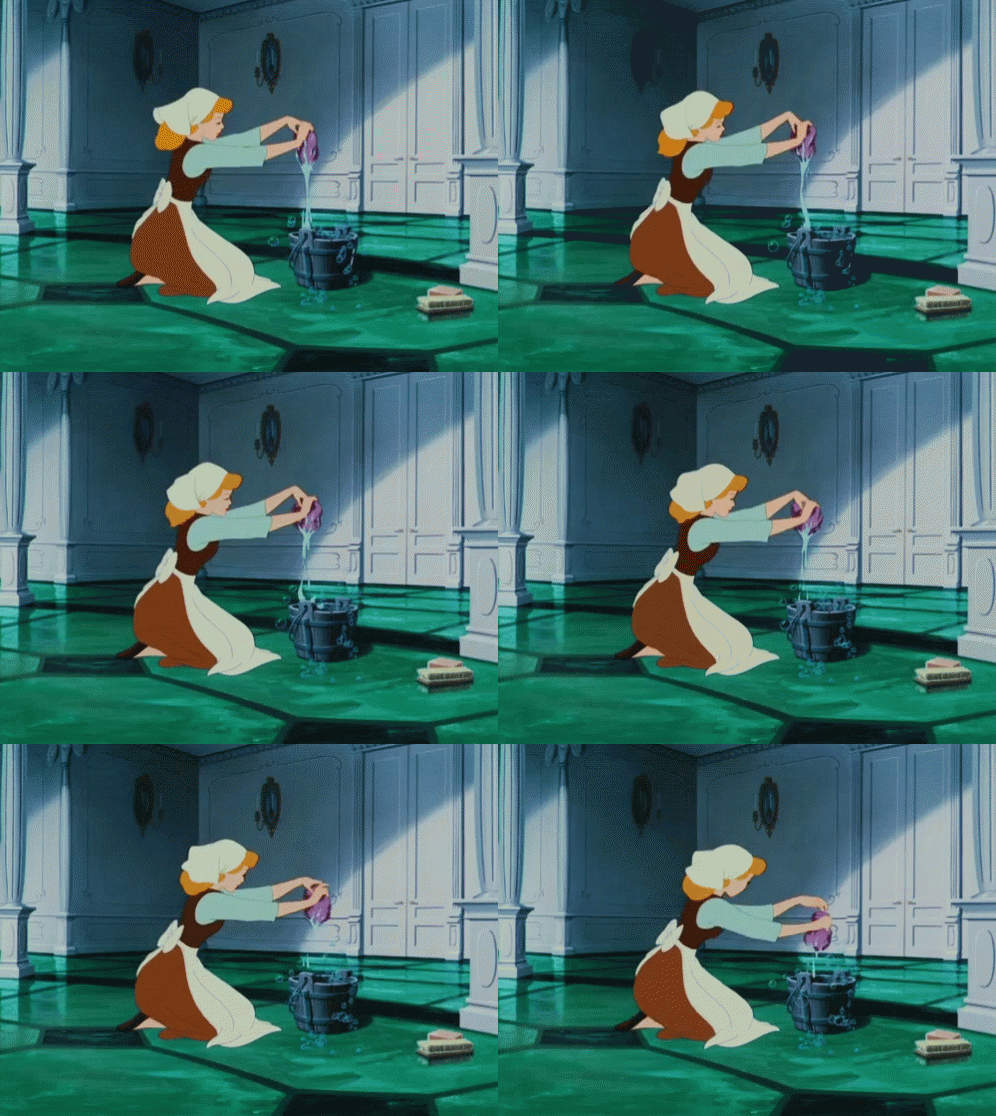
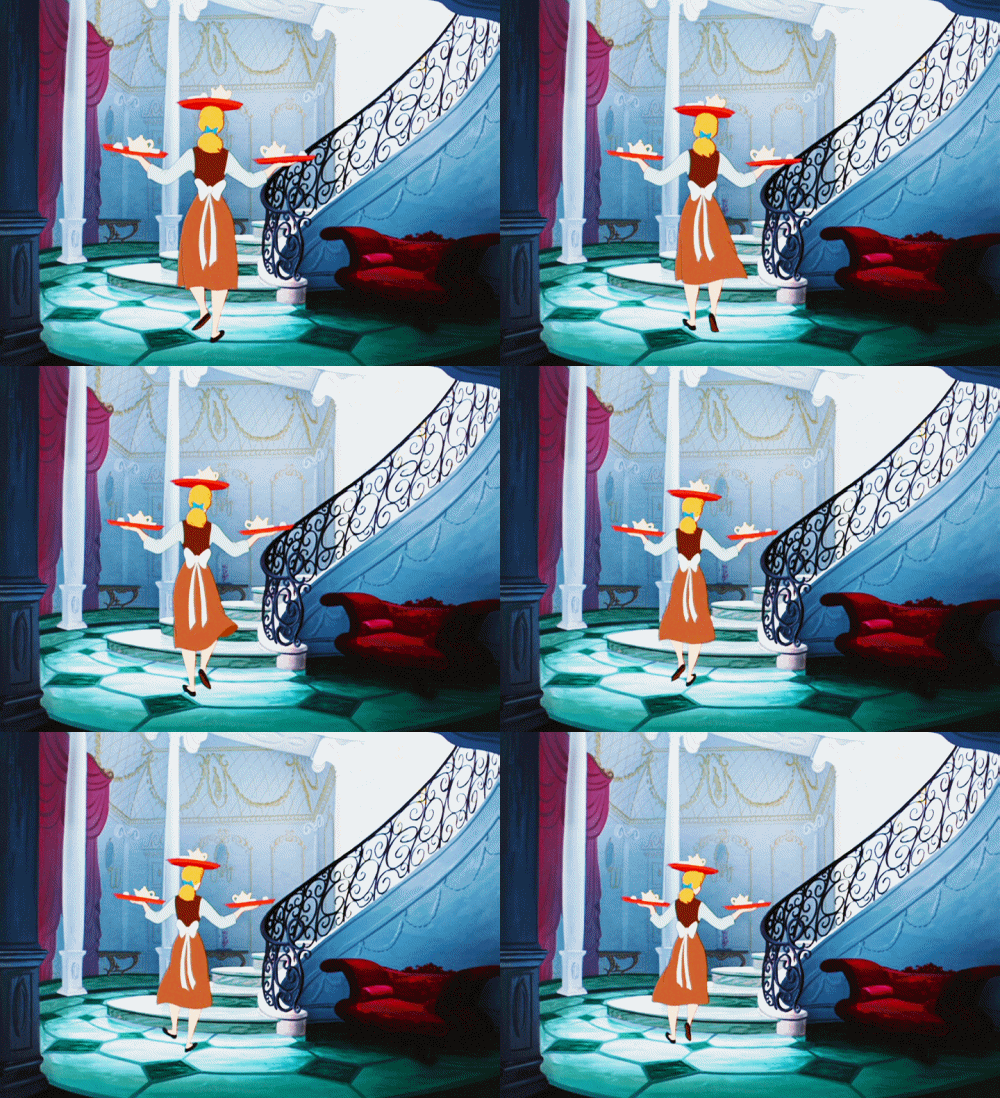
Because Cinderella did work hard.
And guess what we learned from that?
You can work
and work
and work
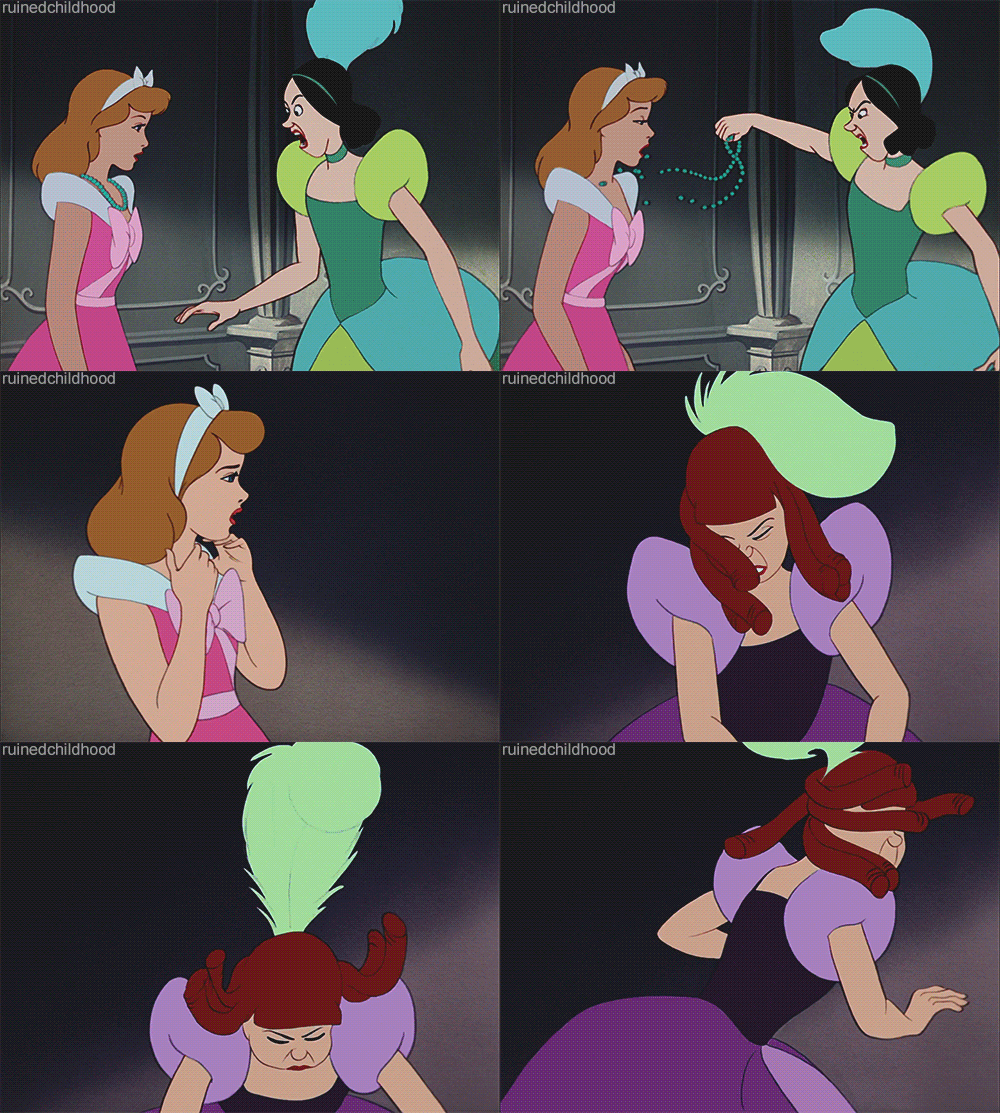
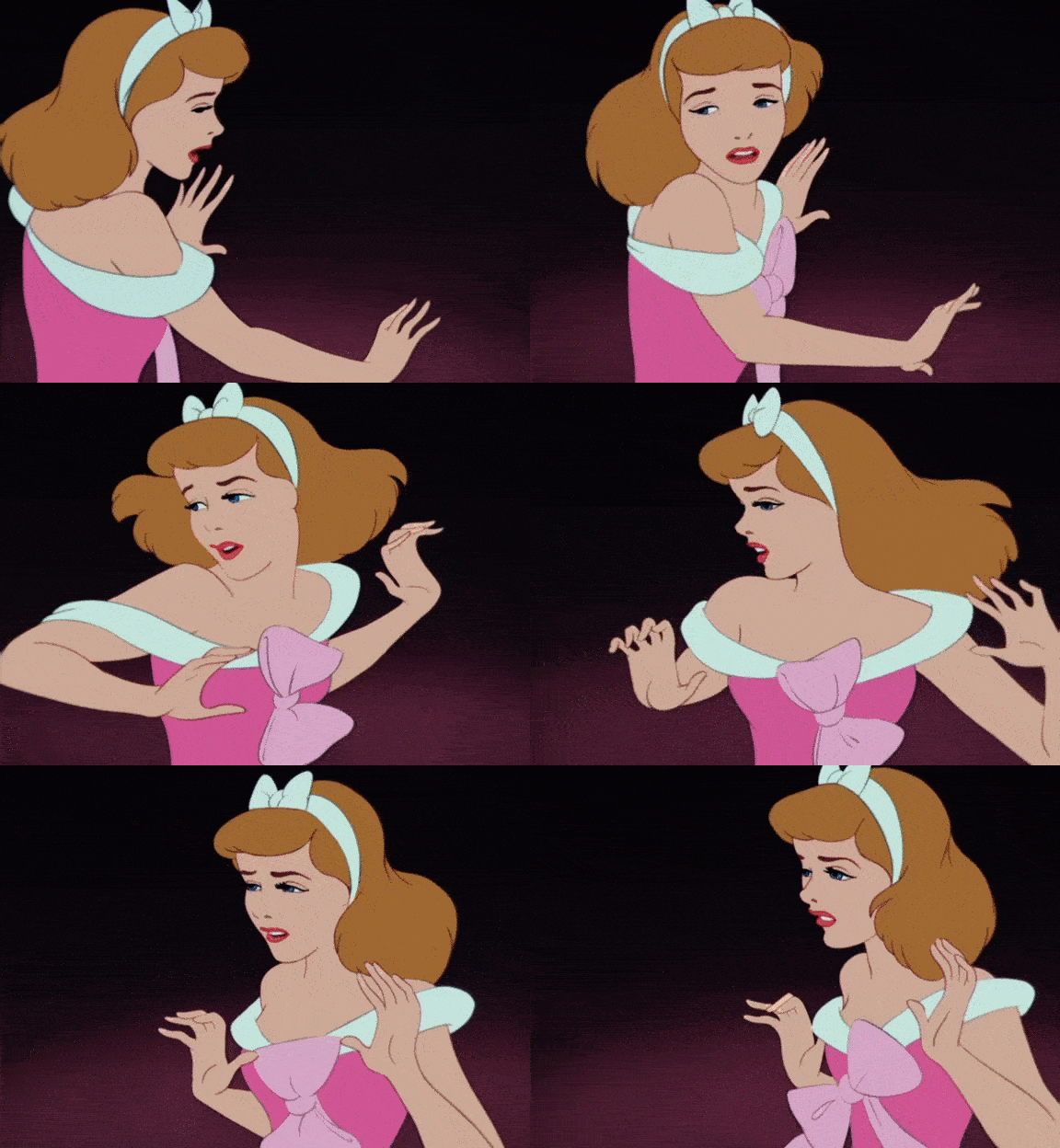
And there will still be people out there who will try to tear you apart:
Literally.
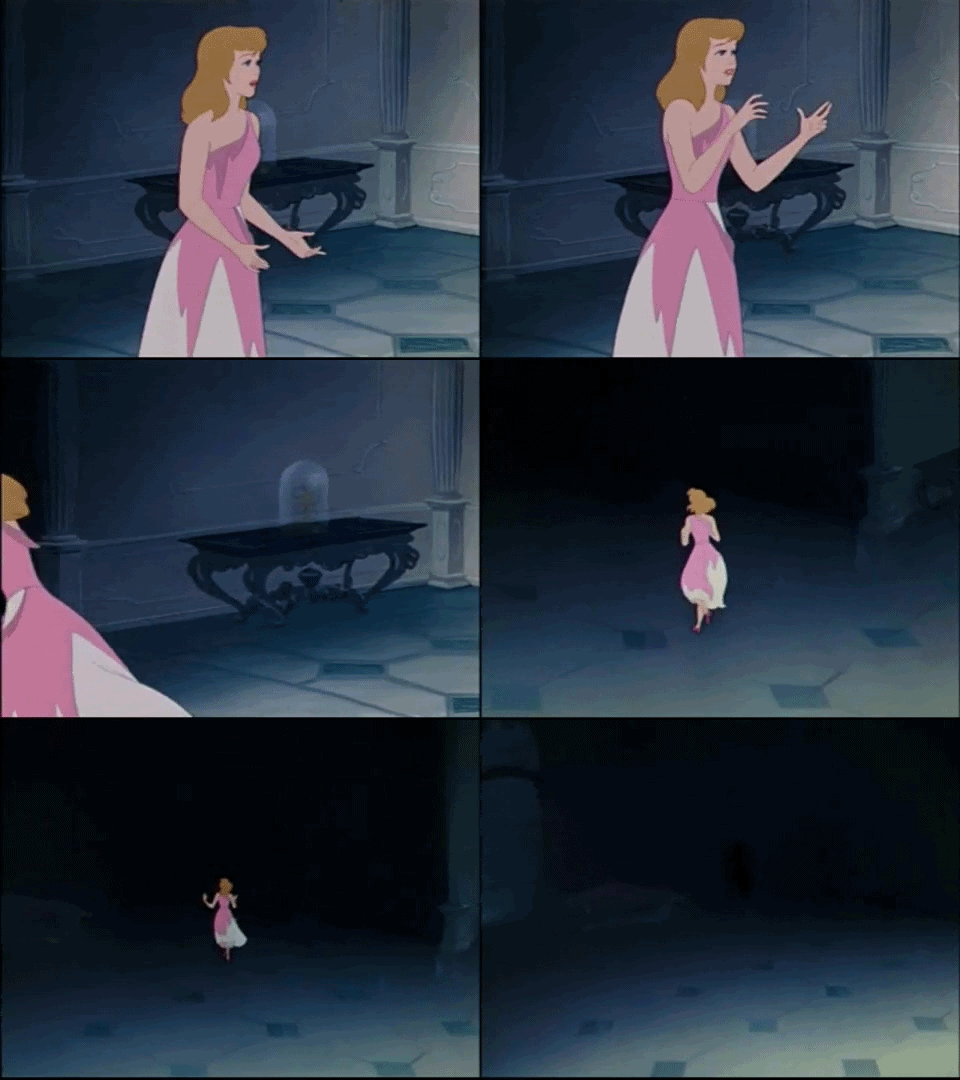
And that sucks. It’s a horrible lesson to learn but it is something we will all face in our lifetimes. There will always be people who will try to tear us down, there will always be people who will try to rip us apart, until we’re in a low place:
Until it seems like there’s no hope…
Until it seems like you’re too weak to get out on your own…
And maybe you are.
Maybe you are too weak to get out on your own. Maybe you’re not the strongest woman in the world. Maybe you’re not capable of screaming at the top of your lungs or brandishing a weapon or throwing a punch. Maybe you’re not able to get out of something on your own. Maybe you hit a low point and maybe you have no way out of it. Not alone. But that’s just it.
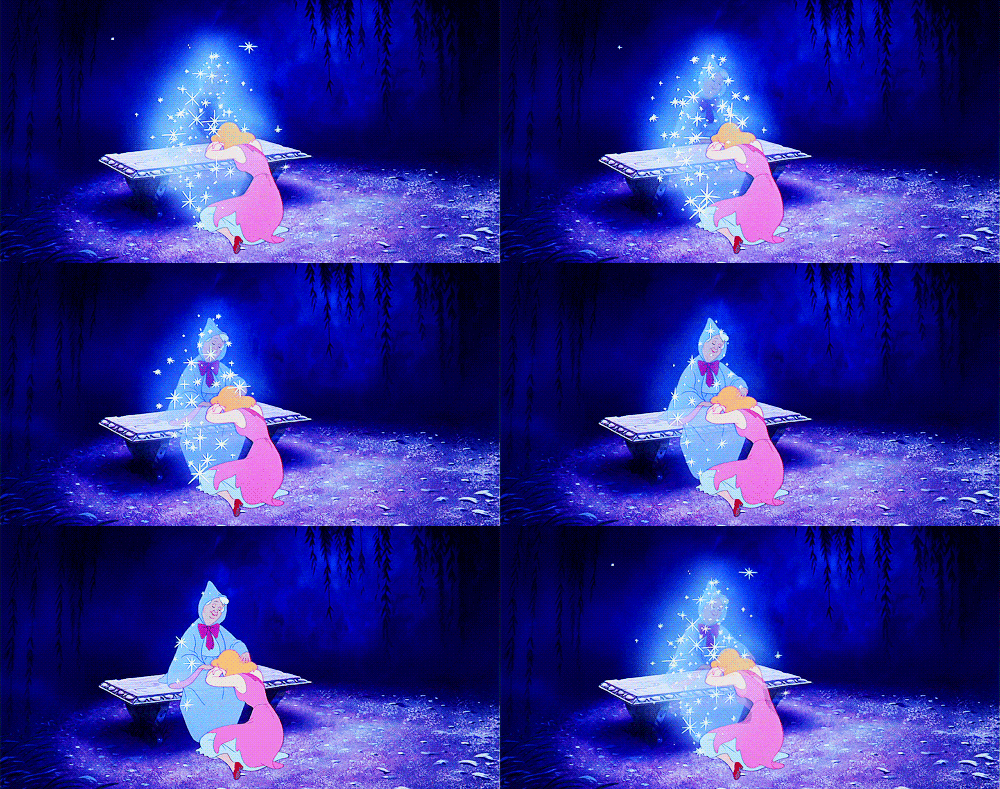
You’re not alone.
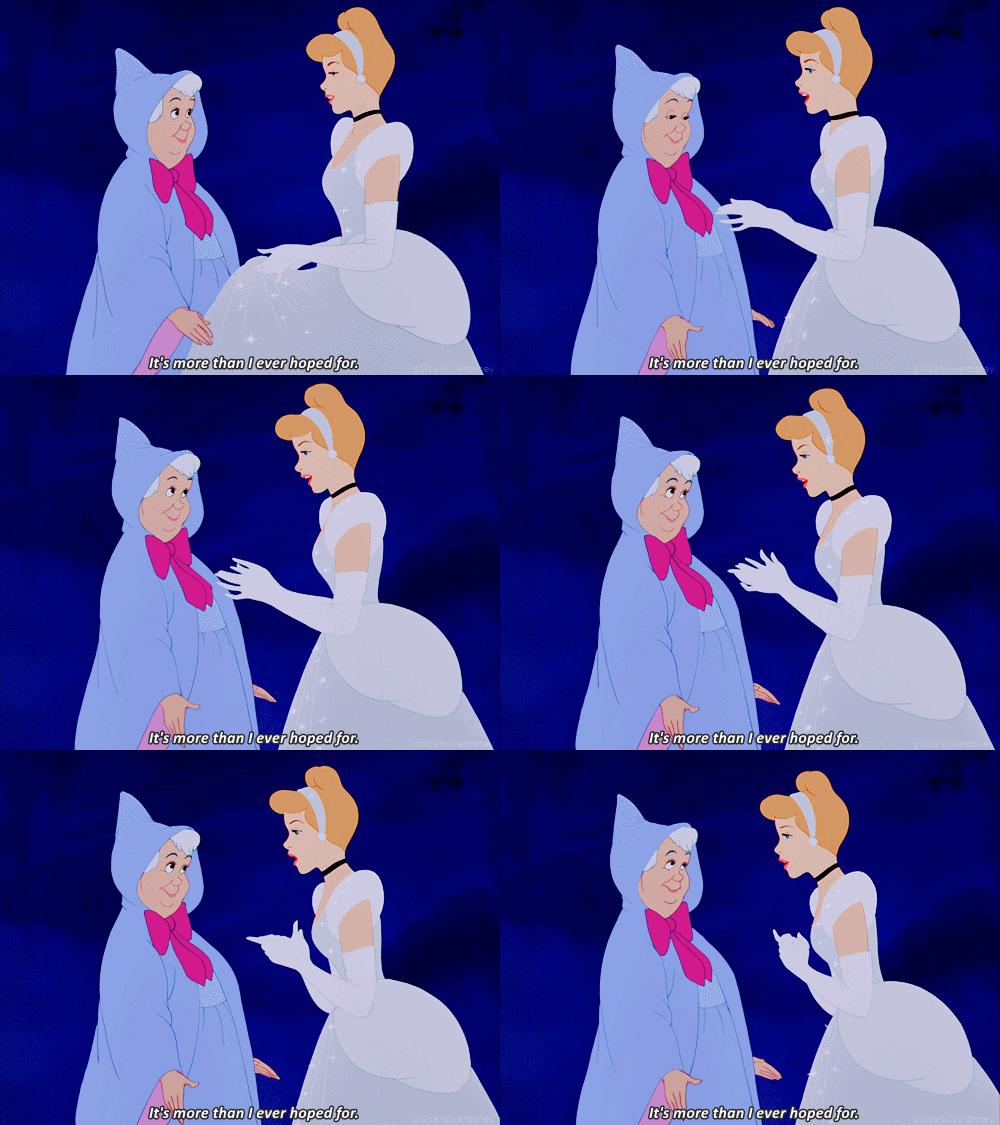
Even at your lowest point, someone will come help you.
You don’t have to do it all alone.
It’s okay to have a little help when you have nowhere else to turn.
Cinderella is the story about an abuse victim who is unable to get out of her toxic situation by herself and just when she begins to lose all hope, is able to get help from an unlikely source. It’s the story about a girl who needs help getting to her happily ever after and that’s okay.
Give us advocates:
They deserve their happily ever afters!
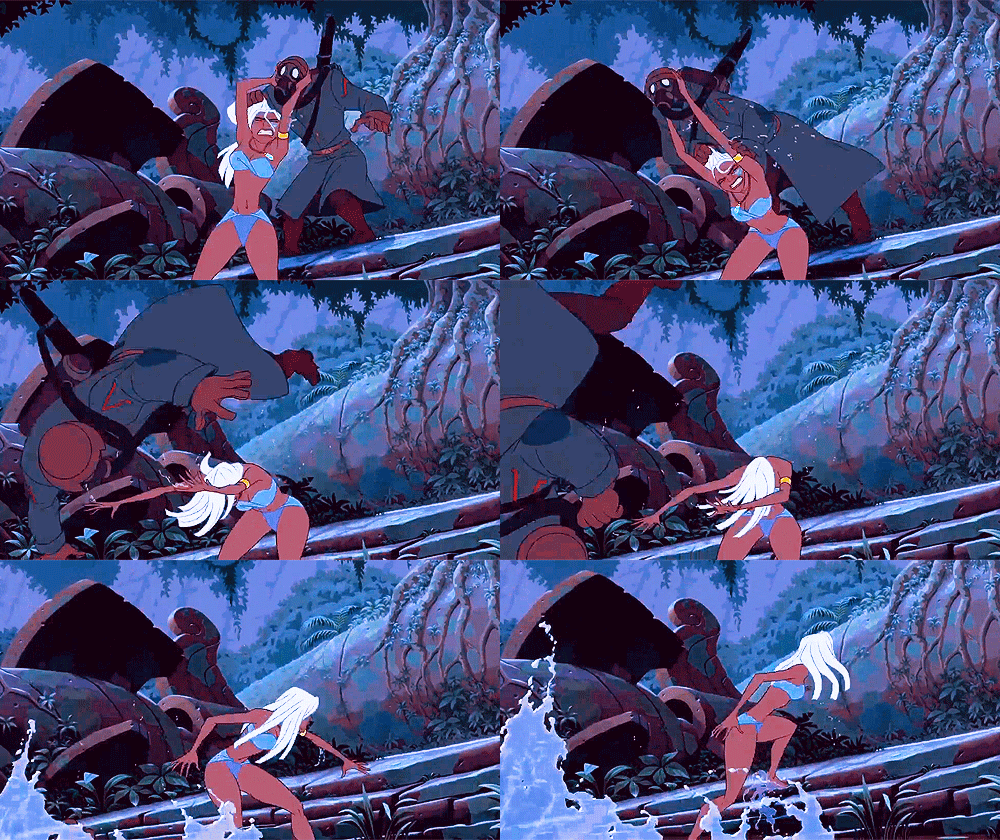
Give us warriors:
They deserve their happily ever afters!
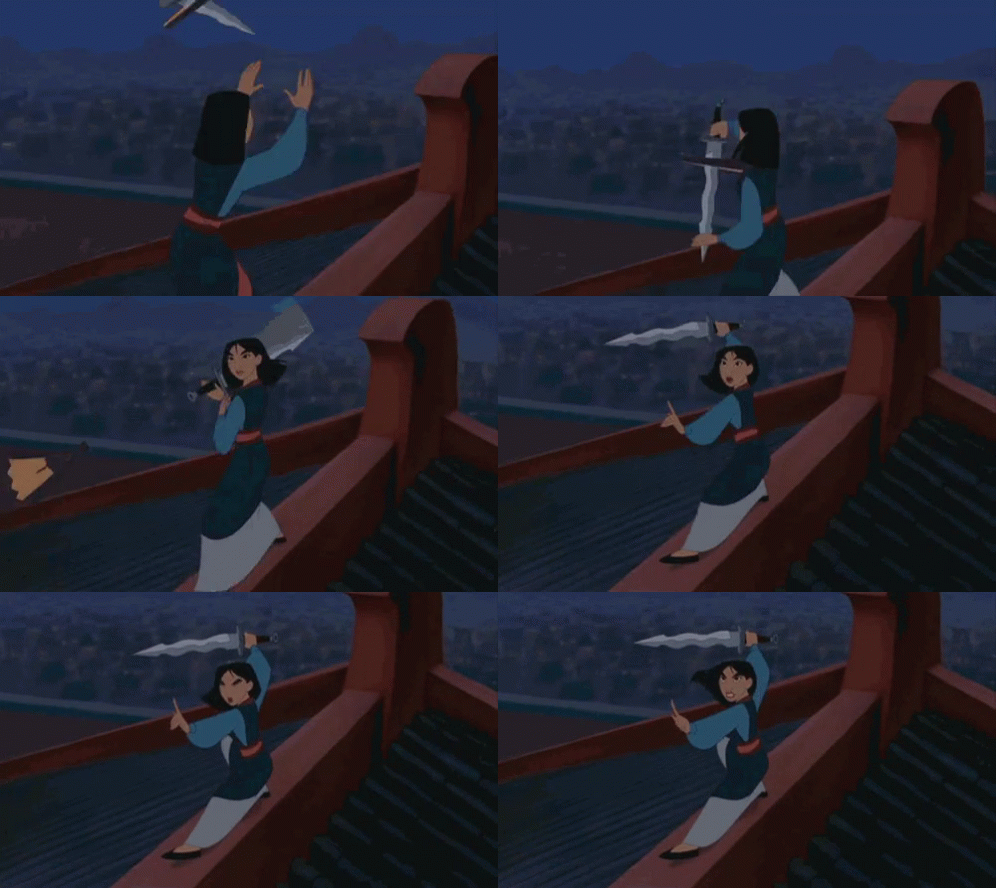
Give us fighters:
They deserve their happily ever afters!
Give us girls who are not advocates, girls who are not warriors, girls who are not fighters, girls who still deserves their happily ever afters:
the greatest skill a woman can learn for herself is self reliance
to clarify … so many strong women in my life rely on men. that dependence is dangerous. ladies here are some good ref resources I’ve found helpful on my journey towards self reliance
this list is in no way comprehensive feel free to add on
a lot of ‘man things’ are a lot easier than you think they are. especially considering the fact that most of these things when buying the parts come with directions on the packaging that men usually don’t even look at (and often end up doing it wrong because they were taught by fathers who also did not look at the packaging).
like i recently had to change my car battery and freaked out cause i thought id electrocute myself but turns out new batteries come with directions and its the easiest shit in the world so long as you can lift the damn thing.
so yeah, ladies dont ever feel like a man is a necessity for life, you can do this shit on your own its easier than you think!
am i the only person not affected by generalized positivity… like post it notes in bathrooms that say ‘you’re beautiful’ or posts that are like ‘smile! you are a beautiful sunshine flower!’ i’m just like … okay…
I just heard a psychologist (Guy Winch) say that the people that positive affirmations help most are actually the people who have high or at least normal self-esteem. They really do cheer those people up!
But for the rest of us they run so counter to our general worldview (we’re fundamentally bad and deserve nothing) that our brain rejects them immediately as lies and uses that moment to remind us of how terrible and abnormal we actually are.
What usually works for people with low self-esteem is stuff like writing out a list of very specific things we know we’re good at, and revisiting it every day to write a paragraph elaborating on one of those things (i.e. “I’m a compassionate person and here are five examples”) to try to set our brain on a different track long term.
That makes so much sense.
the psychology behind the “ok that sounds fake but ok” meme
Holy crap
I got really curious about this so I decided to dive into
the literature! I’ll summarize what I
dug up below.
Very, very short version: yes, self-esteem can affect the way affirmations affect you, but most specifically the TYPE of affirmations that affect you.
(This is mostly from McQueen & Klein 2006, a review of
current experiments involving manipulations of self-affirmation. Stone &
Cooper 2003 is probably the second most relevant to this topic, as it looks at
how self-esteem affects different styles of self-affirmations.)
In sum:
-People have an inherent need to maintain an overall
positive self-evaluation.
-When someone’s sense of self (identity) is attacked they
experience psychological discomfort (dissonance, dysphoria).
-People employ a variety of strategies to reduce this
discomfort, including distancing themself from the person or information
causing the dissonance, minimizing its importance, seeking or interpreting
situations to enhance self-view (self-inflation, can be an unhealthy coping
response—for example, downward social comparisons), or self-affirmation in
other areas to restore “global” (overall) self-image.
-This last area gets a lot of interest and research because
there is a lot of evidence that people become more receptive to challenging ideas
(that may damage sense of self) when self-affirmation is used to maintain
global self-image.
-tl;dr, if you want people to be able to accept challenging information
like “a thing you do is racist” “that activity you like is dangerous/unhealthy”
“that habit of yours is destructive to yourself or others” you need to help
them disarm the instinctive mechanisms that exist to help them defend their
sense of self from the trauma of psychological attacks. This can be done by helping maintain their “global”
sense of themselves when one aspect is being challenged.
-Self-affirmation can serve as a buffer or coping resource when “self” is threatened by reducing cognitive discomfort and dissonance (dysphoria).
-This affirmation does not have to directly relate to the challenged area (and, in fact, for many people--and particularly people with low self esteem–will work better if it doesn’t).
I grew up hearing the phrase “you never stick with anything, what’s the point” a lot. I’ve always been attracted towards seemingly disconnected interests, and gone through phases of being really into something. But eventually my interest would fade and I would move onto something else.
Or at least that’s always how it’s been phrased for me, by others. Now I realize that my interest for the old thing didn’t fade so much as my interest for something new outshined it, and that’s vastly different.
I was always made to feel bad about it, with every abandoned endeavour I was told I needed to stop starting things if I wasn’t going to stick with them. I was told I was wasting time and money picking up these random interests and abandoning them after a year.
So eventually, I stopped picking things up. I told myself “what’s the point, I’m going to give up in a year anyway”. Even worse, I started dismissing every new interest, because I had no way of knowing if my interest was “real” enough or just another passing phase. I stopped trying new things, I stopped looking up stuff that piqued my curiosity, and having chronic depression made it really easy to leave everything on the dirty floor of neglected ideas. The more they piled up, the more depressing it was. All these things that could be nice, but I just can’t take care of them.
I realize now how bullshit that kind of thinking is. So what if I stopped doing karate after a year? That’s one more year of karate than most people I know. And in that year I learned discipline, I learned to listen to a teacher, something I had never done before in all my years of private education. I learned the true meaning of respect, that it’s something you do out of faith at first and maintain as it’s reciprocated, not something you do blindly and regardless of how you’re treated.
It gave me the foundation for the determination and grounding I needed to practice yoga. Another year. Not enough to be good at it maybe, but again a year more than most people I know and a year that is not lost, but gained. I learned balance, I learned to listen to my body, I learned how to let go of emotional tightness through physical stretching.
And then iaido, only a few weeks because I couldn’t afford to keep going. The year of yoga I had done a couple years previous had given me a better starting point than the other newcomers to the class. I already had balance, I had strength in my legs and I had better posture. In those months I learned the importance of precision, the true definition of efficacy, the zen state that is incessant repetition.
Did I practice long enough to get good at iaido, and yoga, and karate? No. Of course not. It takes years to become proficient and decades to master any of those things, but I learned other skills and those skills were an invaluable part of my growth both spiritually and emotionally. Likewise for my forays into painting, sewing, graphic design, film. I’m a photography student now heading into my second year of school, and every single second of practice I have in those other disciplines has given me more experience in those areas and made learning easier.
Skills carry over. They intersect and connect in ways that are sometimes unexpected. Nothing is ever lost, experience is never a waste of time or worthless or stupid. Allow your focus to wander, reflect on what you learn, and consider how you can keep using it in other aspects of your life. Stop telling people their interests aren’t worth their time.
I thought this might be irrelevant to me but it’s got great advice on what to do when someone ignores something that you tell them repeatedly that you hate/makes you uncomfortable/feel like shit




 wupacing