Skill: Shows off the blacksmiths massive horse cock. In a time before modern machinery some crazy Germans and Swiss hammered beyond natural human limit. They probably did it as a meme then realised it was actually useful as a weapon. Sharpening a wavy blade would have been a nightmare.
Functional: Good for duelling sword vs sword. A traditional sword allows you to slide off an enemies blade if your swords clash, because the blade is straight. The waves in a flamberg blade creates vibrations which hurts the opponents hands, that doesn’t sound like much but it gives you an advantage. Very useful for parrying since the enemies sword will strike, then the blade gets stuck on your wavy blade or they pull away from the impact shock. Either way you will have an opening to attack. Also the waves cut much deeper similar to a serrated knife. If you got cut once by this blade, you would not be able to stitch your wound shut, you are pretty much sliced bread.
Aesthetic: Someone challenges you to a duel, while they unsheathe their boring longsword, you unwrap your wiggly sword. They immediately apologize and run because you are rich enough to afford a wiggly sword and probably have multiple wenches giving you ankle parchments.
Ella Hattan, better known by her nom-de-guerre “Jaguarina,” was Colonel Thomas Monstery’s most accomplished student. Born in 1859 in Ohio, she would go on to become widely regarded as one of the greatest swordswomen of the nineteenth century, and perhaps of all time. Hattan would defeat more than sixty men in high-profile combats on both horseback and on foot; according to one major newspaper, more than half of these men were fencing masters.
For more details of Hattan’s extraordinary career, her training, and her lengthy master-student relationship with Monstery, see the following article:
“As soon as she comprehended what his words meant, bang, biff! she landed right and left, and he fell to the ground. ‘Get up, you coward,’ she commanded, and he, overcome by the ringing tones, very foolishly crawled to his knees. Biff! Bang! Right and left landed again, and down he went, and this time he refused to get up and sprawled on the ground, calling for help. It was several days before he was presentable, while Jaguarina laughingly showed her friends in this city the next day that she knocked the fellow down twice without even taking the skin from her rosy little knuckles.” (Los Angeles Herald)
“In the twelfth attack Jaguarina dashed to Wiedemann’s corner, there was a crash of arms, a prolonged ring of steel, a blade was seen to flash through the air, and Jaguarina threw the fragments of a broken sword from her to the ground. In an instant another sword was put into her hand, and again she dashed towards her opponent and slashed right and left, and a moment later the referee announced a point for Jaguarina…the score this time stood five to five. Jaguarina’s friends urged her to be cautious, but she, heeding nothing, rushed at her opponent and cut right and left, Weidemann parrying with all his might and skill. Recovering himself from the first shock, he aimed a cut at Jaguarina in high carte which was met by a strong parry which threw his sword arm out of line, and before he could return his weapon to protect himself, the sound of Jaguarina’s blade was heard on his cuirasse from a vigorous and unmistakable cut in carte, ending the contest with a score of six to five in favor of Jaguarina. The victor at once doffed her helmet and cuirasse and received round after round of applause from those present, many of her more enthusiastic friends throwing their caps high in the air…” (San Diego Union)
“I’m a firm believer in the philosophy that women were meant to be just as robust and hardy as men—and they can be without losing any of their womanliness. In fact, physical culture gives grace, beauty, self-reliance—while taking nothing but aches and dyspepsia.” Ella Hattan
“Despite such accounts, more than one reporter who met her, expecting to meet a “fierce faced Amazon,” was shocked to find that Hattan exuded grace, refinement, and, as one put it, “perfect self-control and sweetness.” “
“After training for three years under Monstery, Hattan left to travel the world, andbecame a sensation with the foil, saber, broadsword, singlestick, rapier, dagger, bayonet, lance, Spanish knife, and Bowie knife, defeating fencing heavyweights such as Sergeant Owen Davis of the U.S. Cavalry, the famed knife duelist Charles Engelbrecht of the Danish Royal Guard, and the fencing master E. N. Jennings of the Royal Irish Hussars.”
“Under Monstery’s tutelage, Hattan would go on to become recognized as one of the greatest swordswomen of the nineteenth century, and perhaps of all time.”
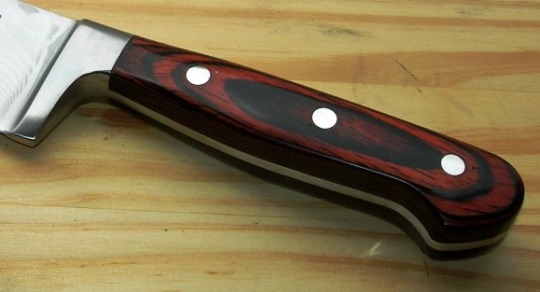
I don’t wanna like Kill The Joke but this brings up a really cool fact about swords in ~14th-16th century Germany! The only people who were allowed to own Real Swords were the royalty and nobility BUT! Everyone else was allowed to own knives. The definition of a knife, however, was based on not length but handle construction, and to some extent how it was sharpened. The handle had to be constructed Like So with 2 pieces of wood sandwiching the metal tang.
Only one edge was allowed to be sharpened, but oftentimes a small part (a couple inches) of the short edge (e.g. the edge that wasn’t sharp) would be sharpened, and weapon design often allowed for this
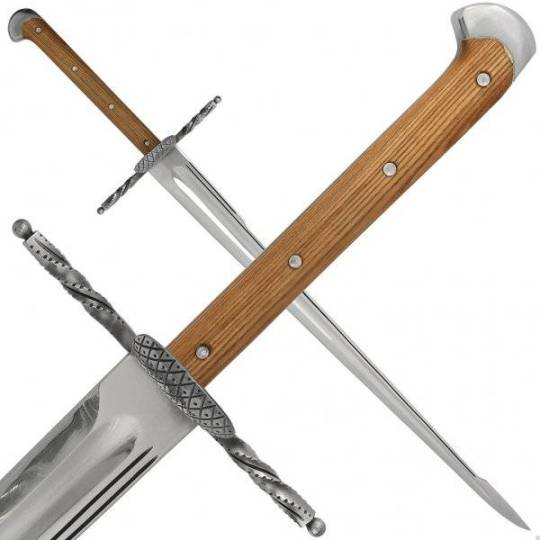
In this way, something that looked like This, a messer of just over a meter in length…
…would be legally considered a knife, and therefore allowable for non-nobility to possess. (you can also see the bit on the back of the tip that would be sharpened)
So @swordmutual, there’s a not definitive but certainly interesting historical perspective on your question
I wish i had a context for this. But I really dont.
I was all ready to “um, actually” this, but, um, actually there’s about 3-4 grams of iron in a person, which x400 is 1.2-1.6kg, which is a smallish but not unreasonable sword. So. Math checks out.
How would you extract the iron, though? The more practical solution would be to kill a mere hundred men, then mix 1 part blood with 3 parts standard molten iron, imo. Cheaper and faster, while still retaining the edge that only evil magic can give you.
Or, you could just make the sword of iron, and then use the blood to temper the blade.
1.2 to 1.6 kilograms is a perfectly reasonable large sword. Your average longsword was 1.1–1.8 kg and I don’t even remember if that’s including the weight of the hilt, guard, and pommel or just the blade. Your more classic “knight sword” was a mere 1.1 kilograms on average; the blood of 400 men is more than enough.
This is using the comparatively crappy metallurgy of medieval Europe and their meh iron swords. Move east to, say, contemporary Iran and make a scimitar using high carbon steel (~2%) for a .75 kilogram blade and you only need the blood of about 225 men.
So putting my thoughts in on this… because how could I not.
So you’ve exsanguinated your 400 guys to get the iron for your sword. Cool. But now you have 400 bodies lying around.
Why not put those to good use and cremate them. Use the carbon from those 400 bodies (you won’t need all of them) and now you can make a nice mid-high carbon steel sword.
Now you have a sword forged with the blood of your enemies AND strengthened with their bones.
“high fantasy math” – the tag I should have expected to write some day.
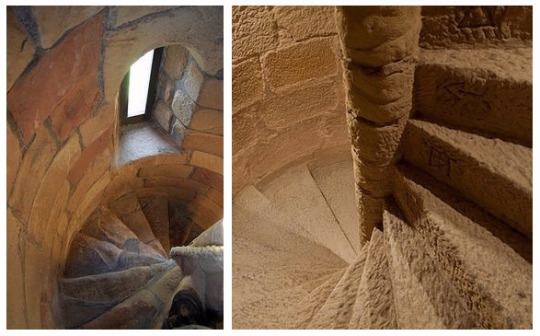
Medieval castle stairs were often built to ascend in narrow, clockwise spirals so right-handed castle defenders could use their swords more easily. This design put those on the way up at a disadvantage (unless they were left-handed). The steps were also uneven to give defenders the advantage of anticipating each step’s size while attackers tripped over them. SourceSource 2Source 3
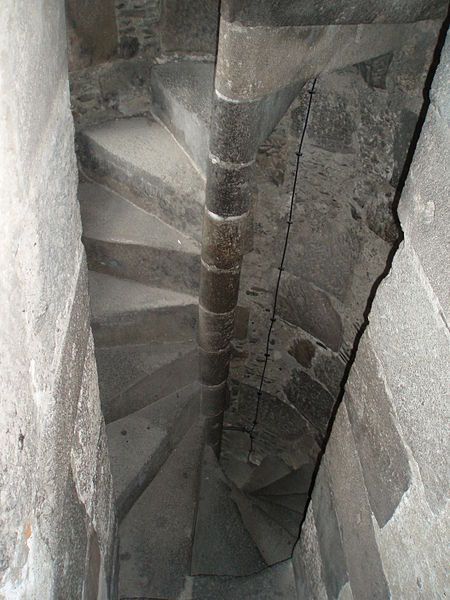
Not really the best illustration since it totally negates the effect by having a wide open space for those ascending. Castle tower staircases tended to look like this:
Extremely tight quarters, with a central supporting pillar that is very, very thoroughly in the way of your right arm.
Wider, less steep designs tend to come later once castles moved away from being fortresses to simply noble family homes with the advent of gunpowder.
Oh! Pre-gunpowder military tactics are my jam! I don’t know why, but this is one of my favorite little details about defensive fortifications, because the majority handedness of attackers isn’t usually something you think about when studying historical wars. But strategically-placed walls were used basically worldwide as a strategy to secure gates and passages against advancing attackers, because most of the world’s population is right-handed (and has been since the Stone Age).
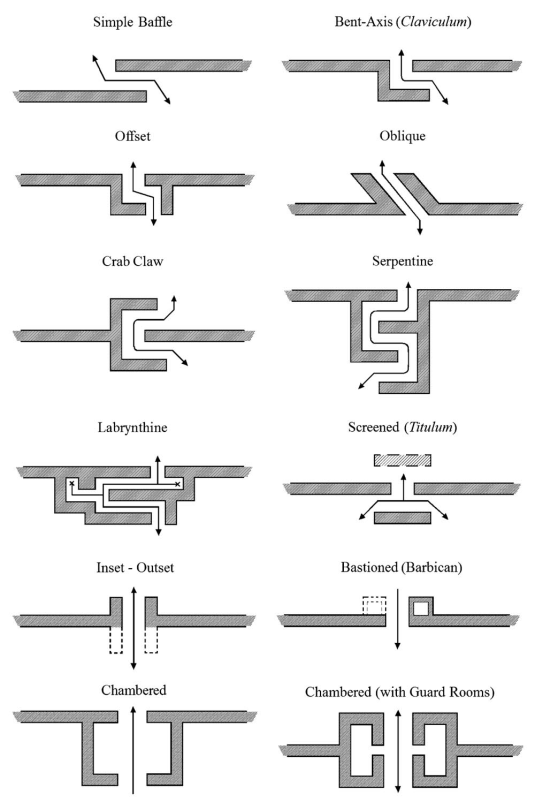
Pre-Columbian towns near the Mississippi and on the East coast did this too. They usually surrounded their towns with palisades, and they would build the entrance to the palisade wall in a zigzag – always with the wall to the right as you entered, to hinder attackers and give an advantage to the defender. Here’s some gates with some examples of what I’m talking about:
Notice that, with the exception of the last four (which are instead designed to congregate the attackers in a space so they can be picked off by archers, either in bastions or on the walls themselves) and the screened gate (which, in addition to being baffled, also forces the attackers to defend their flank) all of these gates are designed with central architectural idea that it’s really hard to kill someone with a wall in your way.
In every culture in the world, someone thought to themselves, “Hey it’s hard to swing a weapon with a wall on your right-hand side,” and then specifically built fortifications so that the attackers would always have the wall on their right. And I think that’s really neat.
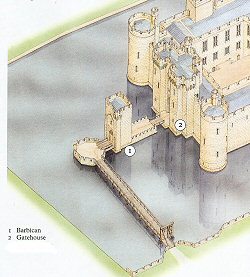
Ooh, ooh, also: Bodiam Castle in Sussex used to have a right-angled bridge so any attacking forces would be exposed to archery fire from the north-west tower on their right side (ie: sword in the right hand, shield on the useless left side):
These tactics worked so well for so long because until quite recently lefties got short shrift and had it trained (if they were lucky) or beaten out of them.
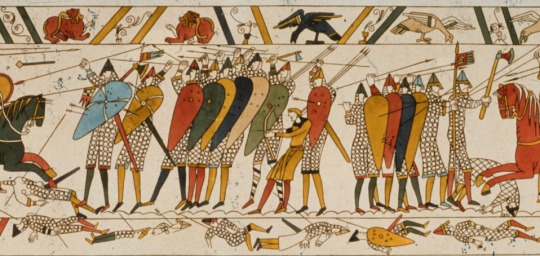
Use of sword and shield is a classic demonstration of how right-handedness predominated. There’s historical mention of left-handed swordsmen (gladiators and Vikings), and what a problem they were for their opponents, but that only applies to single combat.
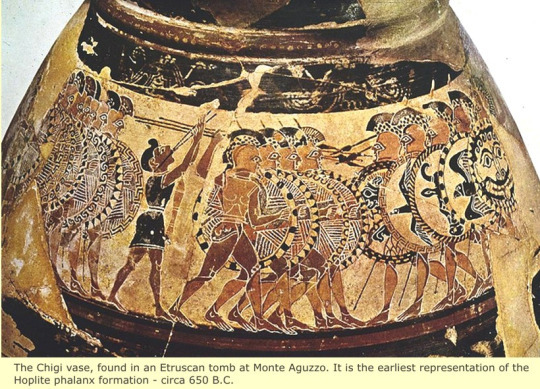
A left-handed hoplite or housecarl simply couldn’t fight as part of a phalanx or shield wall, since the shields were a mutual defence (the right side of the shield covered its owner’s left side, its left side covered the right side of his neighbour to the left, and so on down the line) and wearing one on the wrong arm threw the whole tactic out of whack.
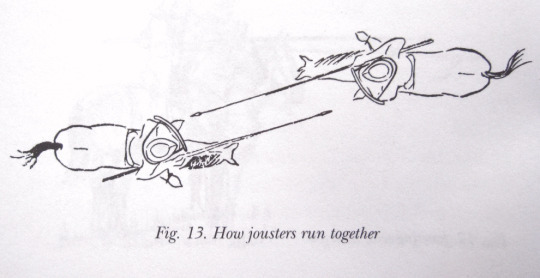
Jousting, whether with or without an Italian-style tilt barrier, was run shield-side to shield-side with the lance at a slant (except for the Scharfrennen, a highly specialised style that’s AFAIK unique.) Consequently left-handed knights were physically unable to joust.
The construction of plate armour, whether specialised tournament kit or less elaborate battle gear, is noticeably “right-handed“ – so even if a wealthy knight had his built “left-handed” it would be a waste of time and money; he would still be a square peg in a world of round holes and none of the other kids would play with him.
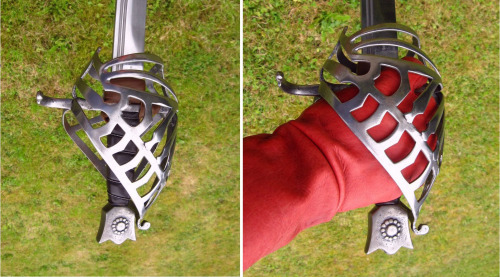
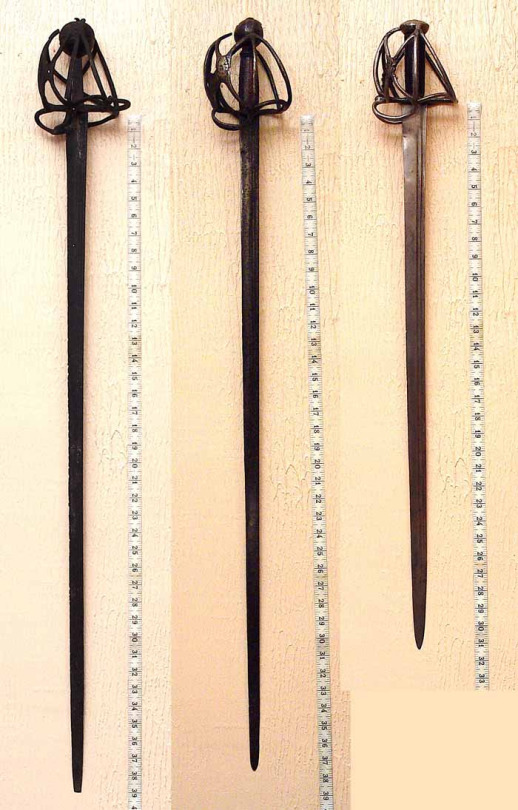
Even after shields and full armour were no longer an essential part of military equipment, right-hand use was still enforced until quite recently, and to important people as well as ordinary ones – it happened to George VI, father of the present Queen of England. Most swords with complex hilts, such as swept-hilt rapiers and some styles of basket-hilt broadsword, are assymetrical and constructed for right handers. Here’s my schiavona…
It can be held left-handed, but using it with the proper thumb-ring grip, and getting maximum protection from the basket, is right-handed only. (More here.) Some historical examples of left-hand hilts do exist, but they’re rare, and fencing masters had the same “learn to use your right hand” bias as tourney organisers, teachers and almost everyone else. Right-handers were dextrous, but left-handers were sinister, etc., etc.
However, several
predominantly left-handed
families did turn their handedness into advantage, among them the Kerrs / Carrs, a notorious Reiver family along the England-Scotland Borders, by building their fortress
staircases with a spiral the other way to the OP image.
This would seem to be a bad idea, since the attackers (coming upstairs) no longer have their right arms cramped against the centre pillar – however it worked in the Kerrs’ favour because they were used to this mirror-image of reality while nobody else was, and the defender retreating up the spiral had that pillar guarding his right side, while the attacker had to reach out around it…
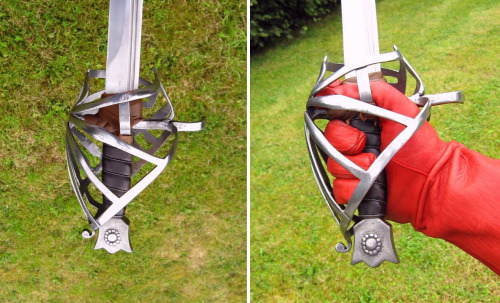
For the most part Reiver swords weren’t elaborate swept-hilt rapiers but workmanlike basket-hilts. Some from Continental Europe have the handedness of my schiavona with thumb-rings and assymmetrical baskets, but the native “British Baskethilt” is a variant of the Highland claymore* and like it seems completely symmetrical, without even a thumb-ring, which gives equal protection to whichever hand is using it.
*I’m aware there are those who insist “claymore” refers only to two-handers, however the Gaelic term claidheamh-mòr
– “big sword” –
just refers to size, not to a specific type of sword in the way “schiavona” or “karabela” or even “katana” does.
While the two-hander was the biggest sword in common use it was the claidheamh-mòr; after it dropped out of fashion and the basket-hilt became the biggest sword in common use, that became the claidheamh-mòr.
When Highlanders in the 1745 Rebellion referred to their basket-hilts as claymores, they obviously gave no thought to the confusion they would create for later compilers of catalogues…
Also, muskets had their whole “Flint and steel and gunpowder” thing on the right side so if you tried firing it lefty you’d get a face full of fire. More recently, rifles eject their spent shell casings to the right, so if you’re a lefty you get some hot metal in your eye.
Yes and no. Those are Buugeng (buugong?) An ancient style of bo-staff that was used in combat as well as dances. Basically the idea behind them was that they’re effectively unblockable. By the time your mind has processed where the blade/shaft was, it was already cutting you in half.


 wupacing