Here is a tiger just going about life until this human gives it the fright of its life. Still cute af. Dream job to be honest. 17/10 would be such an honor to pet
no no no no no look at those ears, tiger totally knows he’s there
tiger thinks the bipeds are terrible, terrible tigers and don’t know how to tiger worth a damn so when one actually pays tiger cub ambush game tiger is so happy
look at that happy tiger
look at it
YES YOU TERRIBLE TIGER YOU ARE FINALLY LEARNING HOORAY 😀
Sick Tiger Cub Gets Rescued From Circus, Makes Incredible Recovery And Finds Love
SHES BLEPPING IN THE LAST PHOTO HELP ME
Since so many “tiger rescues” aren’t really rescues at all, I did some googling on this one.
Good news: This is a legit rescue, carried out by Tigers in America. This organisation rescues tigers from horrible situations like this.
If you’re an animal conservationist looking for an organisation to support, Tigers in America is worth looking into.
In-Sync Exotics – the place this cat lives – is a legitimate sanctuary, but this whole piece is actually just a rip-off of a Dodo “article”. The clickbait sentence above is the title and probably supposed to be an embedded link. I’m not a fan of the fact that this post doesn’t bother to name the facility currently housing her.
Aasha was brought to In-Sync with massive ringworm (what you see in the photos above) along with open wounds that were possibly bite marks. The In-Sync Exotics website doesn’t say where she came from – just that she was bouncing from situation to situation – but the Dodo article (which I am purposefully not linking to, because they are trash) says she was seized from a circus by the USDA. I can’t source that, and I generally mistrust the Dodo because they can’t fact-check their way out of an open door, but they did interview the sanctuary’s founder so it’s likely at least close to the truth.
“By the time Aasha came to In-Sync she was almost completely bald. We were told that she was believed to be about 7 months old and stunted in growth making her about the size of a bobcat. Weighing in at 37 pounds told us that she was around 4 months old. She wasn’t underweight but was covered all over with ringworm. Her tiny feet were swollen and red; the skin on her tummy was raw, red and cracking. For 4 weeks we had to give Aasha baths with medicated shampoo and dip her in a special dip. She also had to take two kinds of oral medications to help clear up and sooth her skin.Since Aasha has been here she is healing and becoming more like a tiger cub. She enjoys playing with her enrichment and has learned to play with the water from the hose. She hasn’t jumped in her tub yet but we know it is just a matter of time. All of us at In-Sync are looking forward to a long happy healthy life with Aasha and a lot of great laughs.“
As the photos above / Dodo “article” show, Aasha is now housed with another adult tiger – a male named Smuggler. Contrary to the messaging espoused by some of the big cat sanctuaries with a large internet presence, it is actually entirely okay and a fairly normal practice to co-house adult big cats… IF their personalities are compatible. Introductions are done slowly, starting at a distance, and they’re set up for success and to minimize any incidence of resource guarding or territorial issues. Some big cats – even tigers – really like having companionship. Some don’t. Both are fine and good.
In-Sync is not accredited by the Global Federation of Animal Sanctuaries, but after looking through their site and from what I’ve heard about them over the years, I’m not worried about that. It sounds like their tours are self-guided (you walk around on your own, like you would at a zoo), which is something GFAS standards prohibit. There are any number of reasons a small sanctuary would choose to prioritize having self-guided tours, but the most probable is that guided tours take a lot of extra staff and/or volunteer time and training. Most of their organization is volunteer-run, and if they’re going to focus on animal care instead of having docents shepherd people around, that’s a reasonable choice.
Tigers in America is not really a great metric to use for if a rescue or a facility is one to support, because they’re basically a membership organization for sanctuaries with tigers. Their founder is on the GFAS board, and honestly, given how he’s been talking since 2014 about how TIA facilities collectively have more tigers than AZA’s conservation breeding programs do… I’m not sure how much stock I put in them. They’re supposed to be a collection of the “best” big cat sanctuaries, but I can’t find the metric they’re using to determine that. They’ve got a lot of high-profile members, like Big Cat Rescue, and some really weird places, like The Wild Animal Sanctuary in Colorado – which has over 500 carnivores that they’ve imported from across the glove, has an very strict no-photos policy, won’t let you in the gate unless you give them a ton of personal information, and puts their employees and visiting professionals under incredibly tight non-disclosure agreements. There are other credible big cat sanctuaries, such as Tiger Haven in Tennessee (where the cats owned by Ringling went), that are not part of the TIA network. You’ve really gotta do your own research into each and every place you think you want to support.
Not to critique evolution, but I would think orange and black stripes wouldn’t be as good for camouflage in a forest as, say, green and black would.
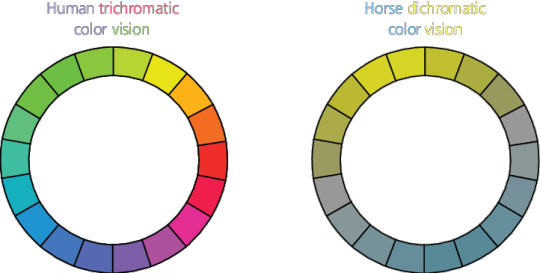
It turns out a lot of animals can’t see the difference between orange and green! Elephants, for instance, have dichromatic vision (two types of cones, rather than three like most humans.)
Check out this diagram from ResearchGate. It deals with the color vision of horses, who are also generally dichromatic. (I think, though I’m not sure, that zebras would have the same color vision as horses.) See how orange and green look to them?
Not to critique evolution but I think prey animals should be better at telling when their predator is dressed like a traffic cone.
It doesn’t matter what zebras see, because tigers are not native to Africa and do not naturally hunt zebra. Tigers are Asian and mostly hunt animals like deer, elk, and buffalo. These aren’t animals with great color vision. They don’t need to have it because they don’t eat fruit and so don’t need to know when the berry is ripe vs when it’s not. Good color vision is too expensive to have if you don’t need it. Deer put their vision stats in a wide field of vision that is sensitive to motion, low light capabilities, and possibly seeing UV light. They don’t have great color and lack a lot of acuity, but have a great sense of smell and good hearing. That’s way more useful if you’re prey. Deer see well in the blue end of the color spectrum and less well in the red. This makes sense because deer are most active in the dawn and dusk periods, when there is more blue in the light. Tigers are taking advantage of deer eyesight by being orange.
We see tigers are being obviously colored because tigers are fruit colored to our tree ape brains.
I don’t know what the best part of this is: implying that deer chose their attributes on a character sheet, or the fact that we get to see tiger colors because they look like a snack.
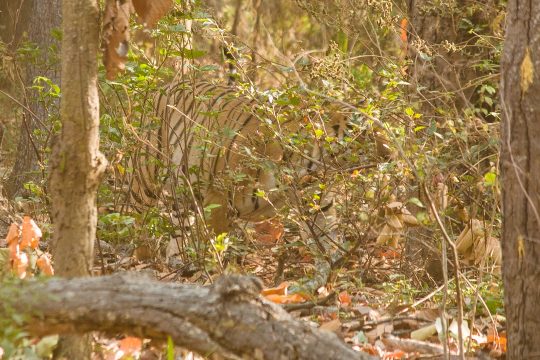
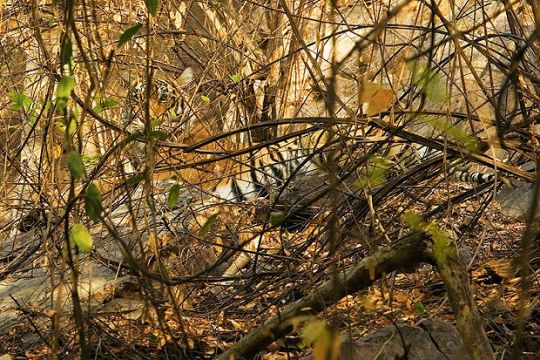
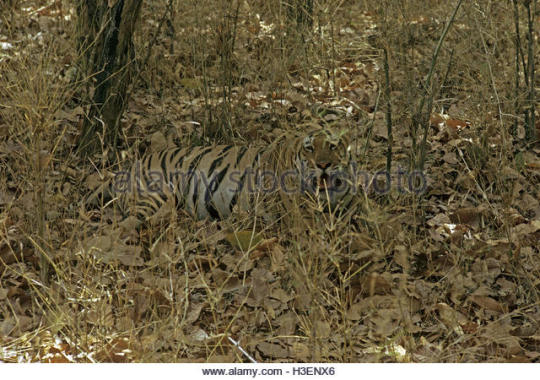
Ok but like, I think you underestimate just how well they blend in when actually in the environment. Like, just using tigers as an example.
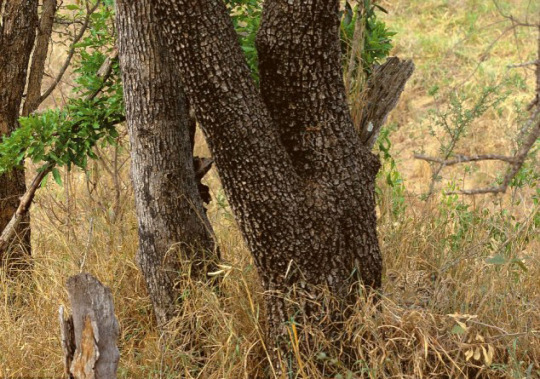
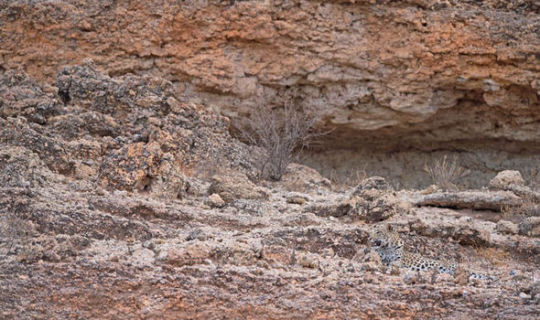
or how about a leopard?
It’s called ‘disruptive colouration’ because the markings help to break up the animal’s outline against the grasses or rocks. And the rosettes on leopards and jaguars? Sun spots shining through the trees and leaves on the ground.
And this is how hard it is to spot them WITH colour vision. Now imagine the above images but with the limited coloured mentioned above?
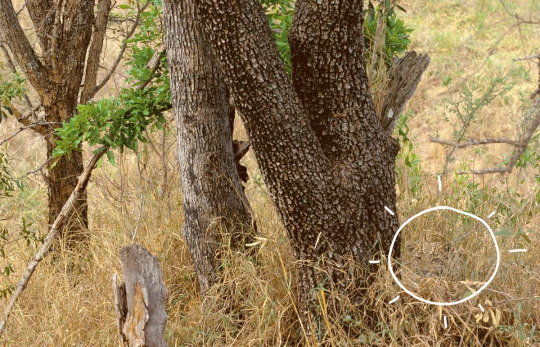
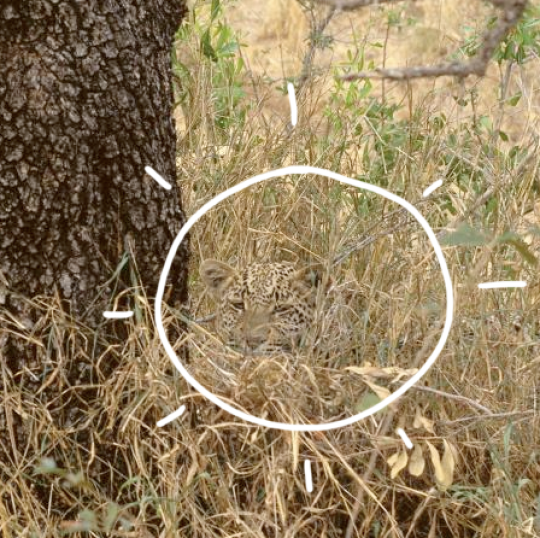
I’m sorry but there is not an animal in that first leopard picture
Are you, sure about that?
“Tigers are fruit colored” is my new favorite phrase.


 wupacing