I just thought about this today and dug through my pictures to find it: a letter from a black soldier in the Civil War to the person who owns his daughter. “The longer you keep my child from me the longer you will have to burn in Hell and the quicker you will get there.“
photo text (with corrected spelling and broken into sentences, paragraphs):
Letter from a Black Soldier to the Owner of His Daughter
Spotswood Ric, a former slave, writes to Kittey Diggs, 1864:
I received a letter from Cariline telling me that you say I tried to steal, to plunder, my child away from you. Not I want you to understand that Mary is my Child and she is a God given rite of my own.
And you may hold on to her as long as you can. But I want you to remember this one thing, that the longer you keep my Child from me the longer you will have to burn in hell and the quicker you’ll get there.
For we are now making up about one thousand black troops to come up thorough, and want to come through, Glasgow. And when we come woe be to Copperhood rebels and to the Slaveholding rebels. For we don’t expect to leave them there. Root nor branch. But we think however that we (that have children in the hands of you devils), we will try your the day that we enter Glasgow.
I want you to understand Kittey Diggs that where ever you and I meet we are enemies to each other. I offered once to pay you forty dollars for my own Child but I am glad now that you did not accept it. Just hold on now as long as you can and the worse it will be for you.
You never in you life before I came down hear did you give children anything, not anything whatever, not even a dollars worth of expenses. Now you call my children your property. Not so with me.
My children is my own and I expect to get them. And when I get ready to come after Mary I will have both a power and authority to bring her away and to exact vengeances on them that holds my Child.
You will then know how to talk to me. I will assure that. And you will know how to talk right too. I want you now to just hold on; to hear if you want to. If your conscience tells that’s the road, go that road and what it will bring you to Kittey Diggs.
I have no fears about getting Mary out of your hands. This whole Government gives cheer to me and you cannot help yourself.
Source: Ira Berlin, ed. Freedom, A Documentary History of Emancipation, 1861-1867. Cambridge: Cambridge University, 1982, 690.
I wanted to find out what happened (DID HE GET HIS DAUGHTER BACK?) and the answer is that not only was he reunited with his family, but went on to be a successful minister and his daughter was interviewed in the 30s for the Slave Narratives Project.
Today is International Cat Day. Although in the 21st century they are the beloved pets of many, cats have had a mixed history with a lot of mythology and superstition surrounding them. Cats have been associated with witchcraft, bad luck, and in Christian art have been used to symbolise sinful human nature.
However, in celebration of International Cat Day, the OUP Religion team wanted to focus on the culture which idolised cats the most:the Ancient Egyptians.
Below are 5 facts about cats and their role in the beliefs, deities, and myths of ancient Egyptian society.
Cats, large and small, were sacred to a number of Egyptian gods. The goddess Sekhmet was usually represented by a lioness, the goddess Pakhet by lions and cats.
Bastet (or Bast), the fertility goddess, is shown with a cat’s head. She is the oldest and best known of the Egyptian feline deities and although she originated from Bubastis, evidence exists to suggest that she was worshipped in various other places and associated with a number of different deities.
Feline deities are predominantly female, however there is one divine male cat often encountered in religious texts, one of the many manifestations of Re (or Ra), the deity of the sun.
The household cat is perhaps the most frequently studied creature in Egyptian iconography. There are sound reasons for thinking that its original home was Egypt, even if conclusive evidence is still lacking.
Since most cat owners in paintings seem to be women, it has been suggested that the cat may have had erotic connotations or was even a symbol of female sexuality.
Something I find incredibly cool is that they’ve found neandertal bone tools made from polished rib bones, and they couldn’t figure out what they were for for the life of them.
“Wait you’re still using the exact same fucking thing 50,000 years later???”
“Well, yeah. We’ve tried other things. Metal scratches up and damages the hide. Wood splinters and wears out. Bone lasts forever and gives the best polish. There are new, cheaper plastic ones, but they crack and break after a couple years. A bone polisher is nearly indestructible, and only gets better with age. The more you use a bone polisher the better it works.”
It’s just.
50,000 years. 50,000. And over that huge arc of time, we’ve been quietly using the exact same thing, unchanged, because we simply haven’t found anything better to do the job.
i also like that this is a “ask craftspeople” thing, it reminds me of when art historians were all “the fuck” about someone’s ear “deformity” in a portrait and couldn’t work out what the symbolism was until someone who’d also worked as a piercer was like “uhm, he’s fucked up a piercing there”. interdisciplinary shit also needs to include non-academic approaches because crafts & trades people know shit ok
One of my professors often tells us about a time he, as and Egyptian Archaeologist, came down upon a ring of bricks one brick high. In the middle of a house. He and his fellow researchers could not fpr the life of them figure out what tf it could possibly have been for. Until he decided to as a laborer, who doesnt even speak English, what it was. The guy gestures for my prof to follow him, and shows him the same ring of bricks in a nearby modern house. Said ring is filled with baby chicks, while momma hen is out in the yard having a snack. The chicks can’t get over the single brick, but mom can step right over. Over 2000 years and their still corraling chicks with brick circles. If it aint broke, dont fix it and always ask the locals.
The story of the Distant Goddess is absolute proof that it’s a crime that Ancient Egyptian mythology hasn’t entered the popular conciousness in the same way as Greek stuff.
Short, super paraphrased version: Ra is sick of humanity being rebellious wee bastards, so he sends a goddess as an embodiment of his vengeance, usually Sekhmet in the form of a great fuckoff lion – first to the southern deserts to wipe out the followers of Set. She does so, and then for unspecified reasons, Ra decides maybe humanity is redeemable hey call off the murderlion. But being an embodiment of pure divine retribution, she isn’t really having it.
So Ra sends Thoth out in an effort to soothe the goddess before she arrives in the north and wipes out everything including the gods (she’s just that strong). He’s terrified, but he tries all sorts of cunning and wisdom and trickery and tells her moral tales and all that, but all he can do is delay her.
In the meantime, Ra’s priests of the north are hard at work. They brew thousands of barrels of beer, and mix pots and pots red dye. And when the goddess inevitably arrives, they mix it up and pour it into the reeds of the nile. Believing it to be the spilled blood of her enemies, she drinks it up proudly… And gets EXTREMELY drunk, calming down and transforming into Hathor, goddess of joy and love.
And once a year to celebrate this momentous occasion, Egyptians would get Absolutely Plastered.
I didn’t find details on the exact date, but some cross-googling suggests the festival occured around the start of the Nile flood season, which is in mid-July.
Anyone got a more precise date?
Well, the traditional beginning of the flood season varies from year to year based on the first rise of the star Sirius before sunrise, and also marks the beginning of the ancient Egyptian new year. The Festival of Drunkenness would be held about 20 days after that.
Sirius’ rise – which varies around the world based on longitude, but basing it on Egypt for consistency’s sake – happens on the 24th of July in 2018.
So if you want to get smashed on behalf of an angry cat, the 13th of August is the day to mark down.
Today’s the day fuckers, get smashed on behalf of a cat.
Ella Hattan, better known by her nom-de-guerre “Jaguarina,” was Colonel Thomas Monstery’s most accomplished student. Born in 1859 in Ohio, she would go on to become widely regarded as one of the greatest swordswomen of the nineteenth century, and perhaps of all time. Hattan would defeat more than sixty men in high-profile combats on both horseback and on foot; according to one major newspaper, more than half of these men were fencing masters.
For more details of Hattan’s extraordinary career, her training, and her lengthy master-student relationship with Monstery, see the following article:
“As soon as she comprehended what his words meant, bang, biff! she landed right and left, and he fell to the ground. ‘Get up, you coward,’ she commanded, and he, overcome by the ringing tones, very foolishly crawled to his knees. Biff! Bang! Right and left landed again, and down he went, and this time he refused to get up and sprawled on the ground, calling for help. It was several days before he was presentable, while Jaguarina laughingly showed her friends in this city the next day that she knocked the fellow down twice without even taking the skin from her rosy little knuckles.” (Los Angeles Herald)
“In the twelfth attack Jaguarina dashed to Wiedemann’s corner, there was a crash of arms, a prolonged ring of steel, a blade was seen to flash through the air, and Jaguarina threw the fragments of a broken sword from her to the ground. In an instant another sword was put into her hand, and again she dashed towards her opponent and slashed right and left, and a moment later the referee announced a point for Jaguarina…the score this time stood five to five. Jaguarina’s friends urged her to be cautious, but she, heeding nothing, rushed at her opponent and cut right and left, Weidemann parrying with all his might and skill. Recovering himself from the first shock, he aimed a cut at Jaguarina in high carte which was met by a strong parry which threw his sword arm out of line, and before he could return his weapon to protect himself, the sound of Jaguarina’s blade was heard on his cuirasse from a vigorous and unmistakable cut in carte, ending the contest with a score of six to five in favor of Jaguarina. The victor at once doffed her helmet and cuirasse and received round after round of applause from those present, many of her more enthusiastic friends throwing their caps high in the air…” (San Diego Union)
“I’m a firm believer in the philosophy that women were meant to be just as robust and hardy as men—and they can be without losing any of their womanliness. In fact, physical culture gives grace, beauty, self-reliance—while taking nothing but aches and dyspepsia.” Ella Hattan
“Despite such accounts, more than one reporter who met her, expecting to meet a “fierce faced Amazon,” was shocked to find that Hattan exuded grace, refinement, and, as one put it, “perfect self-control and sweetness.” “
“After training for three years under Monstery, Hattan left to travel the world, andbecame a sensation with the foil, saber, broadsword, singlestick, rapier, dagger, bayonet, lance, Spanish knife, and Bowie knife, defeating fencing heavyweights such as Sergeant Owen Davis of the U.S. Cavalry, the famed knife duelist Charles Engelbrecht of the Danish Royal Guard, and the fencing master E. N. Jennings of the Royal Irish Hussars.”
“Under Monstery’s tutelage, Hattan would go on to become recognized as one of the greatest swordswomen of the nineteenth century, and perhaps of all time.”
Mugshot of a teenage girl arrested for protesting segregation, Mississippi, 1961.
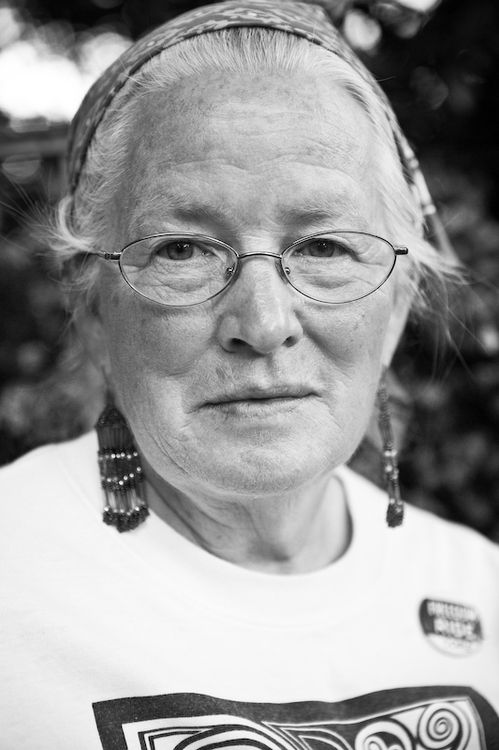
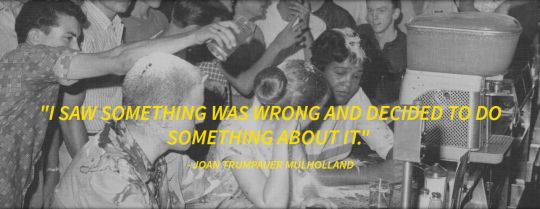
Her name is Joan Trumpauer Mulholland. Her family disowned her for her activism. After her first arrest, she was tested for mental illness, because Virginia law enforcement couldn’t think of any other reason why a white Virginian girl would want to fight for civil rights.
She also created the Joan Trumpauer Mullholland Foundation. Most recently, she was interviewed on Samatha Bee’s Full Frontal on February 15 for their segment on Black History Month.
Don’t reduce civil rights heroes to “teenage girl”.
Her great-grandparents were slave owners in Georgia, and after the United States Civil War, they became sharecroppers. Trumpauer later recalled an occasion that forever changed her perspective, when visiting her family in Georgia during summer. Joan and her childhood friend Mary, dared each other to walk into “n*gger” town, which was located on the other side of the train tracks. Mulholland stated her eyes were opened by the experience: “No one said anything to me, but the way they shrunk back and became invisible, showed me that they believed that they weren’t as good as me. At the age of 10, Joan Trumpauer began to recognize the economic divide between the races. At that moment she vowed to herself that if she could do anything, to help be a part of the Civil Rights Movement and change the world, she would.
In the spring of 1960, Mulholland participated in her first of many sit-ins. Being a white, southern woman, her civil rights activism was not understood. She was branded as mentally ill and was taken in for testing after her first arrest. Out of fear of shakedowns, Mulholland wore a skirt with a deep, ruffled hem where she would hide paper that she had crumpled until it was soft and then folded neatly. With this paper, Mulholland was able to write a diary about her experiences that still exists today. In this diary, she explains what they were given to eat, and how they sang almost all night long. She even mentioned the segregation in the jail cells and stated, “I think all the girls in here are gems but I feel more in common with the Negro girls & wish I was locked in with them instead of these atheist Yankees.
Soon after Mulholland’s release, Charlayne Hunter-Gault and Hamilton E. Holmes became the first African American students to enroll at the University of Georgia. Mulholland thought, “Now if whites were going to riot when black students were going to white schools, what were they going to do if a white student went to a black school?” She then became the first white student to enroll in Tougaloo College in Jackson, where she met Medgar Evers, Dr. Martin Luther King Jr., Reverend Ed King, and Anne Moody.
She received many letters scolding or threatening her while she was attending Tougaloo. Her parents later tried to reconcile with their daughter, and they tried to bribe her with a trip to Europe. She accepted their offer and went with them during summer vacation. Shortly after they returned, however, she went straight back to Tougaloo College.
She ultimately retired after teaching English as a Second Language for 40 years and started the Joan Trumpauer Mulholland Foundation, dedicated to educating the youth about the Civil Rights Movement and how to become activists in their own communities.
I watched a YouTube video once (by a guy who’s name escapes me) about the importance of making sure the stories of white activists are told. His point was that it’s not about lavishing praise on them just because they were white and “woke”, it’s about letting other white allies see that others have come before them who were willing to sacrifice and do the hard work. This way they can see themselves in someone and realize that destroying inequality isn’t a fringe interest or just an “us vs. them” issue. It has to be ALL OF US.
Roses are red, that much is true, but violets are purple, not fucking blue.
I have been waiting for this post all my life.
They are indeed purple, But one thing you’ve missed: The concept of “purple” Didn’t always exist.
Some cultures lack names For a color, you see. Hence good old Homer And his “wine-dark sea.”
A usage so quaint, A phrasing so old, For verses of romance Is sheer fucking gold.
So roses are red. Violets once were called blue. I’m hugely pedantic But what else is new?
My friend you’re not wrong
About Homer’s wine-ey sea!
Colours are a matter
Of cultural contingency;
Words are in flux
And meanings they drift
But the word purple
You’ve given short shrift.
The concept of purple,
My friends, is old
And refers to a pigment
once precious as gold.
By crushing up molluscs
From the wine-dark sea
You make a dye:
Imperial decree
Meant that in Rome,
to wear purpura
was a privilege reserved
For only the emperor!
The word ‘purple’,
for clothes so fancy,
Entered English
By the ninth century
.
Why then are voilets
Not purple in song?
The dye from this mollusc,
known for so long
Is almost magenta;
More red than blue.
The concept of purple
is old, and yet new.
The dye is red,
So this might be true:
Roses are purple
And violets are blue
.
While this song makes me merry, Tyrian purple dyes many a hue From magenta to berry And a true purple too.
But fun as it is to watch this poetic race The answer is staring you right in the face: Roses are red and violets are blue Because nothing fucking rhymes with purple.
Hirple – To limp or walk awkwardly
Cirple – An old Scots word for the hindquarters of a horse
“If you’re a white person who’d never heard POC talk about white people before the advent of social media, it probably means no POC, even your friends, have truly trusted you.”
We have entered a phase of regression,and one of the easiest ways to see it is in our infrastructure: our roads and bridges look more like those in Thailand or Venezuela than the Netherlands or Japan. But it goes far deeper than that, which is why Temin uses a famous economic model created to understand developing nations to describe how far inequality has progressed in the United States. The model is the work of West Indian economist W. Arthur Lewis, the only person of African descent to win a Nobel Prize in economics.
In the Lewis model of a dual economy, much of the low-wage sector has little influence over public policy. Check.
The high-income sector will keep wages down in the other sector to provide cheap labor for its businesses. Check.
Social control is used to keep the low-wage sector from challenging the policies favored by the high-income sector. Mass incarceration – check.
The primary goal of the richest members of the high-income sector is to lower taxes. Check.
Social and economic mobility is low. Check.
Temin says that today in the U.S., the ticket out is education, which is difficult for two reasons: you have to spend money over a long period of time, and the FTE sector is making those expenditures more and more costly by defunding public schools and making policies that increase student debt burdens.
Even with a diploma, you will likely find that high-paying jobs come from networks of peers and relatives. Social capital, as well as economic capital, is critical, but because of America’s long history of racism and the obstacles it has created for accumulating both kinds of capital, black graduates often can only find jobs in education, social work, and government instead of higher-paying professional jobs like technology or finance— something most white people are not really aware of. Women are also held back by a long history of sexism and the burdens — made increasingly heavy — of making greater contributions to the unpaid care economy and lack of access to crucial healthcare.
How did we get this way?
What happened to America’s middle class, which rose triumphantly in the post-World War II years, buoyed by the GI bill, the victories of labor unions, and programs that gave the great mass of workers and their families health and pension benefits that provided security?
Around 1970, the productivity of workers began to get divided from their wages. Corporate attorney and later Supreme Court Justice Lewis Powell galvanized the business community to lobby vigorously for its interests. Johnson’s War on Poverty was replaced by Nixon’s War on Drugs, which sectioned off many members of the low-wage sector, disproportionately black, into prisons. Politicians increasingly influenced by the FTE sector turned from public-spirited universalism to free-market individualism. As money-driven politics accelerated (a phenomenon explained by the Investment Theory of Politics, as Temin explains), leaders of the FTE sector became increasingly emboldened to ignore the needs of members of the low-wage sector, or even to actively work against them.
Temin notes that “the desire to preserve the inferior status of blacks has motivated policies against all members of the low-wage sector.”
What can we do?
We’ve been digging ourselves into a hole for over forty years, but Temin says that we know how to stop digging.
If we spent more on domestic rather than military activities, then the middle class would not vanish as quickly.
The effects of technological change and globalization could be altered by political actions.
We could restore and expand education, shifting resources from policies like mass incarceration to improving the human and social capital of all Americans.
We could upgrade infrastructure, forgive mortgage and educational debt in the low-wage sector,
reject the notion that private entities should replace democratic government in directing society, and
focus on embracing an integrated American population.
We could tax not only the income of the rich, but also their capital.
We have a structure that predetermines winners and losers. We are not getting the benefits of all the people who could contribute to the growth of the economy, to advances in medicine or science which could improve the quality of life for everyone — including some of the rich people.”
Along with Thomas Piketty, whose Capital in the Twenty-First Century examines historical and modern inequality, Temin’s book has provided a giant red flag, illustrating a trajectory that will continue to accelerate as long as the 20 percent in the FTE sector are permitted to operate a country within America’s borders solely for themselves at the expense of the majority.
Without a robust middle class, America is not only reverting to developing-country status, it is increasingly ripe for serious social turmoil that has not been seen in generations.
In Other Words Revolution
Capitalism’s bad
I really hope i don’t see any fellow white Americans on this post talking about how we don’t deserve this because we’re “the greatest country in the world” or how “this shouldn’t be happening in America of all places”. It shouldn’t be happening ANYWHERE, it doesn’t need to be happening anymore, and the fact that it was already happening in predominantly nonwhite countries is largely the fault of white supremacy










 wupacing