Polish has two versions of “to get married” depending on whether you are marrying a man (wyjść za mąż) or a woman (ożenić się)
they are of course “meant” to be used by women and men respectively, and when someone mixes them up – which happens very often in common speech – it’s usually a matter of seconds before some smartass goes “haha, ożenić się, she’s a girl, what is she, a homo, you meant wyjść za mąż!”
same thing happened at the shop today, one local drunkard wanted to wish me all the best and that I marry well – and he said “ożenić się”
the second drunkard obviously started laughing “what, a woman! you meant-”
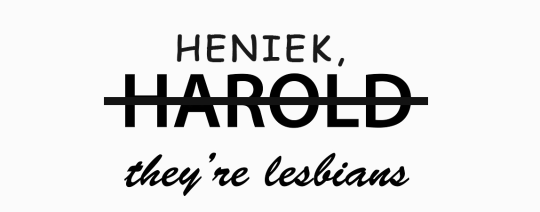
“and who are you to tell her what she can or cannot do, Heniek? She’ll want to marry a girl she’ll marry a girl!”
I have an urge to give him a beer on the house next time he’s here.
To be clear, they’re looking for INTERPRETERS. People who speak the language, not necessarily write it. So if you have interpreting experience or speak this language, please reach out and offer your services!
As you have hopefully noticed, hanzi don’t all seem to work the same way, and during the Han Dynasty six categories were designated for describing the “logic” of a character. It’s not something that comes up a whole lot, but it’s interesting and handy for explaining to folks that it’s not all “lil pictures” ఠ ͟ಠ
象形 xiàngxíng: pictograms, one’s like 火 or 馬. These arose from people using drawings to help remember oral stories, and then those drawings turning into more simplified and consistent symbols.
指事 zhǐ shì: ideograms, things that “demonstrate” a concept. so like 上 and 下
形声 xíngshēng: an ideogram + a phonetic component. so you may not have encountered 氿 before, but hm it’s got water (三点水) and 九—it’s pronounced jiǔ & means “bubble up” as in spring water
会意 huìyì: joint ideogram, so two “meaningful” components that help make a new meaning. A 人 man with a 戈 spear, 伐 attack! (tho more literary now)
related thought: this is also the pattern of development for hieroglyphics and Sumerian writing, though as these got used for other languages eg Akkadian things would get used for their semantic meaning and get new phonetic readings that could then be remixed again, or used purely phonetically, resulting in a mixed system kind of like Japanese but if the kana looked more like kanji. (if yr into it I cannot recommend this book enough) So also no, emoji are not like hieroglyphics.
转注 zhuǎnzhù: transfer characters, these are weird and I don’t totally get them. it seems to be characters that sound different but contain a similar part and mean the same thing, so 爸 and 父. The classical ones given are 考 老 but?? sorry maybe you need to be deeper in the philology ¯_(ツ)_/¯
假借 jiǎjiè: loan characters. This includes old stuff like 来 which meant wheat but was pronounced lái anyway, and now if you want to talk about wheat you have to add the grass radical 莱, heh. This is also how names and foreign things are transliterated
So that’s how hanzi work! I think in ways there are overlap but these are the technical distinctions. For example “beer” used to be transliterated as 皮酒, aka skin alcohol and that’s gross, so it was changed it to 啤酒, with the “pi” that’s also in 埤 and 脾 but the 口 mouth radical since it’s phonetic, like 啊, 哎, and 哦. Otherwise new characters are exceedingly rare and mostly only for elements, like oxygen is 氧, and has the 气 radical like other gases but the 羊 for pronunciation. I feel like you could also make a contemporary pseudocategory for internet punning or something, like 囧 being used as a face and all the censorship work-arounds.
There’s soOoO much to talk about always but you can google around, here’s a Baidu article that has the old school classification poem, here’s an english rundown with more examples and a powerpoint. (o˘◡˘o) 谢谢你们来我的TED talk
Meanwhile, “utter” works for the first (e.g., “you utter floorboard”) but somehow “utterly” doesn’t seem to work as well for the second (“I was utterly floorboarded”).
Utterly doesn’t work for drunk because it’s the affix for turning random objects into terms for *shocked*, obviously.
… huh. I thought that might just be the similarity to “floored”, and yet “I was utterly coat hangered” does seem to convey something similar.
I have to tell you, I am utterly sandwiched at this discovery.
Completely makes the phrase mean “super tired”.
“God, it’s been a long week, I am completely coat-hangered.”
Something is
Something is wrong with our language
Is it a glitch or a feature?
Feature
this neat feature is called collocative substitution, and it occurs when certain words are strongly linked to certain context and/or phrases. when you read/hear a pair of words that usually wouldn’t go together, your brain fills in the context with what would normally be inferred, given the originally phrased pairing. thus, finding out that there’s a term for this phenomenon may indeed leave you utterly sandwiched. lesser known or less strongly linked phrases and pairings may not be able to translate substituted words to appropriately fit the inferred context, so you were not utterly floorboarded at the club last night, but rather you were absolutely floorboarded, and as this explanation continues to drag on, you may by the end of it find yourself completely coathangered from read it all.
I, like all linguists I have met or even heard of, have a deep intricate love-hate relationship with the English Language because of complete and total coathangering like this
how did they learn to translate languages into other languages how did they know which words meant what HOW DID TH
English Person: *Points at an apple* Apple
French Person: Non c’est une fucking pomme
*800 years of war*
Fun fact: There are a lot of rivers in the UK named “avon” because the Romans arrived and asked the Celts what the rivers were called. The Celts answered “avon.”
“Avon” is just the Celtic word for river.
Fan Fact #2: When Spanish conquistadors landed in the Yucatán peninsula, they asked the natives what their land was called and they responded “Yucatán”. In 2015, it was discovered that in those mesoamerican languages, “Yucatán” meant “I don’t understand what you are saying”
W H E E Z E
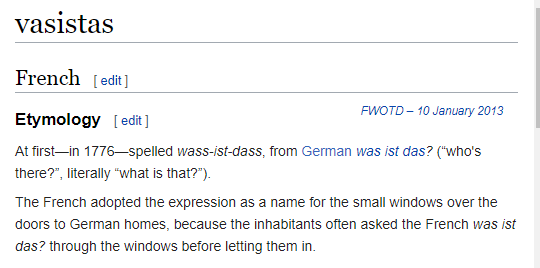
I love entomology so much because so many words kind of happened by accident or by a native speaker trying to say “WTF are you saying?“
i was speaking to a customer in Japanese once at work and my coworker overheard me and later in the break room he said to our other coworkers “man Andrew was over there speakin Naruto”
This doesn’t discuss the 13 missing letters from Old English, which to me is an oversight since they were in fact, part of English as a whole. “&” for example was a letter.
look man im a native english speaker and i’ve been mispronouncing a crap ton of words because i never looked up the pronunciation for any of them but if you make fun of how a foreigner pronounces an english word either because of their accent or having never heard that word before i will fucking fight you because english has shitty pronunciation rules and none of them make sense fuck off

 wupacing