i’m so tired of people justifying cultural appropriation by saying things like “Actual Chinese People ™ from mainland china don’t care that this non-chinese person is wearing a cheongsam!” and acting like this is evidence that cultural appropriation is just an issue made up by Oversensitive Special Snowflakes
like… ok… sure, of course mainland chinese people would care less about who wears cheongsam. but you’re kind of missing the whole point. most of the poc i’ve seen who are upset about cultural appropriation aren’t mainlanders. they’re fckn diaspora.
nobody in mainland china is going to judge you if you wear a cheongsam to a formal event. but let’s pretend you’re the asian chick in your mostly-white school in the US, and your mom pushes you to wear a cheongsam to prom. you’re probably going to get the “oh of course the asian girl wears her asian dress to prom” reaction from the people around you. so you fight your mom about the cheongsam, because you want to fit in with Everyone Else. you don’t want to be the Chinky Girl in the Chinky Dress.
your beautiful cheongsam sits in your closet, until one day, a stray clothes hanger snags on the lace overlay and shreds your dress and you throw it out.
and then a few years later, you see some white girl wearing the dress your mom wanted you to wear, but you were too ashamed to wear because you didn’t want to be a stereotype.
and that’s the frickin difference. mainlanders don’t experience the same things as people who are diaspora. they’re not gonna have the same perspective. there are no societal repercussions stopping them from expressing themselves culturally. their experiences ARE NOT THE SAME. stop using the opinions of people living in China to invalidate the experiences of Chinese Americans. thanks
since tumblr is us-centric, this is probably going to be one of the only posts about it, but here it is.
early this week, naomi musenga, a 22-year-old black woman, called the samu, our equivalent of 911, because she was suffering from extreme stomachache and had a fever. when the operator picked up, naomi was out of breath, as if she had difficulty breathing, and was basically begging for help, saying that she was going to die. you’d expect them to be worried about her and do anything in their power to help, right?
wrong.
the operator who took the call – and another colleague of hers – proceeded to make fun of her, not taking her seriously and saying that “everybody dies eventually”. the operator threathened to hang up on naomi because she wasn’t clear enough, because of the fact that she was in pain? because of her accent?the operator told her to call either sos doctor or her attending physician because “she couldn’t do it for her”. after she did call sos doctors – and taken seriously – she was rushed into the ER before dying of a heart attack, six hours after she called the samu.
naomi musenga was only 22. she has a daughter, who now has to grow up without a mother because of racist – yeah, this is about racism and bigotry and just plain hatred – women who didn’t want to do their jobs.
je sais c’est pas un post en français mais vous pouvez signer la pétition ici :
26-year-old Jamarion Robinson’s grandmother Beverly Nixon said her grandson was bipolar and schizophrenic. Still got shot 76 (!!!) times. Would a white person get the same treatment?
The witness said he saw more than a dozen patrol cars at the complex where US Marshals killed Robinson on August 5, 2016. Why were there no behavioral specialist? Surely one of them would know how to interact with a bipolar schizophrenic better than the police.
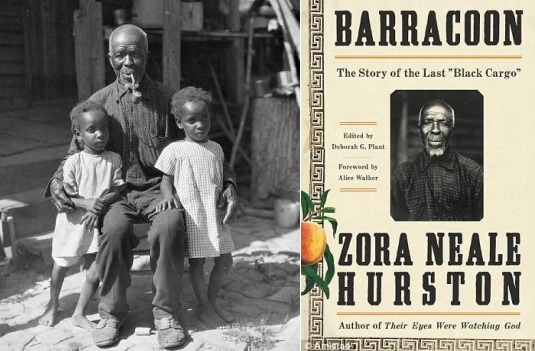
Cudjo Lewis, who was born as Kossola, was nearly 90 years old and living in Plateau, Alabama. He was thought to be the last African man alive who had been kidnapped from his village in West Africa in 1859 and forced into slavery in America aged 19.
Hurston, who was an anthropologist, documented her interviews with Lewis during the late 1920s and wrote a book in his own words about his life titled, ‘Barracoon: The Story of the Last ‘Black Cargo’.
But the manuscript she wrote was turned down by multiple publishers in 1931 who felt as though Lewis’s heavily accented dialect was too difficult to read.
For decades, Hurston’s manuscript of the book was tucked away inside Howard University’s archives until The Zora Neale Hurston Trust found a buyer for the book – more than 50 years after her death in 1960. On Tuesday, May 8, 2018. ‘Barracoon: The Story of the Last ‘Black Cargo’,’ was published by Amistad/HarperCollins.
Of her time spent with Lewis, Hurston wrote in a letter to her friend, fellow Harlem Renaissance author and poet Langston Hughes, that the experience left her deeply moved, according to her biography, ‘Wrapped in Rainbows: The Life of Zora Neale Hurston’ by author Valerie Boyd.
‘Tears welled in his eyes as he described the trip across the ocean in the Clotilda,’ Hurston wrote, as cited in Boyd’s biography.
‘But what moved Hurston most about the old man — whom she always called by his African name, Kossola — was how much he continued to miss his people back in Nigeria. ‘I lonely for my folks,’ he told her.
‘After seventy-five years he still had that tragic sense of loss…That yearning for blood and cultural ties. That sense of mutilation. It gave me something to feel about.’
Our attending walked into the room wearing her white coat, name badge on, and introduced herself as the doctor. The patient continued to refer to her as nurse the entire time we were there, and when we left, asked when the “real doctor” was coming. This same attending had to stop wearing her (very conservative, knee-length) dresses/skirts because male patients would comment on her legs or try to touch them. An ophthalmologist friend was telling me that she won’t do slit-lamp exams with the door shut anymore because male patients have (more than once) groped her.
Racism is still a big problem, too. I have another friend who, just yesterday, was told by a patient something along the lines of “it’s a good thing you aren’t a doctor (he is) because your people are coming here and taking up all the doctor jobs.” And that was definitely one of the milder things I’ve heard patients say about race. They’re usually screaming slurs.
I’ve introduced myself as a doctor, discussed treatment options, and when I left, I heard the patient complain that she hadn’t seen a doctor at all.
I’ve seen this from two perspectives now both on the floor and behind the scenes and I fucking hate it.
I’ve had more people than I can count call in to central billing to dispute their ER bills because the doctor that saw them was either a woman or a minority and, quote, “I never saw a doctor!”
“Sir/Ma’am it says right here you saw Dr. (Insert Name).”
“I mean a REAL doctor!”
“They are a real doctor. And you still have to pay this bill.”
They then usually ask to speak with a supervisor and get mad because all the supervisors are women.
One, single statistically significant variable predicts whether a voter
supports Trump—and it’s not race, income or education levels: It’s
authoritarianism.
That’s right, Trump’s electoral strength—and his staying power—have
been buoyed, above all, by Americans with authoritarian inclinations.
And because of the prevalence of authoritarians in the American
electorate, among Democrats as well as Republicans, it’s very possible
that Trump’s fan base will continue to grow.
My finding is the result of a national poll I conducted in the last
five days of December under the auspices of the University of
Massachusetts, Amherst, sampling 1,800 registered voters across the
country and the political spectrum. Running a standard statistical
analysis, I found that education, income, gender, age, ideology and
religiosity had no significant bearing on a Republican voter’s preferred
candidate. Only two of the variables I looked at were statistically
significant: authoritarianism, followed by fear of terrorism, though the
former was far more significant than the latter.
Authoritarianism is not a new, untested concept in the American
electorate. Since the rise of Nazi Germany, it has been one of the most
widely studied ideas in social science. While its causes are still
debated, the political behavior of authoritarians is not. Authoritarians
obey. They rally to and follow strong leaders. And they respond
aggressively to outsiders, especially when they feel threatened. From
pledging to “make America great again” by building a wall on the border
to promising to close mosques and ban Muslims from visiting the United
States, Trump is playing directly to authoritarian inclinations.
Not all authoritarians are Republicans by any means; in national
surveys since 1992, many authoritarians have also self-identified as
independents and Democrats. And in the 2008 Democratic primary, the
political scientist Marc Hetherington found that authoritarianism
mattered more than income, ideology, gender, age and education in
predicting whether voters preferred Hillary Clinton over Barack Obama.
But Hetherington has also found, based on 14 years of polling, that
authoritarians have steadily moved from the Democratic to the Republican
Party over time. He hypothesizes that the trend began decades ago, as
Democrats embraced civil rights, gay rights, employment protections and
other political positions valuing freedom and equality. In my poll
results, authoritarianism was not a statistically significant factor in
the Democratic primary race, at least not so far, but it does appear to
be playing an important role on the Republican side. Indeed, 49 percent
of likely Republican primary voters I surveyed score in the top quarter
of the authoritarian scale—more than twice as many as Democratic voters.
Political pollsters have missed this key component of Trump’s support
because they simply don’t include questions about authoritarianism in
their polls. In addition to the typical battery of demographic, horse
race, thermometer-scale and policy questions, my poll asked a set of
four simple survey questions that political scientists have employed
since 1992 to measure inclination toward authoritarianism. These
questions pertain to child-rearing: whether it is more important for the
voter to have a child who is respectful or independent; obedient or
self-reliant; well-behaved or considerate; and well-mannered or curious.
Respondents who pick the first option in each of these questions are
strongly authoritarian.
Based on these questions, Trump was the only candidate—Republican or
Democrat—whose support among authoritarians was statistically
significant.
So what does this mean for the election? It doesn’t just help us
understand what motivates Trump’s backers—it suggests that his support
isn’t capped. In a statistical analysis of the polling results, I found
that Trump has alreadycaptured 43 percent of Republican primary
voters who are strong authoritarians, and 37 percent of Republican
authoritarians overall. A majority of Republican authoritarians in my
poll also strongly supported Trump’s proposals to deport 11 million
illegal immigrants, prohibit Muslims from entering the United States,
shutter mosques and establish a nationwide database that track Muslims.
And in a general election, Trump’s strongman rhetoric will surely
appeal to some of the 39 percent of independents in my poll who identify
as authoritarians and the 17 percent of self-identified Democrats who
are strong authoritarians.
What’s more, the number of Americans worried about the threat of
terrorism is growing. In 2011, Hetherington published research finding
that non-authoritarians respond to the perception of threat by behaving
more like authoritarians. More fear and more threats—of the kind we’ve
seen recently in the San Bernardino and Paris terrorist attacks—mean
more voters are susceptible to Trump’s message about protecting
Americans. In my survey, 52 percent of those voters expressing the most
fear that another terrorist attack will occur in the United States in
the next 12 months were non-authoritarians—ripe targets for Trump’s
message.
Take activated authoritarians from across the partisan spectrum and
the growing cadre of threatened non-authoritarians, then add them to the
base of Republican general election voters, and the potential electoral
path to a Trump presidency becomes clearer.
So, those who say a Trump presidency “can’t happen here” should check
their conventional wisdom at the door. The candidate has confounded
conventional expectations this primary season because those expectations
are based on an oversimplified caricature of the electorate in general
and his supporters in particular. Conditions are ripe for an
authoritarian leader to emerge. Trump is seizing the opportunity. And
the institutions—from the Republican Party to the press—that are
supposed to guard against what James Madison called “the infection of
violent passions” among the people have either been cowed by Trump’s
bluster or are asleep on the job.
It is time for those who would appeal to our better angels to take
his insurgency seriously and stop dismissing his supporters as a small
band of the dispossessed. Trump support is firmly rooted in American
authoritarianism and, once awakened, it is a force to be reckoned with.
That means it’s also time for political pollsters to take
authoritarianism seriously and begin measuring it in their polls.




 wupacing